CM Sai's Shaktipeeth Project Puts Chhattisgarh's Sacred Sites on Tourism Map
Synopsis
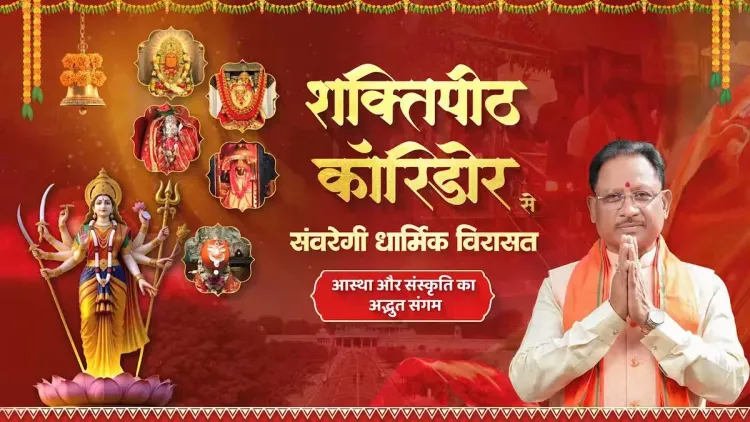
The Chhattisgarh government's Shaktipeeth Project, championed by Chief Minister Vishnu Deo Sai, aims to restore and upgrade Shakti worship sites across the state, improve pilgrim amenities, and position Chhattisgarh as a major religious tourism destination — announced during Navratri 2026.
Key Takeaways
The Shaktipeeth Project is a Chhattisgarh government initiative under CM Vishnu Deo Sai to upgrade Shakti religious sites and promote pilgrim tourism.
The project targets three goals: recognising spiritual heritage, improving amenities for devotees, and boosting religious tourism revenue.
The announcement was made on 19 October 2026 during Navratri, the peak pilgrimage season for Shakti shrines.
Chhattisgarh's state tourism policy from 2023-24 already prioritised religious circuits as economic growth levers.
The project aligns with a broader national pattern of state-level religious infrastructure investment under frameworks like the PRASAD scheme.
Specific sites covered and post-2024 budget allocations have not been officially confirmed in public records.
As Navratri 2026 lights up Chhattisgarh, the state government is using the festival season to spotlight an ambitious bet on faith and footfall. The Chief Minister's Office of Chhattisgarh announced on Monday, 19 October 2026 that the Shaktipeeth Project, led by Chief Minister Vishnu Deo Sai, is a landmark initiative to give the state's spiritual heritage a fresh identity, deliver better facilities to pilgrims, and drive religious tourism forward.
What the Shaktipeeth Project aims to do
The CMO's post — tagged with #शक्ति_वंदन (Shakti Vandan — 'reverence to the goddess') and #CGNavratri2026 — frames the project around three pillars: recognising the state's spiritual legacy, upgrading amenities at Shakti worship sites, and turning religious circuits into a serious driver of tourism revenue. The phrase 'आध्यात्मिक विरासत को नई पहचान' ('new identity for spiritual heritage') signals that this is as much a branding exercise as a brick-and-mortar upgrade.
Vishnu Deo Sai has held the Chief Minister's chair since December 2023, and cultural and religious tourism has been a visible thread in his administration's development narrative. Chhattisgarh's state tourism policy updates in 2023-24 already emphasised religious circuits and heritage preservation as growth levers — the Shaktipeeth Project is the most visible expression of that commitment.
Navratri as the launchpad — why timing matters
Announcing this during Navratri is no accident. The nine-night festival is the single highest-traffic moment for Shakti shrines across India, when millions of devotees travel specifically to visit goddess temples. For a state government looking to demonstrate project momentum, pilgrims walking through upgraded sites in real time is better marketing than any press release.
Across India, states have increasingly treated religious tourism as economic policy — not just cultural preservation. Central schemes like PRASAD (Pilgrimage Rejuvenation and Spiritual, Heritage Augmentation Drive) have provided a national template, and Chhattisgarh's Shaktipeeth initiative fits squarely within that broader pattern of state-level religious infrastructure investment.
What pilgrims and the tourism sector are watching
The immediate audience for this project is twofold: the devout pilgrim who wants cleaner pathways, better rest facilities, and safer access to shrines, and the tourism operator who wants predictable footfall that can anchor local economies. The #महतारी_का_सम्मान hashtag — roughly, 'respect for the mother goddess' — underscores the cultural reverence the government wants the project to carry.
Exactly which sites fall under the project's scope, and what fresh budget has been committed post-2024, has not been officially confirmed in public records. Project implementation milestones and pilgrim footfall numbers from Navratri 2026 will be the first real measure of delivery against promise.
If Chhattisgarh pulls it off, it will have turned one of India's least-visited states into a pilgrimage destination with genuine national pull — and Chief Minister Sai will have something tangible to show for it before the next election cycle.
Point of View
In office since December 2023, is deploying the Navratri season to associate the BJP-led government with both goddess reverence and visible development delivery. The timing mirrors a broader pattern across BJP-governed states, where religious infrastructure investment serves dual purposes: genuine heritage preservation and differentiated political messaging. Whether the project delivers measurable pilgrim-footfall growth will determine if it becomes a governance success story or remains a well-branded promise.
NationPress
19 Oct 2026
Frequently Asked Questions
What is the Shaktipeeth Project in Chhattisgarh?
The Shaktipeeth Project is a Chhattisgarh government initiative under Chief Minister Vishnu Deo Sai to upgrade Shakti worship sites across the state, improve facilities for pilgrims, and promote religious tourism as an economic driver.
Who announced the Shaktipeeth Project?
The Chief Minister's Office of Chhattisgarh announced the project, attributing its leadership to Chief Minister Vishnu Deo Sai, on 19 October 2026 during the Navratri festival.
How does the Shaktipeeth Project benefit pilgrims?
The project aims to provide better amenities — including improved access, rest facilities, and infrastructure — at Shakti religious sites so that pilgrims have a safer and more comfortable experience.
Which sites are covered under Chhattisgarh's Shaktipeeth Project?
The exact list of sites covered under the Shaktipeeth Project has not been officially confirmed in public records as of October 2026.
How does the Chhattisgarh Shaktipeeth Project relate to the central PRASAD scheme?
While the Shaktipeeth Project is a state-level initiative, it fits within the broader national model of pilgrimage infrastructure development exemplified by the central government's PRASAD scheme, which funds upgrades at key religious sites across India.