CM Sai Reaffirms 'Vikas bhi, Virasat bhi' Cultural Pledge
Synopsis
Chhattisgarh Chief Minister Vishnu Deo Sai on 17 July 2026 reiterated his administration's 'Vikas bhi, Virasat bhi' pledge, emphasising that respect for faith strengthens culture, folk traditions, and social harmony — a cornerstone of the BJP-led state government's governance identity since December 2023.
Key Takeaways
CM Vishnu Deo Sai posted on 17 July 2026 reaffirming his government's cultural and heritage commitments.
The guiding principle 'Vikas bhi, Virasat bhi' — 'Development as well as heritage' — frames the BJP -led Chhattisgarh government's dual policy identity.
The post emphasises that respect for faith is the foundation for cultural flourishing, social harmony, and community trust.
Sanatan traditions , folk culture, and Chhattisgarh's rich cultural heritage are cited as areas of continuous government commitment.
The 'Vikas bhi, Virasat bhi' approach has been a consistent BJP policy thread at state and central levels since 2014 .
Stakeholders including local communities, tribal groups, and folk practitioners stand to be most directly affected by concrete cultural policy measures.
Chhattisgarh Chief Minister Vishnu Deo Sai on Friday, 17 July 2026 reaffirmed his government's commitment to preserving Sanatan traditions and promoting folk culture, stating that where faith is respected, culture flourishes and society binds together in harmony and trust.
Context
In a post on X, CM Sai wrote: 'जहां आस्था का सम्मान होता है, वहीं संस्कृति फलती-फूलती है' — 'Where faith is honoured, culture thrives, traditions grow stronger, and society binds in an unbreakable thread of affection, harmony, and trust.' He framed the message around the guiding principle his administration has publicly adopted: 'Vikas bhi, Virasat bhi' — 'Development as well as heritage.'
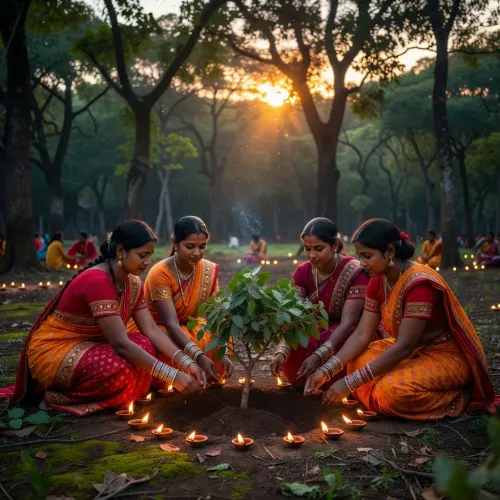
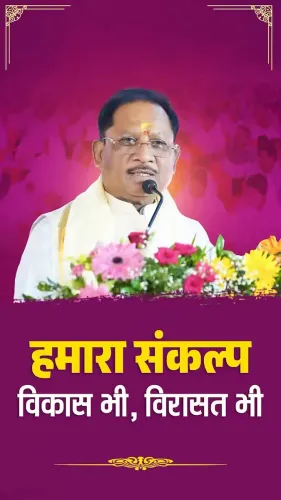
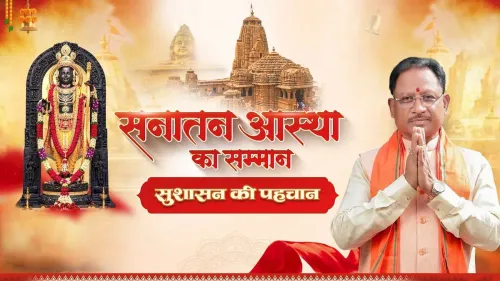
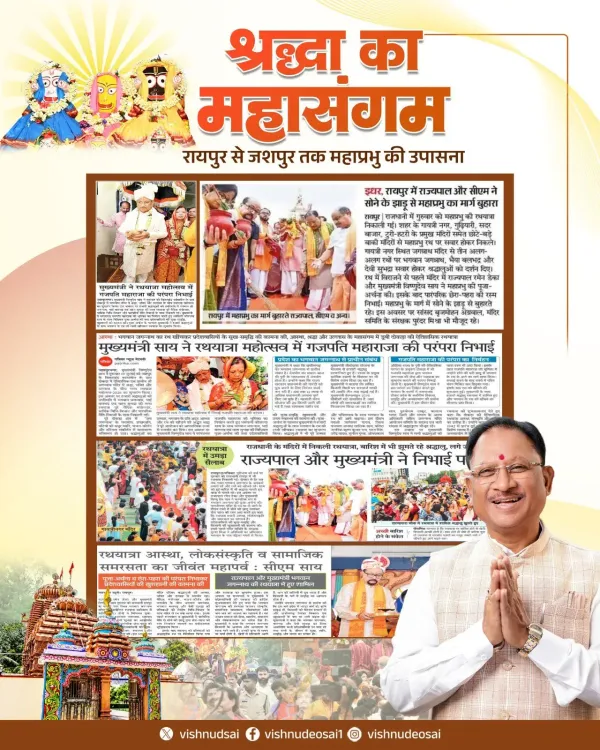
The statement underlines the BJP-led state government's dual focus on infrastructure-driven growth and the active stewardship of Chhattisgarh's cultural and religious heritage. The post was accompanied by an image, reinforcing the visual dimension of the cultural messaging.
Policy Backdrop
The 'Vikas bhi, Virasat bhi' formulation has been a consistent thread in BJP communications at both state and central levels since 2014, appearing in manifestos and official schemes focused on heritage sites, traditional festivals, and folk arts. CM Sai, who took office in December 2023 after the party's assembly election victory in Chhattisgarh, adopted the phrase as a cornerstone of his administration's public identity.
Across BJP-governed states, this approach has translated into budget allocations for heritage conservation, support for religious and folk festivals, and the promotion of Sanatan traditions as a complement to economic development programmes. Chhattisgarh, with its rich tribal culture and ancient temple heritage, provides a particularly resonant backdrop for such messaging.
Stakeholders and Impact
The government's cultural posture directly affects local communities, folk artists, priests, and cultural practitioners across Chhattisgarh's diverse regions. Tribal communities, who form a significant share of the state's population, are among the primary stakeholders in any policy that touches on folk traditions and local heritage.
For these communities, state recognition of cultural identity carries practical weight — influencing funding for festivals, maintenance of heritage sites, and institutional support for traditional art forms. The 'Vikas bhi, Virasat bhi' framing signals that cultural priorities will not be subordinated to purely economic metrics in state planning.
What's Next
Observers will watch Chhattisgarh's upcoming state budget allocations and policy announcements for concrete measures that translate this cultural commitment into funded programmes — including heritage site development, folk festival support, and grants for traditional art practitioners. The government's ability to back its stated philosophy with measurable initiatives will determine how this messaging is received by communities on the ground.
As BJP-led administrations continue to position cultural stewardship alongside development as a political identity, CM Sai's restatement of this principle signals that the theme will remain central to Chhattisgarh's governance narrative in the months ahead.
Point of View
Heritage, and social cohesion to the development narrative. By invoking 'Vikas bhi, Virasat bhi,' Sai aligns Chhattisgarh's state identity with a broader national BJP template that has proven electorally effective since 2014. The emphasis on Sanatan traditions and folk culture also serves to consolidate the party's appeal among both Hindu communities and tribal constituencies in a culturally diverse state. Whether this rhetorical commitment translates into measurable budgetary action will be the real test of its policy substance.
NationPress
15 Oct 2026
Frequently Asked Questions
What is the 'Vikas bhi, Virasat bhi' policy of the Chhattisgarh government?
'Vikas bhi, Virasat bhi' — meaning 'Development as well as heritage' — is the guiding principle of the BJP-led Chhattisgarh government under CM Vishnu Deo Sai, which aims to pursue infrastructure and economic growth while simultaneously preserving Sanatan traditions and folk cultural heritage.
What did Chhattisgarh CM Vishnu Deo Sai say about culture and faith?
CM Sai stated that where faith is honoured, culture thrives, traditions grow stronger, and society binds together in affection, harmony, and trust — reaffirming his government's commitment to cultural and heritage preservation.
When did Vishnu Deo Sai become Chief Minister of Chhattisgarh?
Vishnu Deo Sai became Chief Minister of Chhattisgarh in December 2023 after the BJP won the state assembly elections.
What is the BJP's approach to cultural policy in Indian states?
BJP-led governments at state and central levels have consistently framed cultural policy around respect for Sanatan and folk traditions as a complement to economic programmes, a pattern visible in multiple state manifestos and heritage-focused schemes since 2014.
Who are the main stakeholders in Chhattisgarh's cultural heritage policy?
The primary stakeholders include local communities, tribal groups, folk artists, cultural practitioners, and priests across Chhattisgarh, whose traditions and livelihoods are directly affected by state cultural policy and funding decisions.