CM Vishnu Deo Sai marks Karma Tihar, backs tribal heritage
Synopsis
Chhattisgarh Chief Minister Vishnu Deo Sai marked Karma Tihar on 10 October 2026, calling it a living celebration of tribal identity and nature-reverence, and reaffirmed his government's commitment to preserving tribal culture under the motto 'Vikas bhi, virasat bhi.'
Key Takeaways
Karma Tihar is one of Chhattisgarh's most significant tribal festivals, centring on worship of the Karma tree for prosperity, harvest, and kinship.
CM Vishnu Deo Sai praised the younger generation for staying connected to their cultural roots despite modernisation pressures.
The CM invoked the governing motto 'Vikas bhi, virasat bhi' — development alongside heritage — as the framework for his government's tribal policy.
Scheduled tribes constitute roughly 30 percent of Chhattisgarh's population, making tribal welfare a major political and administrative priority.
The post reflects the BJP-led Chhattisgarh government's broader push — since its late-2023 election win — to combine economic development with tribal cultural preservation.
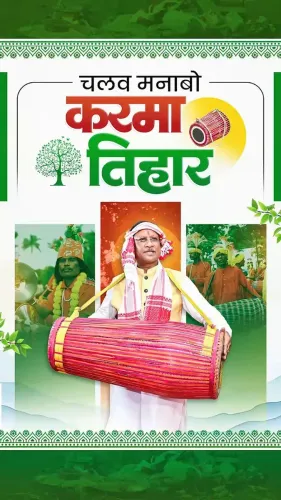
In the age of viral trends and rapid modernisation, a harvest festival celebrated deep in the forests of Chhattisgarh is still pulling young people back to their roots — and Chhattisgarh Chief Minister Vishnu Deo Sai wants the country to take note. On Saturday, 10 October 2026, the Chief Minister posted a warm tribute to Karma Tihar, invoking it as a living symbol of tribal identity, reverence for nature, and the enduring power of folk tradition.
Writing in Hindi, CM Sai called the festival 'janjatiya asmita, prakriti ke prati agadh aastha aur hamaari samridh lokparamparaon ka jeevant utsav' — 'a living celebration of tribal identity, deep faith in nature, and our rich folk traditions.' His particular delight, he noted, was watching the younger generation engage with their cultural heritage with full enthusiasm and affection, even amid the pressures of modern life.
What Karma Tihar means for Chhattisgarh's tribal communities
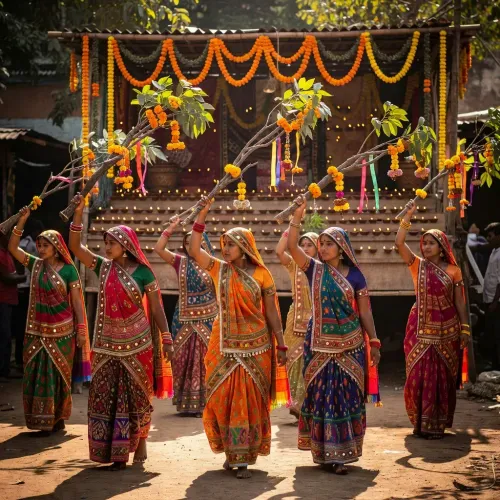
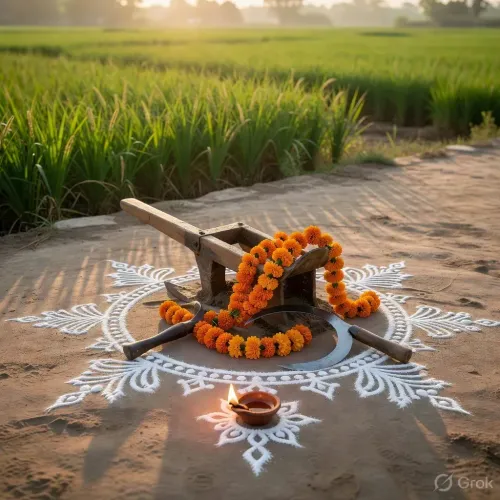
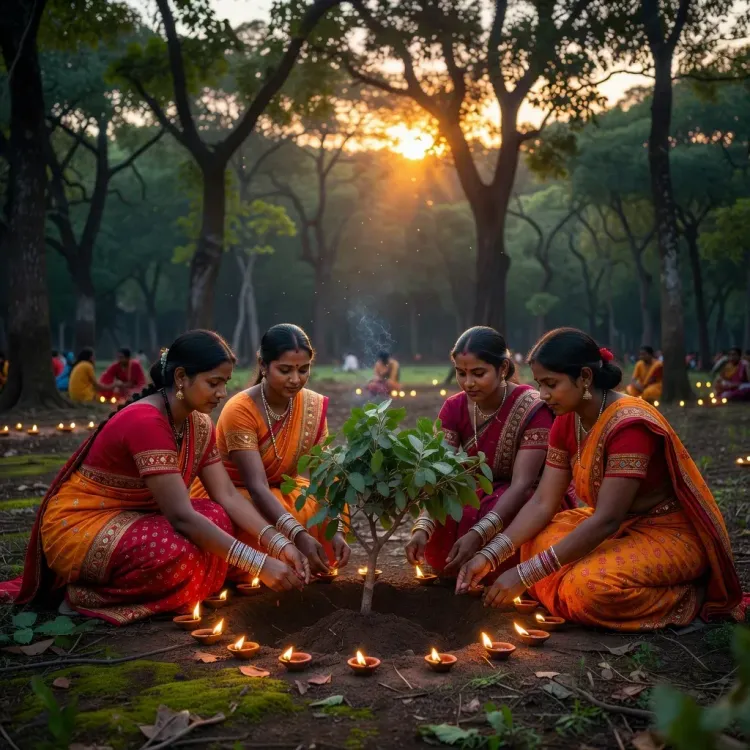
Karma Tihar — also rendered as Karma Puja — is one of the most significant festivals observed by tribal communities across Chhattisgarh, Jharkhand, and parts of Odisha and West Bengal. Centred on the worship of the Karma tree (Nauclea parvifolia), the festival is a prayer for prosperity, good harvest, and the well-being of siblings and kin. Young women plant branches of the Karma tree, perform rituals through the night, and immerse the branch in a river the next morning — a complete cycle of reverence, celebration, and release.
For Chhattisgarh, where tribal communities constitute a substantial share of the population, festivals like Karma Tihar are not folklore curiosities — they are living civic occasions that bind communities, reinforce ecological knowledge, and transmit values across generations.
'Vikas bhi, virasat bhi' — the BJP's dual-track promise to tribal India
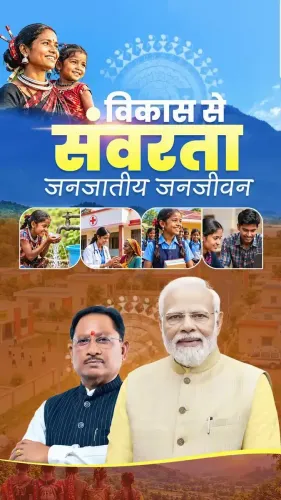
CM Sai anchored his message in a phrase that has become something of a governing motto: 'Vikas bhi, virasat bhi' — 'Development too, heritage too.' He stated that his government is working with full commitment to preserve tribal culture, identity, and self-respect, and to pass this invaluable heritage on to future generations.
The phrase neatly captures a political tightrope — delivering roads, hospitals, and economic opportunity to tribal districts while simultaneously signalling that modernity will not erase the cultures it reaches. For a state like Chhattisgarh, where scheduled tribes make up roughly 30 percent of the population and where tribal rights over forests and land remain sensitive political terrain, this dual framing carries real electoral and administrative weight.
Youth and cultural continuity at the centre of the message
Perhaps the sharpest thread in CM Sai's post is his emphasis on yuva peedhi — the younger generation. The anxiety that urbanisation and digital culture will hollow out indigenous traditions is shared across many countries; Sai's observation that Chhattisgarh's youth are choosing to remain connected to their ancestral legacy is framed as both a relief and a responsibility. If the young come to the Karma tree willingly, the state's job, the CM implied, is to ensure the tree is still standing for their children.
Karma Tihar lands at a moment when the BJP-led government in Chhattisgarh — in office since the party's decisive win in the late-2023 assembly election — has made tribal welfare a visible policy priority, from forest rights to cultural preservation programmes. A festival greeting, then, is also a statement of governing intent. The real test, of course, will be measured in budgets, land records, and school curricula — not posts alone.
Point of View
Virasat bhi' framing is a deliberate answer to the longstanding critique that development projects in tribal belts erode indigenous identity; by naming both in the same breath, Sai is pre-emptively framing any infrastructure push as culturally sensitive rather than disruptive. His emphasis on youth uptake of tradition is also politically pointed — it signals that the next generation of tribal voters sees the party as a custodian, not just an administrator. Whether that narrative holds will depend on how the government handles forest rights, land acquisition, and tribal language education in the months ahead.
NationPress
10 Oct 2026
Frequently Asked Questions
What is Karma Tihar and why is it important in Chhattisgarh?
Karma Tihar — also called Karma Puja — is a major tribal festival observed primarily in Chhattisgarh, Jharkhand, and neighbouring states. It centres on the worship of the Karma tree as a prayer for prosperity, good harvest, and the well-being of family. For Chhattisgarh, where tribal communities make up roughly 30 percent of the population, it is a vital occasion for cultural continuity and communal bonding.
What did CM Vishnu Deo Sai say about Karma Tihar?
CM Sai called Karma Tihar 'a living celebration of tribal identity, deep faith in nature, and our rich folk traditions.' He expressed happiness that young people remain enthusiastically connected to their ancestral culture and pledged that his government would preserve and pass this heritage to future generations under the motto 'Vikas bhi, virasat bhi.'
What does 'Vikas bhi, virasat bhi' mean?
'Vikas bhi, virasat bhi' translates to 'Development too, heritage too.' It is a governing motto used by the BJP-led Chhattisgarh government to signal that economic development in tribal regions will go hand in hand with the preservation of tribal culture, identity, and self-respect.
How large is the tribal population in Chhattisgarh?
Scheduled tribes constitute approximately 30 percent of Chhattisgarh's total population, making the state one of India's most tribally significant, and tribal welfare a central concern in both state politics and governance.
When did Vishnu Deo Sai become Chief Minister of Chhattisgarh?
Vishnu Deo Sai became Chief Minister of Chhattisgarh following the BJP's decisive victory in the state assembly elections held in late 2023, taking office as the state's first tribal Chief Minister from the Sai community.