CM Sai Celebrates Karma Tihar at Raipur Indoor Stadium
Synopsis
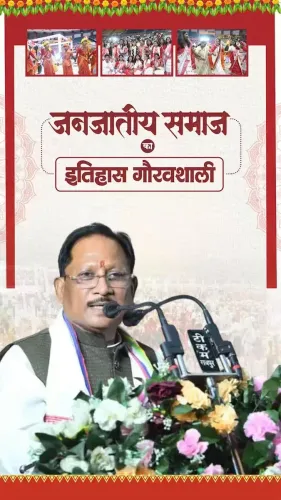
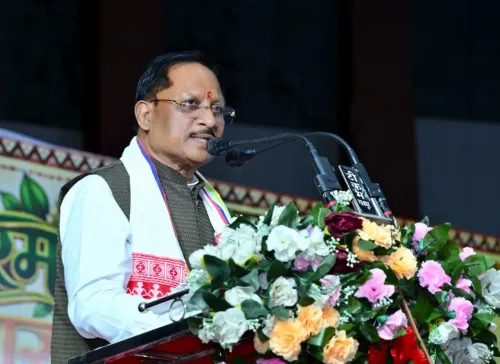
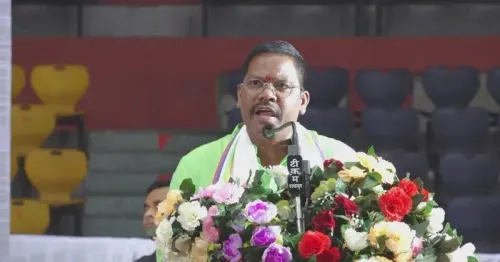
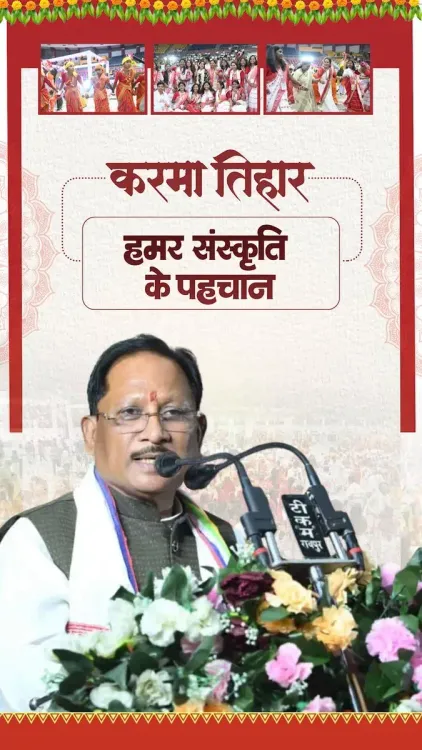
Chief Minister Vishnu Deo Sai led Chhattisgarh's Karma Tihar 2026 celebrations at Balbir Singh Juneja Indoor Stadium in Raipur on 10 October, describing the tribal festival as a symbol of the state's culture, identity, and intergenerational heritage.
Key Takeaways
Chief Minister Vishnu Deo Sai addressed the Karma Tihar 2026 celebration in Raipur on 10 October 2026 .
The event was held at Balbir Singh Juneja Indoor Stadium, Raipur — a major public venue signalling large-scale state backing.
CM Sai called Karma Tihar 'the symbol of our culture and identity' and a means of binding tribal society in unity.
He highlighted the festival's role in transmitting traditions and heritage to the next generation.
Karma Tihar is a key festival for tribal communities in Chhattisgarh, where indigenous peoples make up over 30 percent of the population.
CM Sai belongs to the Oraon tribal community , lending personal significance to his leadership of the event.
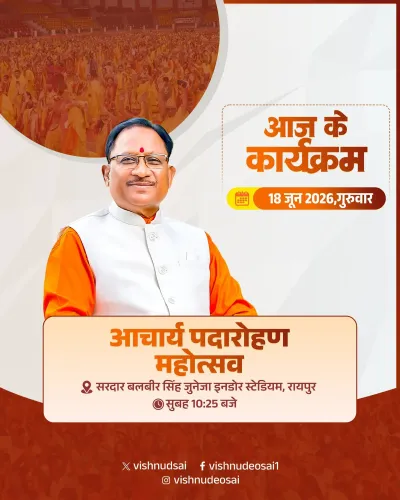
At Balbir Singh Juneja Indoor Stadium in Raipur, the ancient rhythms of tribal Chhattisgarh filled the air on Saturday, 10 October 2026, as Chief Minister Vishnu Deo Sai led the state's celebration of Karma Tihar — one of the most revered festivals of the region's indigenous communities. The Chief Minister's Office of Chhattisgarh marked the occasion with a pointed message: this festival is not just a ritual, it is a lifeline for identity.
What Karma Tihar means — in the CM's own words
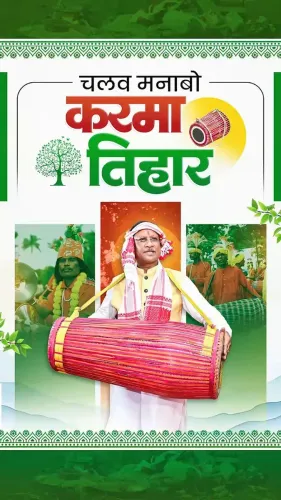
Speaking at the event, Chief Minister Vishnu Deo Sai described Karma Tihar as a symbol of Chhattisgarh's culture and identity. In his words: 'करमा तिहार हमर संस्कृति अउ पहिचान के प्रतीक हे' — 'Karma Tihar is the symbol of our culture and identity.' He added that the festival serves a dual purpose: it binds the tribal society in a thread of unity, and it carries forward the state's traditions and heritage to the next generation.
The choice of Balbir Singh Juneja Indoor Stadium — one of Raipur's largest public venues — signals the scale at which the state government is elevating this celebration from a community observance to a marquee civic event.
Karma Tihar and Chhattisgarh's tribal calendar
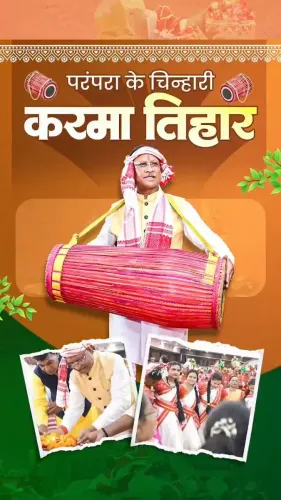
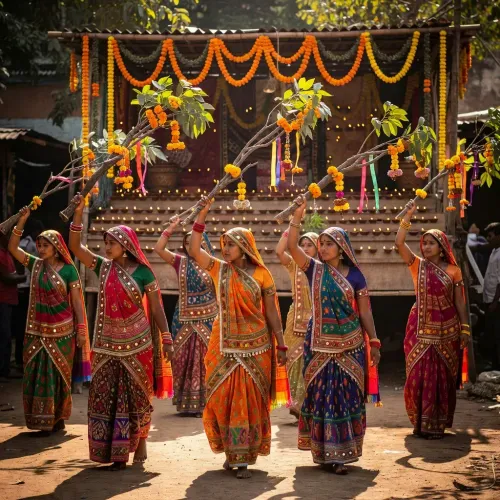
Karma Tihar is a traditional festival observed primarily by the tribal and indigenous communities of Chhattisgarh, Jharkhand, and adjoining regions. Centred on the worship of the Karma tree — associated with prosperity, good fortune, and the bond between siblings — the festival is typically celebrated on the eleventh day of the bright fortnight of the Bhadrapada month in the Hindu calendar. Young women perform rituals, songs, and dances around Karma branches planted in the earth, seeking blessings for their brothers and families.
In Chhattisgarh, where tribal communities account for over 30 percent of the population, Karma Tihar occupies a central place in the cultural calendar. The state has historically used the festival as a platform to reinforce the government's connect with its janjatiya (tribal) constituency.
The political and cultural stakes of a state-sponsored Tihar
Chief Minister Sai himself belongs to the Oraon tribal community, making his stewardship of this festival carry personal as well as political weight. His government has consistently framed tribal heritage preservation as a governance priority — and a state-level gathering at a major stadium is a visible, high-footfall demonstration of that commitment.
The emphasis on passing traditions to the 'next generation' is not incidental. Across India's tribal belts, festival-centred cultural transmission is increasingly seen as a bulwark against the erosion of indigenous languages, customs, and social structures — a concern that cuts across party lines but finds particular resonance in states where tribal welfare is both a constitutional obligation and an electoral imperative.
Karma Tihar 2026 in Raipur is a reminder that in Chhattisgarh, the cultural stage and the political stage often share the same floor — and for a Chief Minister from a tribal community, the Karma tree planted in the stadium is both a ritual act and a statement of governance.
Point of View
The government is aligning welfare-state signalling with a growing national conversation about protecting indigenous heritage. The venue choice — a large indoor stadium in the state capital — also reflects a deliberate strategy to urbanise and amplify tribal cultural events, pulling them from the periphery into the mainstream political and civic calendar. In a state where tribal voter blocs are decisive, cultural stewardship is governance.
NationPress
10 Oct 2026
Frequently Asked Questions
What is Karma Tihar and why is it celebrated?
Karma Tihar is a traditional festival of tribal and indigenous communities in Chhattisgarh and Jharkhand, centred on the worship of the Karma tree. It is observed for prosperity, the sibling bond, and community unity, typically on the eleventh day of the bright fortnight of Bhadrapada month.
Where was Karma Tihar 2026 celebrated in Raipur?
The state-level Karma Tihar 2026 celebration was held at Balbir Singh Juneja Indoor Stadium in Raipur, Chhattisgarh.
What did CM Vishnu Deo Sai say about Karma Tihar?
CM Vishnu Deo Sai said Karma Tihar is the symbol of Chhattisgarh's culture and identity, and that it binds tribal society in unity while also serving as a medium to pass on traditions and heritage to the next generation.
Is Vishnu Deo Sai from a tribal community?
Yes, Chief Minister Vishnu Deo Sai belongs to the Oraon tribal community, which gives his participation in Karma Tihar both personal and political significance.
What percentage of Chhattisgarh's population is tribal?
Tribal and indigenous communities account for over 30 percent of Chhattisgarh's population, making them a substantial demographic and a central focus of the state's cultural and welfare policies.