CM Shivakumar Inspects Safe Footpath Drive in Bengaluru
Synopsis
Karnataka CM D.K. Shivakumar personally inspected the 'Safe Footpath' drive in Bengaluru on 10 July 2026, with over 430 km of walkways reclaimed, 9,878 encroachments cleared, and designated vending zones planned for registered street vendors.
Key Takeaways
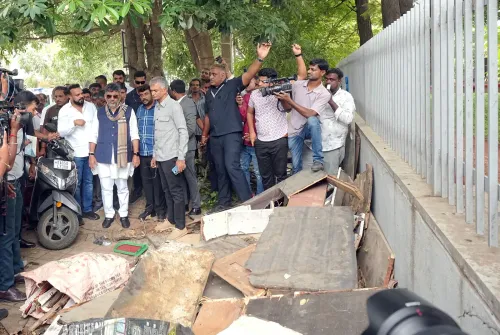
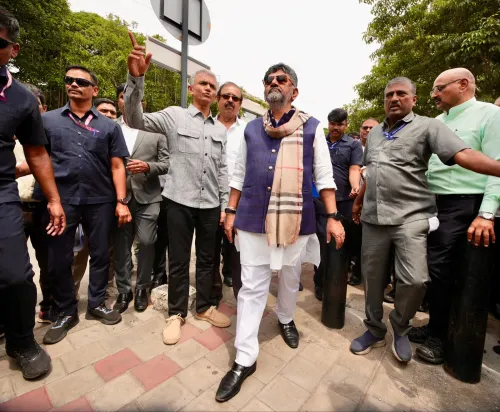
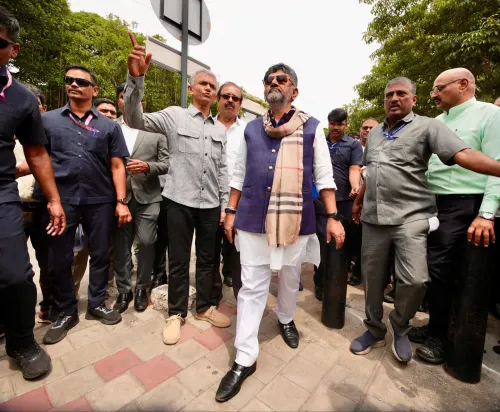
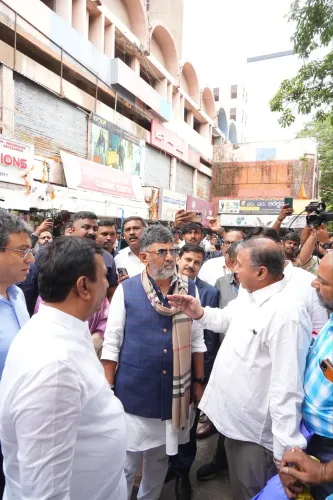
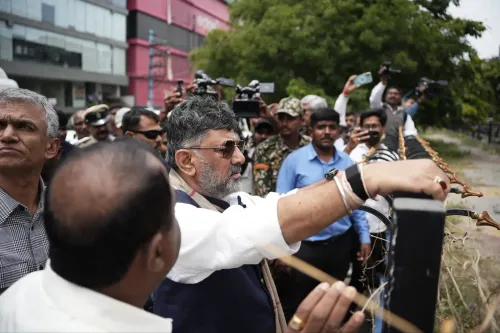
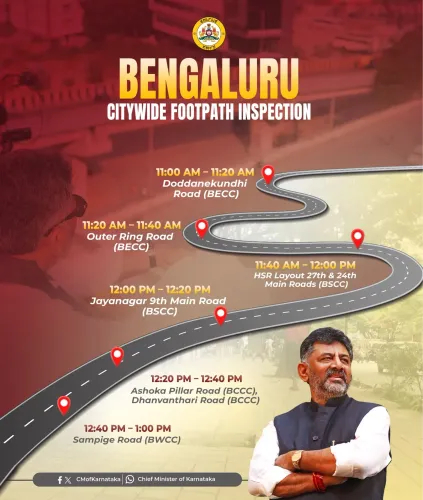
Shivakumar conducted a ground inspection of the Safe Footpath campaign at HAL Old Airport Road, HSR Layout, Jayanagar 4th Block , and Ashoka Pillar on 10 July 2026 .
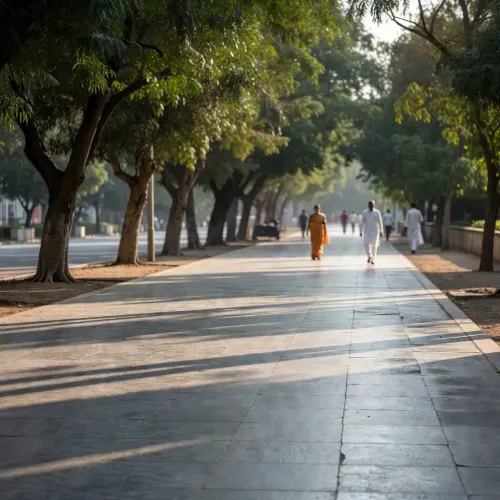
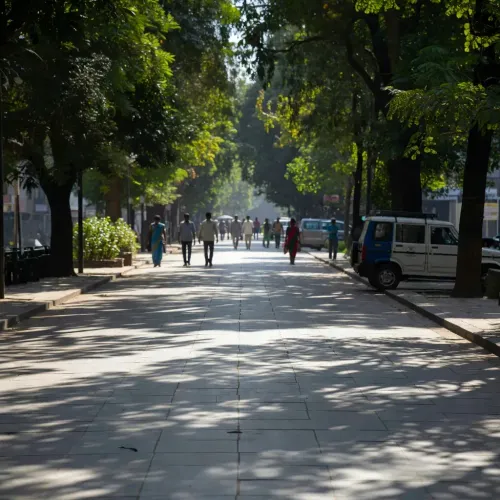
More than 430 kilometres of footpaths across Bengaluru have been cleared of encroachments under the campaign.
A total of 9,878 encroachments , including shop fronts occupying road space, have been removed so far.
Over 900 people died in Bengaluru over the past three years due to unsafe pedestrian conditions, cited as the key trigger for the drive.
The government will identify designated vending zones and distribute pushcarts to registered street vendors to protect their livelihoods.
The campaign will be intensified to also remove abandoned vehicles from footpaths, in compliance with Supreme Court of India directions.
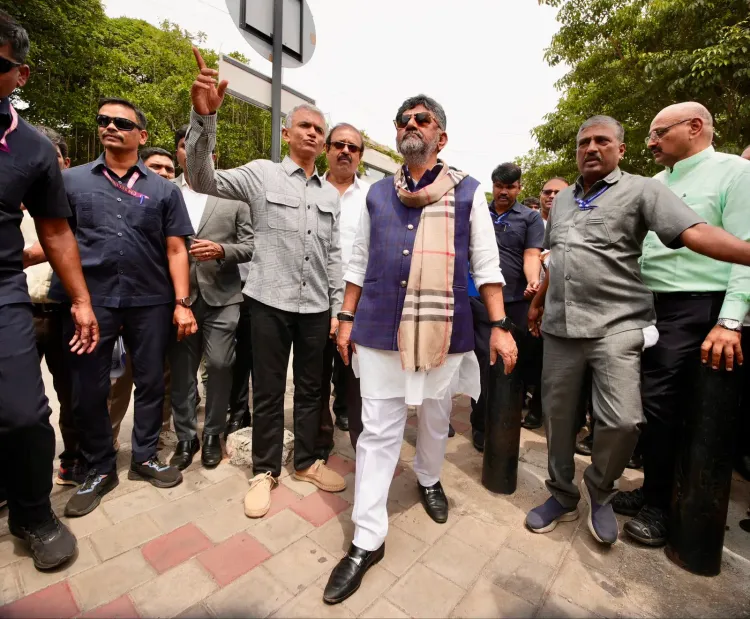
The Chief Minister's Office of Karnataka announced on Friday, 10 July 2026 that Chief Minister D.K. Shivakumar personally inspected ongoing footpath encroachment clearance and repair work across key areas of Bengaluru, including HAL Old Airport Road, HSR Layout, Jayanagar 4th Block, and Ashoka Pillar, accompanied by Bengaluru Development Minister Krishna Byregowda.
Context
The inspection was part of the 'Safe Footpath' (Surakshita Padachari Marga) campaign launched by the Bruhat Bengaluru Mahanagara Palike (BBMP) to reclaim pedestrian walkways from encroachers. The Chief Minister addressed the media at the sites, reaffirming the government's commitment to making Bengaluru 'cleaner, safer, and more beautiful' — ಸ್ವಚ್ಛ, ಸುರಕ್ಷಿತ ಹಾಗೂ ಸುಂದರ [clean, safe, and beautiful].
According to the official post, more than 430 kilometres of footpaths across the city have already been cleared of encroachments, and a total of 9,878 encroachments of various kinds — including shop fronts spilling onto roads — have been removed so far. The campaign is being driven under the direct leadership of Minister Krishna Byregowda.
Policy Backdrop
The drive comes in direct response to directions from the Supreme Court of India, which has repeatedly ordered municipal bodies to treat footpaths as non-negotiable pedestrian rights-of-way and to prevent their use as parking or commercial space. The government cited a grim statistic from the official post: more than 900 people lost their lives in Bengaluru over the past three years while crossing roads or walking in areas lacking proper footpaths.
Bengaluru has seen periodic anti-encroachment operations in its central business districts since the late 2010s, often triggered by public interest litigations. The current campaign represents a more citywide, sustained push, and fits within the broader national emphasis on walkability under urban development frameworks such as the Smart Cities Mission.
Stakeholders and Impact
While the drive is aimed squarely at improving pedestrian safety, the government has also committed to protecting the livelihoods of street vendors. The official post states that designated vending zones will be identified for registered vendors, and pushcarts will be distributed to them so their income is not disrupted. This dual approach seeks to balance enforcement with social equity.
The campaign's next phase will include the removal of abandoned vehicles left on footpaths across the city. Citizens, elected representatives, civic officials, and all stakeholders who have joined the initiative were commended by the Chief Minister's Office in the post.
What's Next
The government has signalled that the Safe Footpath campaign will be intensified in the coming days, with no exceptions made for any category of encroacher. Repair of damaged footpaths is also underway simultaneously, with the goal of making them fully usable for the public.
The rollout of designated vending zones and the distribution of pushcarts to registered street vendors will be a key measure of whether the government can sustain public support for the drive without triggering backlash from the informal economy. Progress reports to the Supreme Court of India may also shape the pace and scope of future enforcement.
Point of View
Or fades as previous anti-encroachment drives have, will be the real test of institutional will.
NationPress
10 Jul 2026
Frequently Asked Questions
What is the Safe Footpath campaign in Bengaluru?
The Safe Footpath ( Surakshita Padachari Marga ) campaign is a BBMP-led drive to clear encroachments from pedestrian walkways across Bengaluru, repair damaged footpaths, and restore them for public use, under the leadership of Bengaluru Development Minister Krishna Byregowda.
How many kilometres of footpaths have been cleared in Bengaluru so far?
According to the Chief Minister's Office, more than 430 kilometres of footpaths across Bengaluru have been freed from encroachments under the Safe Footpath campaign.
Why did the Karnataka government launch the footpath encroachment drive?
The drive was launched following Supreme Court of India directions on pedestrian safety, and in response to sustained public demand, after more than 900 people were reported to have died in Bengaluru over three years due to unsafe road-crossing and footpath conditions.
What will happen to street vendors removed during the Bengaluru footpath drive?
The Karnataka government has committed to identifying designated vending zones for registered street vendors and distributing pushcarts to them, so their livelihoods are not disrupted by the encroachment removal.
Which areas in Bengaluru were inspected by CM Shivakumar during the footpath campaign?
Chief Minister D.K. Shivakumar inspected footpath clearance and repair work at HAL Old Airport Road , HSR Layout , Jayanagar 4th Block , and Ashoka Pillar on 10 July 2026 .