CM Yogi Targets SP, Congress Over Ram Temple Obstruction
Synopsis
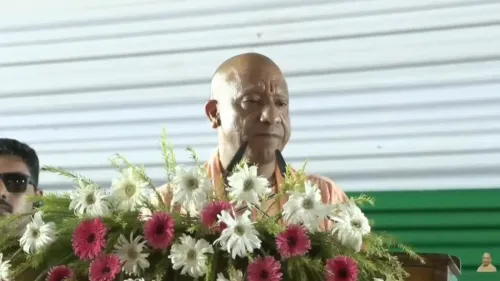
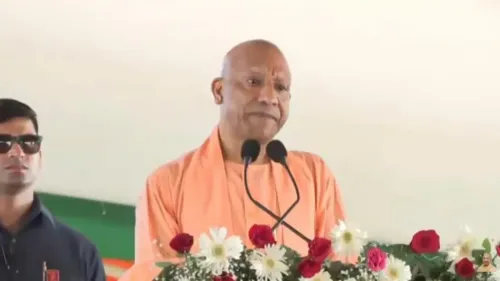
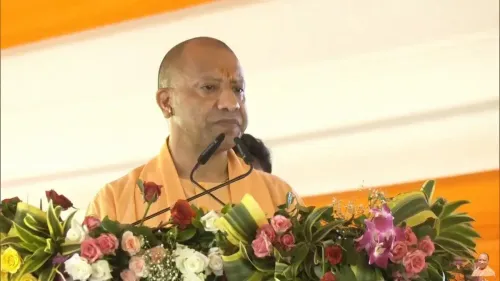
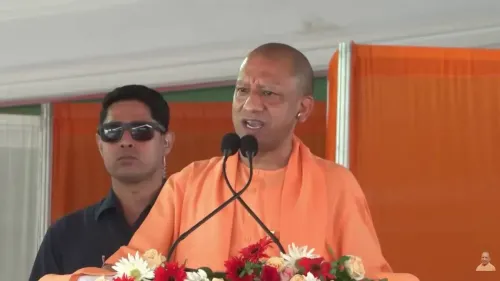
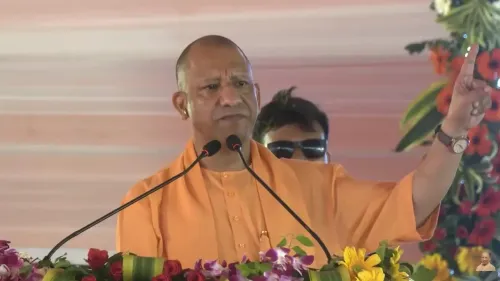
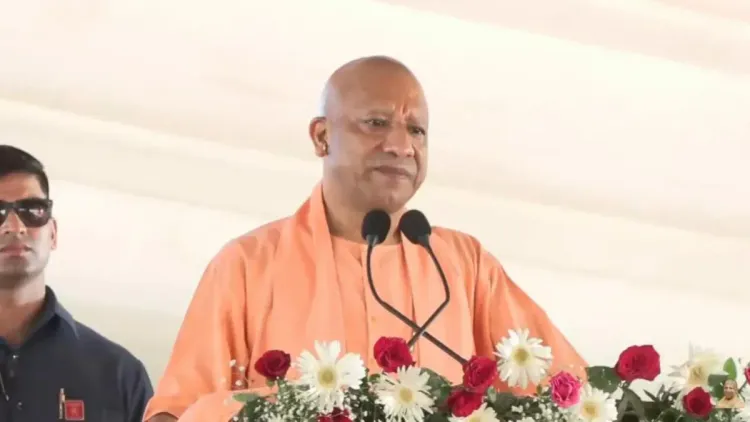
Uttar Pradesh Chief Minister Yogi Adityanath attacked the Samajwadi Party and Congress on 10 July 2026, accusing them of obstructing Ram Temple construction in Ayodhya and endangering devotees, while crediting the BJP-led double-engine government with completing the grand temple.
Key Takeaways
Yogi Adityanath accused the Samajwadi Party and Congress of creating obstacles in the construction of the Ram Temple in Ayodhya .
He alleged that these parties had 'bullets fired on Ram devotees' and tried to question the existence of Lord Ram — claims relating to disputed events of the 1990s .
He credited the BJP's double-engine government — aligned at both the state and central level — with completing the Ram Temple .
The Supreme Court cleared the way for temple construction in November 2019 ; the bhoomi pujan was held on 5 August 2020 .
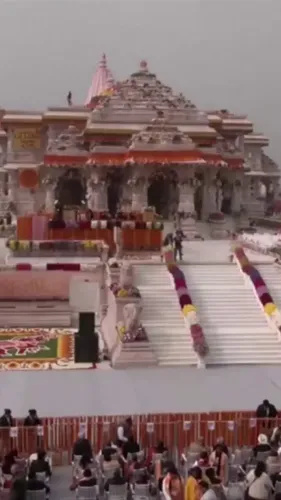
The temple was inaugurated by Prime Minister Narendra Modi and CM Yogi Adityanath on 22 January 2024 .
The remarks underscore the continued electoral salience of the Ayodhya temple issue in Uttar Pradesh politics.
Uttar Pradesh Chief Minister Yogi Adityanath on Friday, 10 July 2026, directly attacked the Samajwadi Party and the Indian National Congress, accusing both parties of obstructing the construction of the Ram Temple in Ayodhya and of actions that endangered the lives of Ram devotees. The remarks, posted on his official X account, drew a sharp contrast between what he described as the obstruction of previous governments and the delivery of the temple under the current BJP-led dispensation.
Context
In his post, Yogi Adityanath wrote in Hindi: 'Samajwadi Party aur Congress ke logon ne mandir nirman mein badha khadi ki' — 'People of the Samajwadi Party and Congress created obstacles in temple construction.' He further alleged that these parties 'tried to raise questions about Lord Ram' and 'had bullets fired on Ram devotees.' The Chief Minister then contrasted this with the present, stating that when the 'double-engine government' came to power, the 'grand temple of Lord Ram was built.'
The reference to bullets fired on Ram devotees is widely understood to allude to events during the Ayodhya movement of the early 1990s, a period of intense communal and political tension in Uttar Pradesh. Attribution of specific orders from that era remains contested in historical and judicial records, and the research notes that the specific claims of firing orders carry varying accounts across sources.
Policy Backdrop
The Ram Janmabhoomi dispute stretched across several decades, involving legal battles, political negotiations, and mass mobilisation. In November 2019, the Supreme Court of India delivered a unanimous verdict clearing the disputed site for temple construction and directing the allocation of the land to a trust for that purpose.
Prime Minister Narendra Modi performed the bhoomi pujan (ground-breaking ceremony) on 5 August 2020, laying the foundation stone of the temple. The Ram Temple in Ayodhya was then consecrated and inaugurated by Prime Minister Modi in the presence of Chief Minister Yogi Adityanath on 22 January 2024 — an event the BJP has consistently described as the fulfilment of a decades-long civilizational promise.
The 'double-engine government' formulation, frequently used by BJP leaders, refers to the alignment of the same party in power at both the state level in Uttar Pradesh and at the Centre in New Delhi, which the party argues enables faster policy and development outcomes.
Stakeholders and Impact
The remarks are directed at the political base of Ram devotees — a significant constituency in Uttar Pradesh, a state that sends 80 members to the Lok Sabha and has historically been a decisive battleground in national elections. By invoking the temple's completion, Yogi Adityanath reinforces the BJP's claim to be the sole political force that delivered on a promise that opposition parties allegedly delayed or opposed.
Both the Samajwadi Party and the Indian National Congress have faced this line of attack before, particularly during the 2024 Lok Sabha elections and the run-up to state assembly polls. The Samajwadi Party, founded by Mulayam Singh Yadav and now led by Akhilesh Yadav, governed Uttar Pradesh at various points during the dispute's history and has consistently denied obstructing the temple.
What's Next
Political observers note that the BJP's framing of the Ram Temple as a civilizational achievement is likely to remain a central pillar of its electoral narrative in Uttar Pradesh for the foreseeable future. With pending legal and political discussions around religious sites in Kashi and Mathura gaining attention in political circles, similar contrasts between BJP governance and opposition records may feature prominently in upcoming campaign cycles. Yogi Adityanath's post signals that the temple issue, far from receding after its completion, continues to serve as a live political instrument.
Point of View
The Chief Minister compresses decades of contested history into a clean before-and-after frame. This kind of messaging has proven durable in UP elections and is likely being stress-tested ahead of the next electoral cycle. The broader arc points to a BJP strategy of keeping the Ayodhya achievement perpetually active rather than treating it as a closed chapter.
NationPress
9 Oct 2026
Frequently Asked Questions
What did Yogi Adityanath say about SP and Congress and the Ram Temple?
Yogi Adityanath accused the Samajwadi Party and Congress of obstructing Ram Temple construction in Ayodhya, claiming they questioned Lord Ram and had bullets fired on devotees, while crediting the BJP-led double-engine government with completing the temple.
When was the Ram Temple in Ayodhya inaugurated?
The Ram Temple in Ayodhya was inaugurated on 22 January 2024 by Prime Minister Narendra Modi in the presence of Uttar Pradesh Chief Minister Yogi Adityanath.
What is the double-engine government Yogi Adityanath refers to?
The 'double-engine government' is a BJP term describing a situation where the same party governs both the state — in this case Uttar Pradesh — and the Centre, which the party argues enables faster delivery of development and policy outcomes.
What is the history of the Ram Janmabhoomi dispute?
The Ram Janmabhoomi dispute spanned several decades and involved legal battles and political mobilisation over the site in Ayodhya believed to be the birthplace of Lord Ram. The Supreme Court resolved it in November 2019, clearing the way for temple construction, and the foundation stone was laid on 5 August 2020.
Did the Samajwadi Party respond to Yogi Adityanath's allegations?
The Samajwadi Party has historically denied allegations of obstructing the Ram Temple; no specific response to this particular post was available at the time of publication.