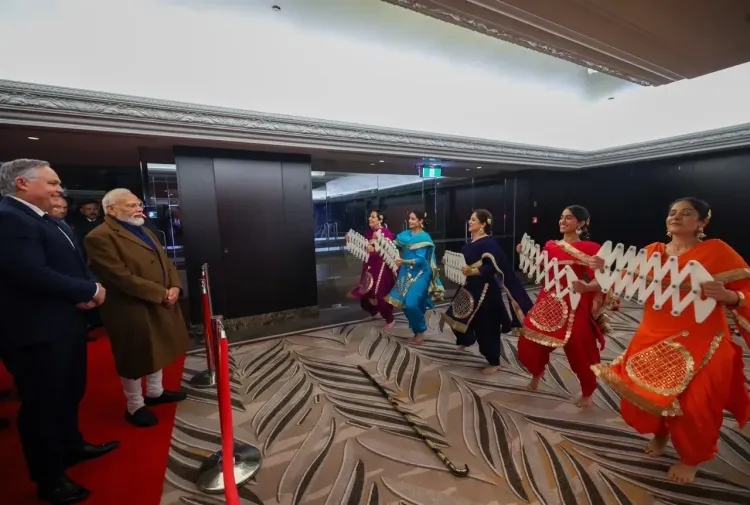
PM Modi attends cultural welcome by Indian diaspora in Auckland
Synopsis
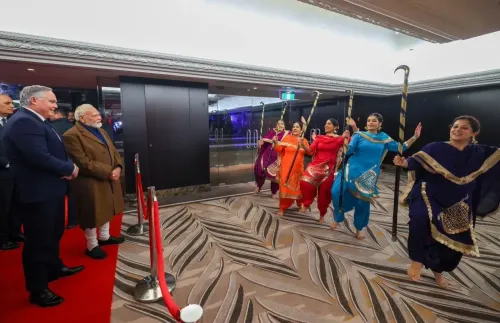
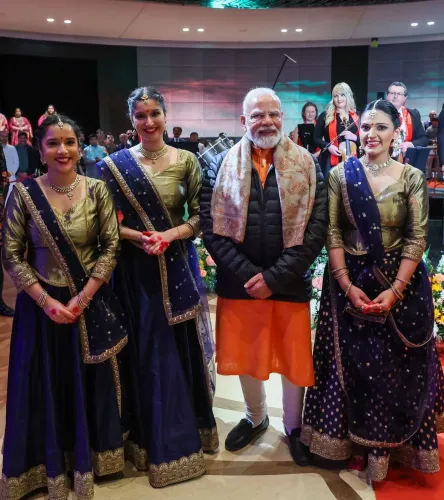
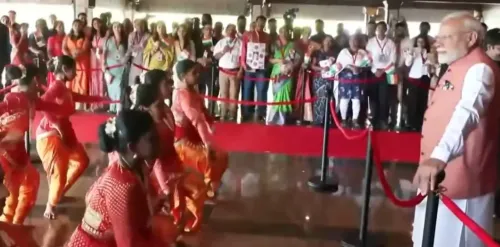
Prime Minister Narendra Modi attended a community welcome in Auckland on 10 July 2026, where the Indian diaspora performed Punjabi folk, Tamil classical arts, and a Carnatic-Hindustani fusion, closing with Vande Mataram. Modi praised the diaspora for keeping India's cultural heritage alive across generations and continents.
Key Takeaways
Prime Minister Narendra Modi attended a diaspora community welcome in Auckland, New Zealand on 10 July 2026 .
Performances spanned Punjab folk traditions, Tamil Nadu classical arts, and a fusion of Carnatic and Hindustani classical music .
The event concluded with a rendition of Vande Mataram , described by Modi as 'stirring.' Modi publicly complimented the diaspora for sustaining India's cultural heritage 'across generations and continents.' The event reinforces India's use of cultural diplomacy to strengthen people-to-people ties during high-level bilateral visits.
India and New Zealand have maintained diplomatic relations since 1950 , with the relationship anchored in trade, education, and community links.
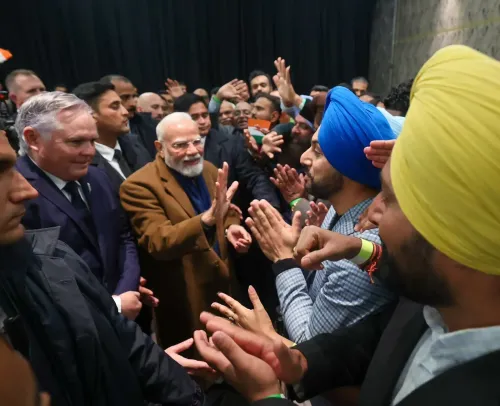
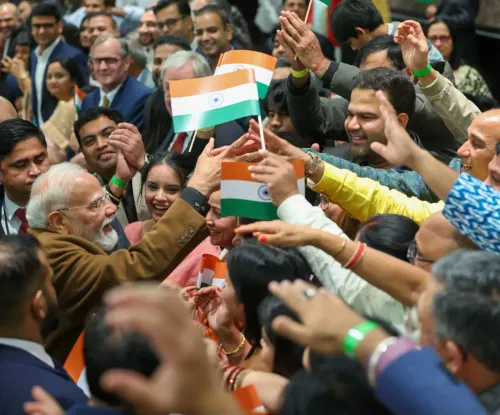
Prime Minister Narendra Modi attended a community welcome event in Auckland, New Zealand, on the evening of Friday, 10 July 2026, where members of the Indian diaspora presented a vibrant showcase of India's regional and classical cultural traditions.
What unfolded at the Auckland event
The gathering featured performances rooted in the folk traditions of Punjab and the classical heritage of Tamil Nadu, alongside a fusion of Carnatic and Hindustani classical music. The evening concluded with a rendition of Vande Mataram, India's national song, which Prime Minister Modi described as 'stirring.' Posting on X, the Prime Minister said he was 'delighted to witness a vibrant celebration of India's rich cultural heritage' at the event.
Modi specifically complimented the diaspora 'for keeping India's cultural heritage vibrant across generations and continents and for strengthening the enduring people-to-people bonds between India and New Zealand.' The event brought together community members from across Auckland, home to one of New Zealand's largest concentrations of Indian settlers.
Context
India and New Zealand established diplomatic relations in 1950, with the bilateral relationship anchored in trade, education, and people-to-people links. Auckland's Indian community represents a significant bridge between the two nations, sustaining cultural, linguistic, and economic connections across decades of migration.
The Indian Council for Cultural Relations, founded in 1950, has long promoted performances of Indian classical and regional arts at overseas diplomatic events, lending institutional weight to the kind of cultural showcase witnessed in Auckland. Blending regional styles — from Punjab's folk energy to Tamil Nadu's Carnatic rigour — with a unifying national symbol such as Vande Mataram reflects a deliberate emphasis on India's civilisational diversity and unity.
Policy backdrop
India's foreign policy has consistently deployed diaspora cultural events as instruments of soft power during high-level visits, using community gatherings to reinforce official bilateral messaging. The Auckland welcome fits a broader pattern of Indian outreach to Pacific nations that host settled Indian communities, where cultural diplomacy complements formal government-to-government engagement.
The performances spanning Punjab and Tamil Nadu — two states with large overseas populations — signal an inclusive projection of Indian identity that resonates with diaspora members from diverse linguistic and regional backgrounds. Such events also serve a domestic audience, reinforcing the government's narrative of a globally connected Indian civilisation.
Stakeholders and impact
The Indian diaspora in New Zealand stands as the most immediate stakeholder, receiving direct acknowledgement from the Prime Minister for sustaining cultural traditions abroad. Cultural performers who showcased Punjabi folk, Tamil classical dance, and the Carnatic-Hindustani fusion earned a public compliment from the country's top elected official.
For the bilateral relationship, such high-visibility community moments generate goodwill that can translate into smoother negotiations on education partnerships, trade frameworks, and mobility agreements. The event signals to New Zealand that India views the diaspora as a living asset in the relationship, not merely a consular constituency.
What's next
The remainder of Prime Minister Modi's New Zealand visit is expected to include formal government engagements where announcements on education or trade cooperation may follow. Community and cultural events organised by Indian groups in New Zealand are likely to continue through the visit, sustaining the people-to-people dimension alongside official diplomatic activity. The Auckland welcome sets a tone of warmth that typically precedes substantive bilateral deliverables.
Point of View
Projecting an image of a globally celebrated Indian civilisation. If substantive announcements on trade or education follow, the cultural warmth generated in Auckland will have laid the diplomatic groundwork.
NationPress
10 Jul 2026
Frequently Asked Questions
Why did PM Modi visit Auckland in July 2026?
Prime Minister Narendra Modi was in Auckland as part of a bilateral visit to New Zealand , during which he attended a community welcome hosted by the Indian diaspora on 10 July 2026 .
What performances were shown at the Auckland diaspora event?
The event featured performances rooted in Punjab folk traditions, Tamil Nadu classical arts, a fusion of Carnatic and Hindustani classical music , and a rendition of Vande Mataram .
What did PM Modi say about the Indian diaspora in New Zealand?
Modi complimented the diaspora 'for keeping India's cultural heritage vibrant across generations and continents and for strengthening the enduring people-to-people bonds between India and New Zealand.'
How large is the Indian community in New Zealand?
Auckland is home to one of New Zealand's largest Indian diaspora communities, which has sustained cultural, linguistic, and economic ties with India across decades of migration.
What is India's diplomatic relationship with New Zealand?
India and New Zealand established diplomatic relations in 1950 , with the bilateral relationship focused on trade, education, and people-to-people links, reinforced by a significant Indian diaspora presence.