Giriraj Singh greets tribal communities on World Indigenous Peoples Day
Synopsis
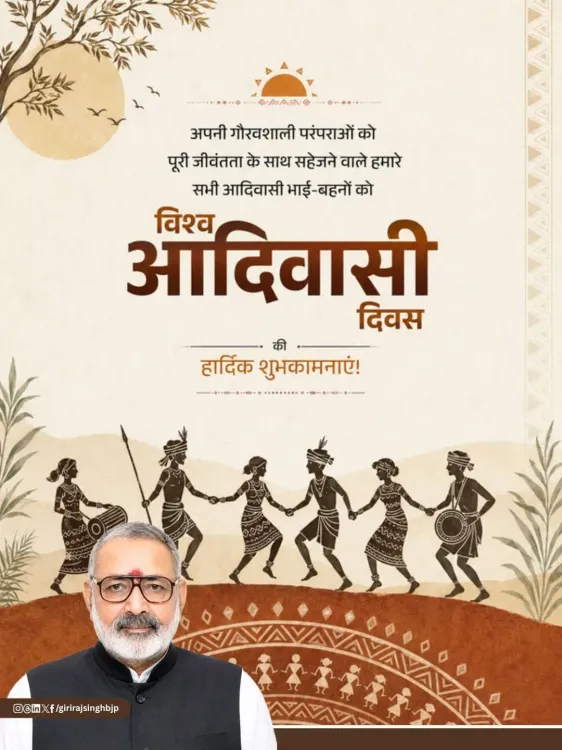
Union Textiles Minister Giriraj Singh marked World Indigenous Peoples Day on 9 August 2026 with a Hindi message honouring tribal communities for preserving India's culture, folk arts, and ecological heritage, and called for renewed commitment to their welfare and rights.
Key Takeaways
Giriraj Singh posted greetings on World Indigenous Peoples Day, 9 August 2026 , addressing all Adivasi communities in India.
He highlighted tribal contributions to nature conservation, environmental balance, and cultural heritage as 'unforgettable'.
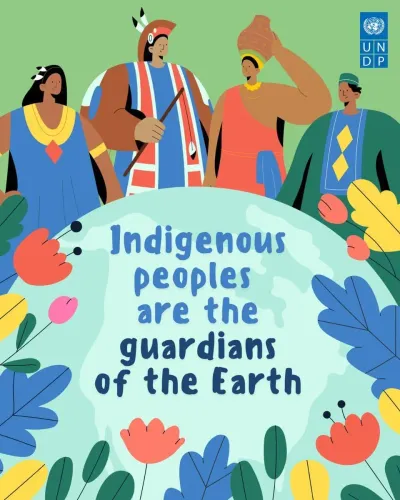
The International Day of the World's Indigenous Peoples has been observed annually on 9 August since 1994 , established by the United Nations.
India's tribal protections include the Fifth and Sixth Schedules of the Constitution and the Forest Rights Act, 2006 .
The Ministry of Tribal Affairs , set up in 2003 , coordinates national welfare and development programmes for scheduled tribes.
Every year on 9 August, the world pauses to recognise the peoples who have been its oldest stewards — and this year, Union Textiles Minister Giriraj Singh used the occasion of World Indigenous Peoples Day to salute India's tribal communities for their irreplaceable role in preserving culture, ecology, and living heritage.
Posting in Hindi on Sunday, 9 August 2026, Singh extended warm greetings to all Adivasi brothers and sisters, writing: 'Apni gauravshali paramparaon, samridh sanskriti aur jeevant lok-kalaon ko sahejne wale hamare sabhi aadivasi bhai-bahnon ko Vishwa Aadivasi Diwas ki hardik shubhkamnayen!' — 'Heartfelt greetings on World Indigenous Peoples Day to all our tribal brothers and sisters who safeguard our glorious traditions, rich culture, and vibrant folk arts!'
He went further, calling the tribal community's contribution to nature conservation, environmental balance, and cultural heritage 'unforgettable', and called on the nation to renew its commitment to tribal welfare, upliftment, and rights protection on this occasion.
A day with deep UN roots — and Indian resonance
The International Day of the World's Indigenous Peoples has been observed every 9 August since 1994, when the United Nations established it to raise global awareness of indigenous peoples' rights and contributions. In India, where scheduled tribes number in the tens of millions and span hundreds of distinct communities, the day carries particular weight — both as a moment of cultural pride and as a political prompt to revisit welfare commitments.
India's constitutional architecture for tribal protection is layered: the Fifth and Sixth Schedules of the Constitution carve out special governance provisions for tribal areas, while the Scheduled Tribes and Other Traditional Forest Dwellers (Recognition of Forest Rights) Act, 2006 formally recognised traditional rights over forest land and resources — rights that tribal communities had exercised for generations before the law caught up.
What Singh's message signals in the political calendar
Senior leaders across party lines issue messages on this date each year, but Singh's framing — emphasising folk arts, ecological balance, and rights protection in a single breath — reflects the BJP's sustained effort to deepen its connect with tribal constituencies, which have grown increasingly pivotal in state assembly elections across Jharkhand, Chhattisgarh, Madhya Pradesh, and Odisha.
The Ministry of Tribal Affairs, established in 2003, coordinates welfare and development programmes for scheduled tribes nationally. Any follow-up from that ministry on scheme updates or legislative priorities will indicate whether today's message is the start of a broader policy push or a standalone observance.
For now, the minister's call to 'resolve to protect tribal rights' lands as both tribute and challenge — one that India's policy machinery will be measured against long after the day's greetings fade.
Point of View
And the BJP has invested heavily in consolidating that base. By weaving together cultural pride, ecological stewardship, and rights protection, the minister signals a three-dimensional pitch — identity, environment, and governance — rather than a single welfare plank. The real test will be whether the messaging translates into legislative or budgetary action from the Ministry of Tribal Affairs in the months ahead.
NationPress
23 Sept 2026
Frequently Asked Questions
What is World Indigenous Peoples Day and when is it observed?
World Indigenous Peoples Day, formally the International Day of the World's Indigenous Peoples, is observed every year on 9 August . The United Nations established it in 1994 to raise awareness of indigenous peoples' rights and contributions globally.
What did Giriraj Singh say on World Indigenous Peoples Day 2026?
Union Textiles Minister Giriraj Singh extended greetings to all tribal communities, praised their 'unforgettable' contributions to nature conservation, environmental balance, and cultural heritage, and called on the nation to commit to tribal welfare, upliftment, and rights protection.
What legal protections exist for tribal communities in India?
India's tribal communities are protected under the Fifth and Sixth Schedules of the Constitution and the Scheduled Tribes and Other Traditional Forest Dwellers (Recognition of Forest Rights) Act, 2006 , which recognises traditional rights over forest land and resources.
Which ministry handles tribal welfare in India?
The Ministry of Tribal Affairs , established in 2003 , is the central government ministry responsible for coordinating welfare, development, and rights protection for scheduled tribes across India.
Why do Indian leaders issue messages on 9 August each year?
9 August is the UN-designated World Indigenous Peoples Day, and Indian leaders across parties use the occasion to acknowledge tribal communities' cultural and ecological contributions and to reaffirm government commitments to scheduled tribe welfare and constitutional protections.