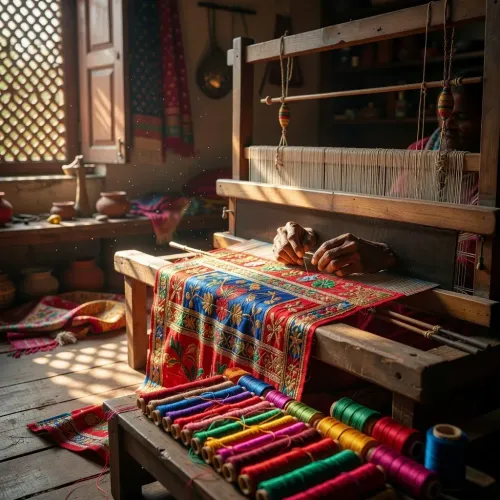
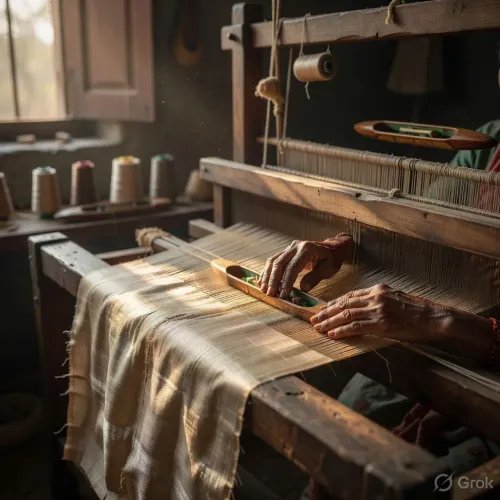
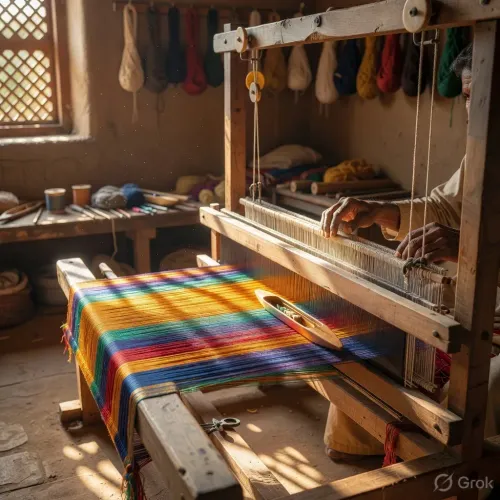
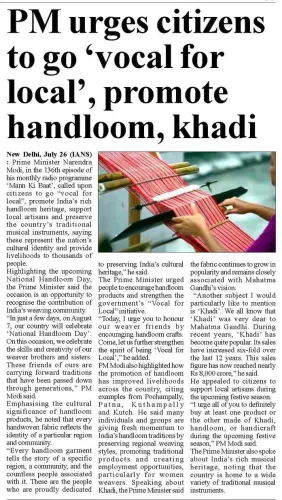
Giriraj Singh spotlights Bichitrapuri saree, Odisha's double ikat heritage
Synopsis
Union Textiles Minister Giriraj Singh spotlighted the Bichitrapuri saree of Odisha on 22 July 2026, praising its double ikat weaving, checked designs, and nature-inspired motifs as a mark of unparalleled artisan skill — amplifying the Vocal for Local push ahead of National Handloom Day.
Key Takeaways
Union Textiles Minister Giriraj Singh highlighted the Bichitrapuri saree of Odisha on 22 July 2026 .
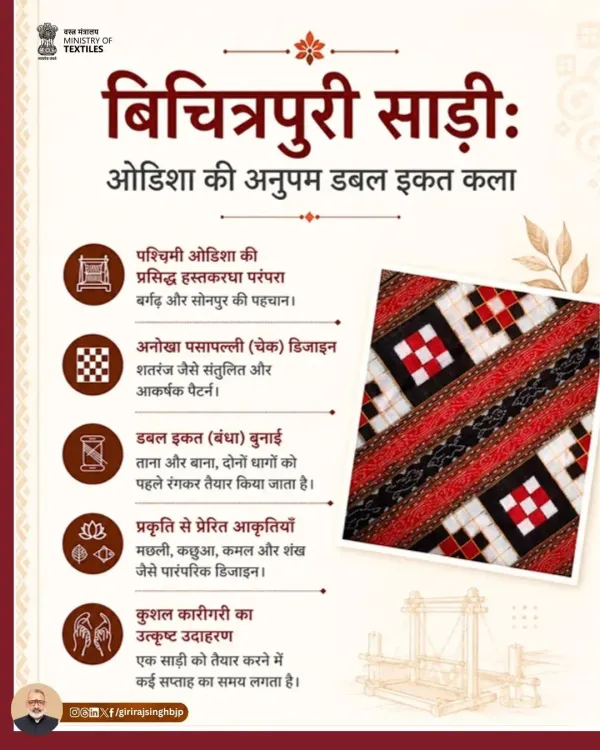
The saree is distinguished by its double ikat weaving technique , chaukhanedaar (checked) designs, and nature-inspired traditional motifs.
The minister emphasised the time and labour involved in crafting each piece as a reflection of artisans' 'unparalleled skill'.
The post was part of the #VocalForLocal campaign, launched in 2020 under the Atmanirbhar Bharat package to boost indigenous product consumption.
National Handloom Day is observed on 7 August every year since 2015 , providing a recurring platform for such outreach.
Odisha is a major handloom state with multiple GI-tagged weave categories and longstanding artisan clusters.
Union Textiles Minister Giriraj Singh on Wednesday, 22 July 2026 highlighted the Bichitrapuri saree of Odisha, calling it a 'beautiful example' of the state's rich weaving tradition and the extraordinary skill of its weavers.
Context
In a post on X, the minister wrote in Hindi: 'Bichitrapuri saari Odisha ki samriddh bunai parampara aur bunakaron ki adbhut kala ka sundar udaharan hai' — 'The Bichitrapuri saree is a beautiful example of Odisha's rich weaving tradition and the extraordinary art of its weavers.' He drew attention to three defining features of the textile: its double ikat weaving technique, its distinctive checked (chaukhanedaar) designs, and its nature-inspired traditional motifs.
The minister also noted that the time and labour invested in crafting each individual saree reflects the 'unparalleled skill' of India's artisans. The post was tagged with #VocalForLocal, #Handloom, #Textiles, #Odisha, and #IndianTextiles.
Policy Backdrop
The Vocal for Local campaign was launched in 2020 as part of the Atmanirbhar Bharat package to encourage domestic consumption of indigenous products, including handlooms and handicrafts. Ministerial social media posts championing state-specific weaves have become a consistent feature of the Ministry of Textiles' outreach strategy, aimed at building demand and visibility for artisan clusters.
National Handloom Day has been observed annually on 7 August since 2015, providing a recurring platform to honour weavers and spotlight regional textile traditions. The Bichitrapuri saree, known for its double ikat technique — where both warp and weft threads are resist-dyed before weaving — is among the more technically demanding varieties produced in Odisha, a state with longstanding handloom clusters and multiple geographically indicated weave categories.
Successive governments have linked cultural preservation of regional weaves to economic programmes covering market access, branding, and export promotion. Geographical Indication (GI) tagging and cluster development efforts, which gained momentum in the early 2000s, have been central to this approach.
Stakeholders and Impact
Odisha's handloom weavers and traditional artisans stand at the centre of this spotlight. The double ikat process is labour-intensive and time-consuming, making each finished saree a product of significant craft investment. Visibility generated through ministerial platforms can translate into domestic market interest and support for artisan livelihoods.
The broader handloom sector in India employs millions of weavers, with Odisha being one of the key contributing states. Promotional activity by the Ministry of Textiles intersects with ongoing efforts to connect weavers to national expos, buyer-seller meets, and e-commerce platforms to expand their market reach.
What's Next
The ministry's focus on Odisha's weaving heritage may signal increased participation of Odisha handloom clusters in upcoming national textile expos and buyer-seller events in the current fiscal year. As National Handloom Day on 7 August approaches, further ministerial communication around regional weave traditions and artisan welfare schemes is expected. The sustained emphasis on Vocal for Local and GI-tagged textiles suggests that policy support for clusters like those producing Bichitrapuri sarees will remain a priority for the ministry.
Point of View
The timing is deliberate, part of a calendar-driven outreach cycle the ministry has maintained since 2015. The Vocal for Local framing also keeps the Atmanirbhar Bharat narrative active at the ground level without requiring a formal policy announcement. Sustained ministerial attention to Odisha's weaving clusters could foreshadow increased allocation or participation in upcoming national textile events.
NationPress
21 Oct 2026
Frequently Asked Questions
What is the Bichitrapuri saree?
The Bichitrapuri saree is a traditional handloom saree from Odisha, known for its double ikat weaving technique, distinctive checked designs, and nature-inspired motifs. It is one of the more labour-intensive varieties of Odisha's celebrated weaving tradition.
What is double ikat weaving?
Double ikat is a weaving technique in which both the warp and weft threads are resist-dyed in precise patterns before being woven together on a loom. It requires exceptional skill and planning, as the final design emerges only when the threads are perfectly aligned during weaving.
Why did Giriraj Singh post about the Bichitrapuri saree?
As Union Textiles Minister, Giriraj Singh regularly highlights regional handloom traditions on social media as part of the government's Vocal for Local campaign, which encourages domestic consumption of indigenous products including handlooms.
What is the Vocal for Local campaign?
Vocal for Local is a campaign launched in 2020 under the Atmanirbhar Bharat package to promote domestic products and reduce dependence on imports. It has been widely applied to the handloom and handicraft sectors to boost artisan livelihoods.
When is National Handloom Day in India?
National Handloom Day is observed every year on 7 August. It has been celebrated since 2015 to honour India's weaving community and promote the cultural and economic importance of the handloom sector.