Giriraj Singh writes on handloom as India's economic backbone
Synopsis
On National Handloom Day 2026, Union Textiles Minister Giriraj Singh published an op-ed in Hindustan linking India's handloom sector to rural livelihoods, women's empowerment, and the Atmanirbhar Bharat agenda, while outlining how technology and market access are being used to make weavers globally competitive.
Key Takeaways
National Handloom Day is observed on 7 August every year since 2015 , marking the centenary of the Swadeshi movement.
Union Textiles Minister Giriraj Singh published a full op-ed in Hindustan on the occasion, outlining the sector's policy direction.
The article frames handloom as a pillar of Atmanirbhar Bharat , rural livelihoods, women's empowerment, and sustainable development.
Technology, innovation, skill development, and improved market access are cited as the key levers being deployed under PM Modi 's leadership.
Women artisans form the core of the handloom workforce and are a stated priority in the sector's promotion strategy.
Upcoming Union Budget allocations and international textile fairs are the next concrete tests for the policy commitments outlined.
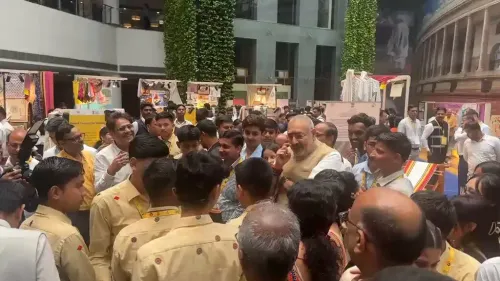
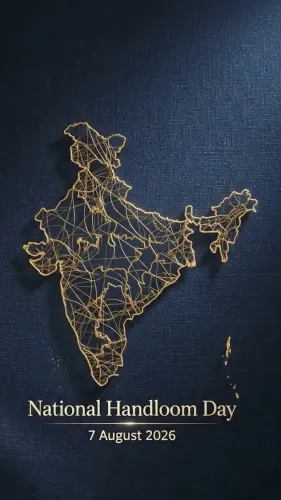
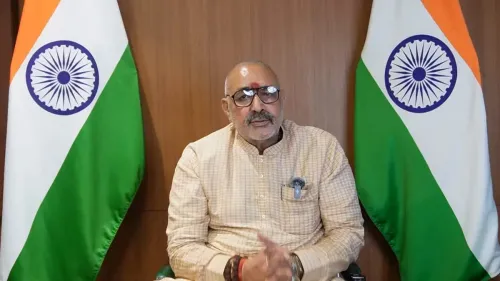
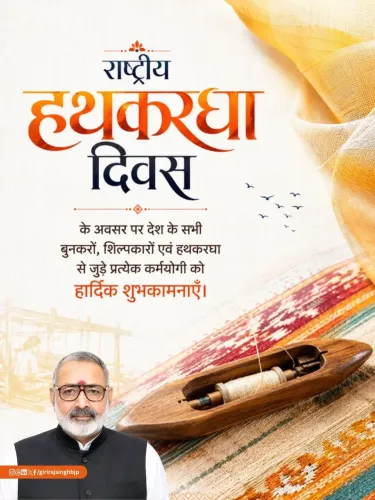
On National Handloom Day, 7 August 2026, Union Textiles Minister Giriraj Singh published an op-ed in Hindustan arguing that India's handloom sector is far more than a cultural relic — it is, in his framing, the living spine of rural livelihoods, women's empowerment, and the Atmanirbhar Bharat mission.
Writing on the occasion of #NationalHandloomDay2026, Singh described the handloom industry as 'करोड़ों लोगों की आजीविका, महिला सशक्तिकरण, सतत विकास और आत्मनिर्भर भारत का मजबूत आधार' — 'the strong foundation of the livelihoods of crores of people, women's empowerment, sustainable development, and a self-reliant India.' The piece, he said, outlines how technology, innovation, skill development, and improved market access are being deployed to give the sector fresh momentum under Prime Minister Narendra Modi's leadership.
A day rooted in the Swadeshi century
National Handloom Day has been observed every 7 August since 2015, when the government instituted it to mark the centenary of the Swadeshi movement — the 1905 mass campaign that turned hand-woven cloth into an act of national assertion. The date is deliberate: it anchors a contemporary economic agenda to one of the most emotionally charged chapters in India's freedom struggle. For the weavers it honours, the symbolism is inseparable from the subsidy, the cluster support, and the export opportunity.
Technology and market access as the new shuttle
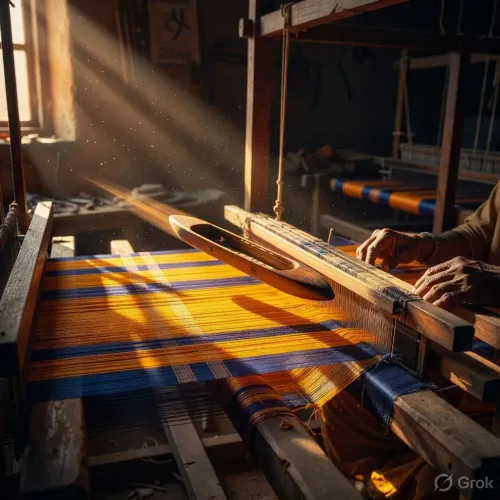
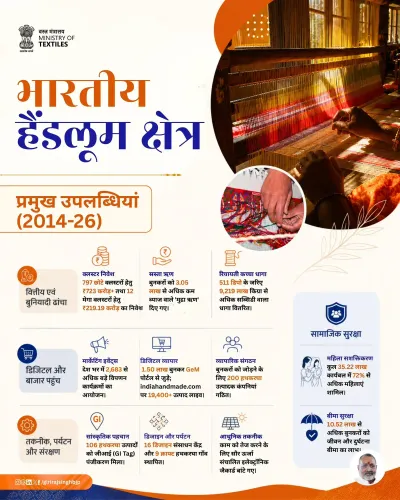
The National Handloom Development Programme, running in various forms since the early 2000s, has channelled support into weaver clusters, yarn supply chains, and market linkages. Under the Atmanirbhar Bharat framework launched in 2020, that support has been recast with a sharper emphasis on digital platforms and global competitiveness — positioning a craft once defined by its resistance to industrialisation as a potential export engine. Singh's article, by his own account, maps that transformation: how a loom that once defied colonial mills is now being equipped to compete on international textile fair floors.
Women weavers at the centre of the argument
Women artisans form the majority of India's handloom workforce, and Singh's framing — placing women's empowerment alongside livelihood and sustainability — reflects a consistent policy thread in the sector's recent promotion. Skill development schemes targeting women in weaver households have been a recurring component of handloom budgets, and the minister's op-ed appears to reinforce that emphasis on the sector's most visible human face.
With the next Union Budget's handloom allocations and India's participation in upcoming international textile fairs both on the horizon, the minister's public argument for the sector carries a timing that is anything but accidental. The loom, Singh is saying, is ready for the world stage. Whether the policy architecture catches up is the question that follows.
Point of View
The minister aligns handloom promotion with the BJP government's two most durable domestic narratives. The emphasis on technology and global competitiveness signals an intent to shift the sector's identity from heritage preservation to export ambition. How that ambition translates into allocations and on-the-ground cluster support will determine whether the op-ed is a policy signal or a ceremonial gesture.
NationPress
22 Sept 2026
Frequently Asked Questions
Why is National Handloom Day celebrated on 7 August?
7 August was chosen to mark the centenary of the Swadeshi movement launched in 1905, which made hand-woven cloth a symbol of national resistance. The government instituted the annual observance in 2015 to honour weavers and highlight the sector's economic importance.
What did Giriraj Singh write in his National Handloom Day article?
Union Textiles Minister Giriraj Singh published an op-ed in Hindustan on 7 August 2026 arguing that India's handloom sector is a foundation for rural livelihoods, women's empowerment, sustainable development, and the Atmanirbhar Bharat mission, and describing how technology and market access are being used to make weavers globally competitive.
What is Atmanirbhar Bharat and how does it relate to handloom?
Atmanirbhar Bharat is a self-reliance campaign launched in 2020 that includes support for traditional industries including handloom, using digital platforms, skill development, and export promotion to position indigenous crafts as both cultural assets and sources of rural employment.
What government schemes support handloom weavers in India?
The National Handloom Development Programme has provided support for weaver clusters, yarn supply, and market access since the early 2000s. Under Atmanirbhar Bharat , additional emphasis has been placed on technology upgrades, skill development, and digital market linkages for weavers.
What is the role of women in India's handloom sector?
Women artisans form the majority of India's handloom workforce. Government policy, including the schemes highlighted by Minister Giriraj Singh , has consistently targeted women in weaver households through skill development programmes, making women's empowerment a central pillar of handloom sector promotion.