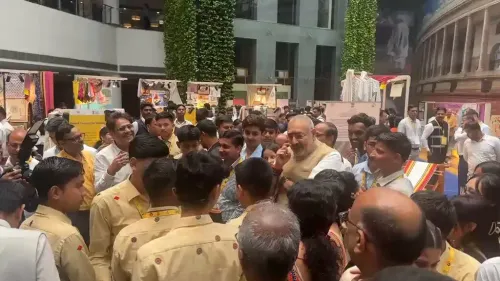
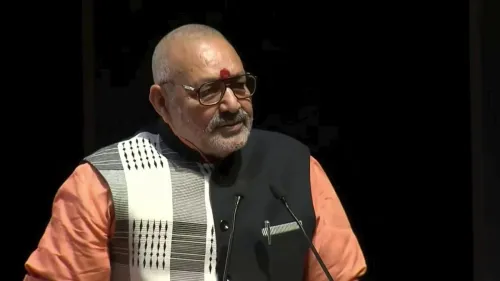
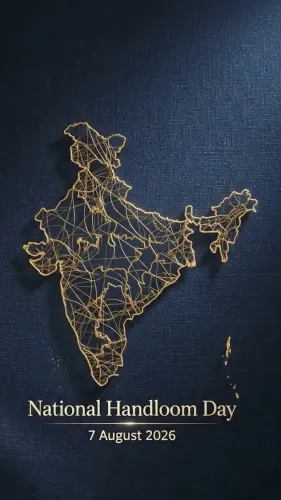
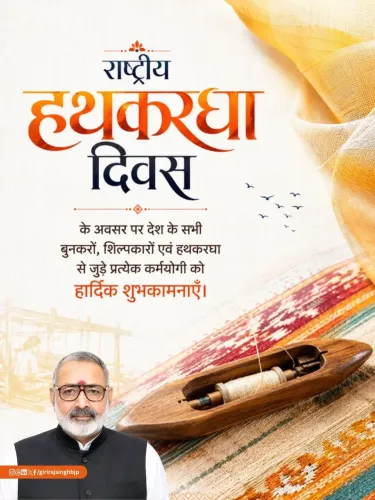
Kishan Reddy amplifies Giriraj Singh's handloom vision on National Day
Synopsis
On National Handloom Day 2026, Union Minister G. Kishan Reddy amplified Textiles Minister Giriraj Singh's op-ed arguing India's handloom traditions can power a globally competitive creative economy, linking the sector to women-led rural development and the Viksit Bharat 2047 vision.
Key Takeaways
National Handloom Day is observed on 7 August each year since 2015 , marking the anniversary of the 1905 Swadeshi Movement.
Union Textiles Minister Giriraj Singh authored an op-ed framing handloom as 'one of India's greatest civilisational strengths.' The article advocates for Handloom 4.0 — a technology-driven modernisation of the sector — and women-led rural entrepreneurship.
The handloom push is explicitly tied to the government's Viksit Bharat goal of a developed India by 2047 .
Kishan Reddy shared the piece, illustrating cross-ministerial amplification of cultural-economy narratives.
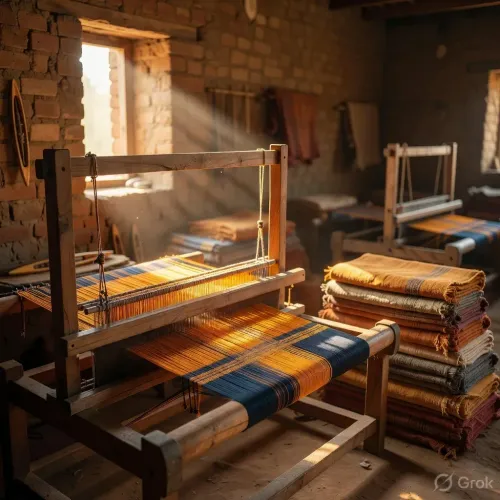
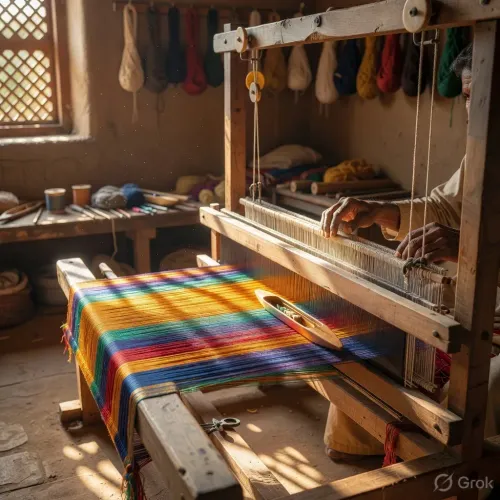
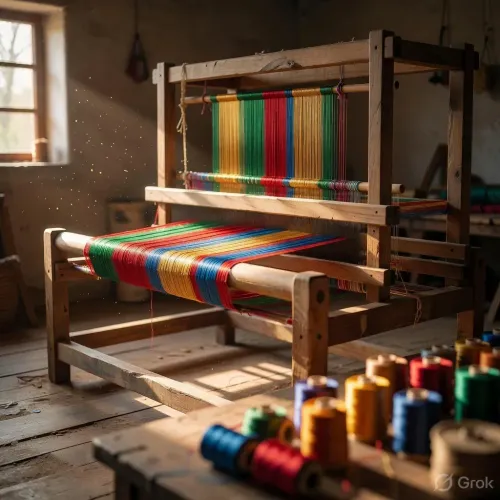
On National Handloom Day, 7 August 2026, Union Coal and Mines Minister G. Kishan Reddy used his platform to spotlight a sweeping vision for India's handloom sector — sharing an op-ed by Union Textiles Minister Giriraj Singh that frames the ancient craft not as a relic, but as the foundation of a globally competitive creative economy.
What Giriraj Singh's article argues
Reddy quoted the piece directly: 'Handloom is not merely a craft, but one of India's greatest civilisational strengths.' The op-ed, authored by Singh, charts a roadmap that runs from empowering weavers and rural women to what it calls Handloom 4.0 — a technology-forward modernisation push — and positions the sector as central to the Viksit Bharat vision of a developed India by 2047.Why 7 August carries weight
The date is not incidental. The Government of India instituted National Handloom Day on 7 August in 2015, choosing it to commemorate the Swadeshi Movement launched on the same date in 1905 — a moment when handloom became a symbol of economic self-determination. That historical echo is deliberate: successive administrations have woven together heritage, rural livelihoods, and the self-reliance narrative into handloom policy through GI tagging, technology upgradation funds, and export incentives.Cross-ministerial amplification and Brand India
Reddy's post is itself a signal — a Coal and Mines minister lending visibility to a Textiles minister's argument illustrates how the ruling coalition deploys cross-ministerial amplification on cultural-economy themes. The op-ed's emphasis on women-led rural entrepreneurship and a stronger Brand India in global markets reflects a continuing policy thread that links India's craft traditions directly to employment generation and export ambition. The handloom sector, spread across states from Assam to Andhra Pradesh to Uttar Pradesh, has historically been one of the largest unorganised employers in rural India. The kicker is in the framing itself: when two Union ministers align on the same day to call a loom a geopolitical asset, the sector's place in India's economic storytelling is no longer a footnote.Point of View
More consequential test for any government programme. Whether the rhetoric translates into measurable gains in weaver incomes and global market share will be the real verdict.
NationPress
22 Sept 2026
Frequently Asked Questions
Why is National Handloom Day celebrated on 7 August?
National Handloom Day is observed on 7 August to mark the anniversary of the Swadeshi Movement launched on that date in 1905 , during which handloom became a symbol of economic self-reliance against colonial trade policies. The Government of India instituted the observance in 2015 .
What is Handloom 4.0?
Handloom 4.0 is a term used in Giriraj Singh 's op-ed to describe a technology-forward modernisation push for India's handloom sector, integrating digital tools and contemporary design into traditional weaving to make it globally competitive. Specific programme details have not been officially confirmed in public records.
What is the Viksit Bharat vision?
Viksit Bharat is the Government of India's stated goal of becoming a fully developed nation by 2047 , the centenary of independence. It is frequently cited across ministries as the overarching framework for economic, cultural, and social policy.
What did G. Kishan Reddy post about handloom?
G. Kishan Reddy , Union Minister for Coal and Mines, shared an op-ed by Textiles Minister Giriraj Singh on National Handloom Day, 7 August 2026 , calling handloom 'one of India's greatest civilisational strengths' and describing it as central to the Viksit Bharat vision.
How many weavers does India's handloom sector employ?
The op-ed shared by Reddy references 'over 35 lakh weavers,' though this specific figure has not been independently verified from official public records. The handloom sector is widely recognised as one of the largest unorganised rural employers in India.