Uttarakhand CM: GSDP at ₹3.82 lakh crore, per capita 25% above national avg
Synopsis
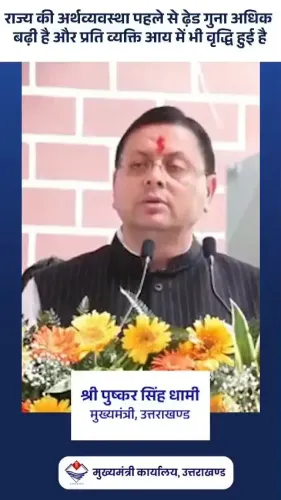
At Rajyotsav in Dehradun, Uttarakhand's Chief Minister projected a GSDP of ₹3.82 lakh crore, per capita income of ₹2.74 lakh — over 25% above the national average — and a 7.23% growth rate, citing PM Modi and Home Minister Shah's guidance.
Key Takeaways
Uttarakhand's GSDP is projected at approximately ₹3 lakh 82 thousand crore for the current year.
Per capita income is estimated at around ₹2 lakh 74 thousand — more than 25% above the national average .
The state's projected economic growth rate stands at approximately 7.23 percent .
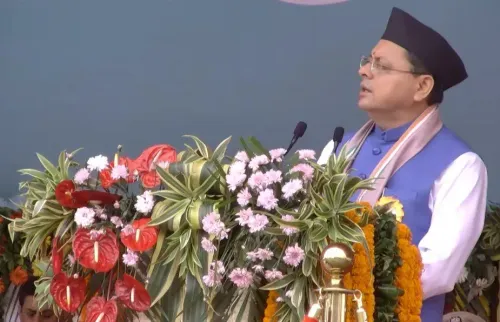
The announcements were made at the Rajyotsav celebrations at Parade Ground, Dehradun .
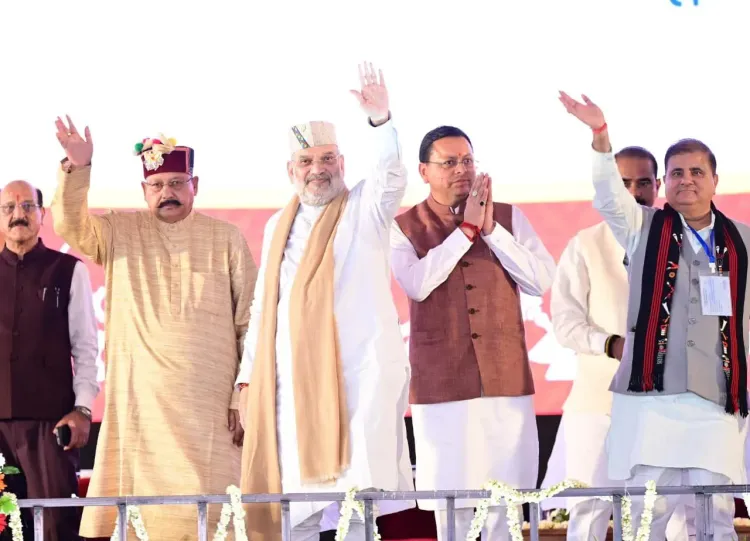
Four former Chief Ministers — Koshyari, Bahuguna, Rawat, and Nishank — attended the event alongside serving Cabinet Ministers and MPs.
The CM cited the guidance of PM Narendra Modi and Home Minister Amit Shah for the state's development trajectory.
Uttarakhand's economy is outpacing the national average — and the state government is making sure the numbers are heard. At the Rajyotsav celebrations held at Parade Ground, Dehradun, the Chief Minister announced that the state's Gross State Domestic Product (GSDP) for the current year is estimated at approximately ₹3 lakh 82 thousand crore, with per capita income projected at around ₹2 lakh 74 thousand and an economic growth rate of roughly 7.23 percent. Crucially, the state's per capita income now stands more than 25 percent above the national average — a figure that reframes Uttarakhand's standing among India's hill states.
What the Rajyotsav podium revealed about Uttarakhand's economic ambition
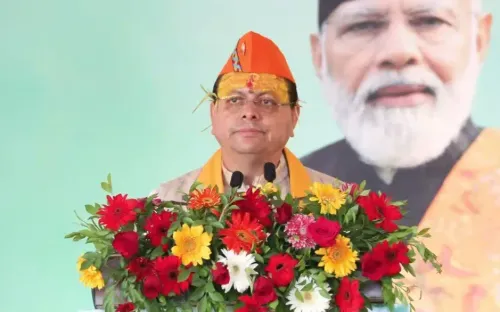
The Chief Minister used the Rajyotsav platform to deliver a pointed message: 'Devbhoomi ki janta vikas, suraksha tatha samvedansheel aur jawabdeh shaasan chahti hai' ('The people of Devbhoomi want development, security, and sensitive, accountable governance'). The state government, he said, is committed to meeting those expectations under the guidance of Prime Minister Narendra Modi and Union Home Minister Amit Shah. Setting economic milestones at a foundation-day event is a well-worn political tradition in India — but a projected growth rate of 7.23 percent in a mountainous state with limited industrial land gives the claim unusual weight.
Uttarakhand's above-average per capita income story is not accidental. The state's economy is structurally anchored in services, tourism, hydropower, and remittances from a large out-migrant workforce serving in the Indian Army and central police forces. Those inflows cushion household incomes in ways that raw GSDP figures sometimes obscure. The tourism corridor from Char Dham to Jim Corbett continues to draw domestic and international visitors, feeding the hospitality and transport sectors.
A Stateotsav gathering that brought Uttarakhand's political history onto one stage
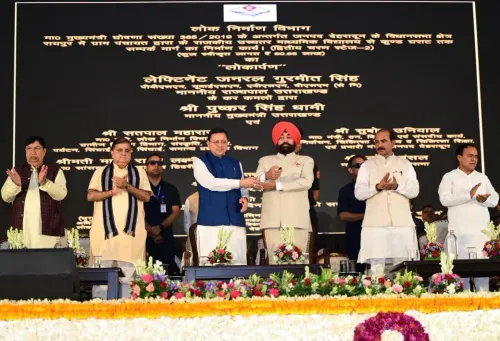
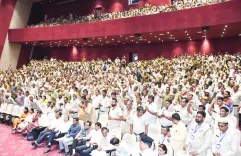
The scale of the gathering at Parade Ground underlined the symbolic weight of the occasion. Former Chief Ministers Bhagat Singh Koshyari, Vijay Bahuguna, Tirath Singh Rawat, and Dr. Ramesh Pokhriyal 'Nishank' were all present — a rare assembly of the state's post-formation leadership in one frame. Union Minister of State for Road Transport and Highways Ajay Tamta, Rajya Sabha MP and BJP state president Mahendra Bhatt, MPs Anil Baluni, Ajay Bhatt, and Bansuri Swaraj, along with the full Cabinet — including Satpal Maharaj, Ganesh Joshi, Madan Kaushik, Subodh Uniyal, Dr. Dhan Singh Rawat, and Rekha Arya — attended, as did Dehradun Mayor Saurabh Thapliyal and large numbers of residents.
Uttarakhand was carved out of Uttar Pradesh on November 9, 2000, and the Rajyotsav marks that founding moment each year. That the state now reports per capita income comfortably ahead of the national benchmark, little more than two decades after formation, is the headline the government wants fixed in public memory — even as the next economic survey will be the real stress-test of these projections.
For a state that is still building its highway network and battling seasonal migration, a 7-percent-plus growth trajectory, if it holds, could reshape the conversation about mountain-state viability in India's federal architecture. The next budget will tell us whether the momentum is structural or celebratory.
Point of View
Useful ahead of any electoral cycle. The 7.23 percent growth projection, however, will face scrutiny when the formal economic survey arrives; hill-state GDP figures can be volatile given their tourism and remittance dependence. The gathering of four former Chief Ministers on one stage adds a rare optic of intra-party continuity that the ruling establishment will want amplified.
NationPress
6 Nov 2026
Frequently Asked Questions
What is Uttarakhand's GSDP for 2026?
Uttarakhand's Gross State Domestic Product (GSDP) for the current year is projected at approximately ₹3 lakh 82 thousand crore, as announced by the Chief Minister at the Rajyotsav event in Dehradun.
What is Uttarakhand's per capita income compared to the national average?
Uttarakhand's per capita income is estimated at around ₹2 lakh 74 thousand, which is more than 25 percent above the national average, according to the Chief Minister's Rajyotsav address.
What is Uttarakhand's economic growth rate in 2026?
The Chief Minister projected Uttarakhand's economic growth rate at approximately 7.23 percent for the current year, announced at the state's Rajyotsav celebrations in Dehradun.
What is Rajyotsav in Uttarakhand?
Rajyotsav is the foundation day celebration of Uttarakhand, marking its formation as a separate state carved out of Uttar Pradesh on November 9, 2000. It is observed annually with official events across the state.
Which former Chief Ministers attended Uttarakhand Rajyotsav 2026?
Former Chief Ministers Bhagat Singh Koshyari, Vijay Bahuguna, Tirath Singh Rawat, and Dr. Ramesh Pokhriyal 'Nishank' attended the Rajyotsav event at Parade Ground, Dehradun.