Giriraj Singh calls for wider adoption of khadi and handloom
Synopsis
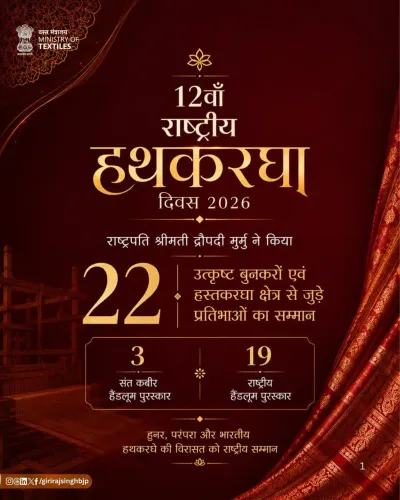
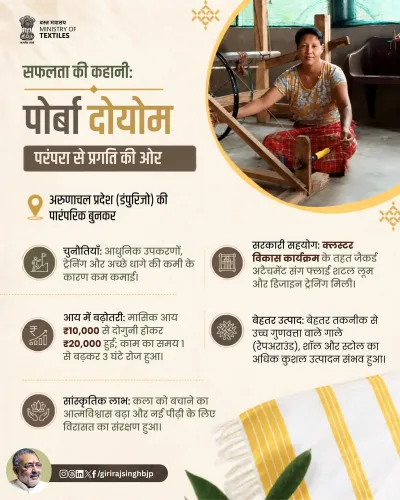
Union Textiles Minister Giriraj Singh on 27 July 2026 called on citizens to adopt khadi and handloom products, framing consumer support as essential to strengthening livelihoods of lakhs of weavers and advancing the Atmanirbhar Bharat and Vocal for Local goals under PM Modi's leadership.
Key Takeaways
Union Textiles Minister Giriraj Singh posted on 27 July 2026 urging citizens to adopt khadi and handloom products made by artisans.
He credited PM Narendra Modi's leadership for giving weavers new identity, new markets, and new opportunities.
The minister linked individual consumer choices to strengthening livelihoods of lakhs of craftspeople and preserving cultural heritage.
The post invoked the Atmanirbhar Bharat framework and carried the hashtag #VocalForLocal , a campaign active since 2020.
The Khadi and Village Industries Commission (KVIC) and the National Handloom Development Programme are the primary institutional vehicles for weaver support under the Ministry of Textiles.
Future budget allocations and scheme expansions for the handloom sector in parliamentary sessions will be a key indicator of follow-through.
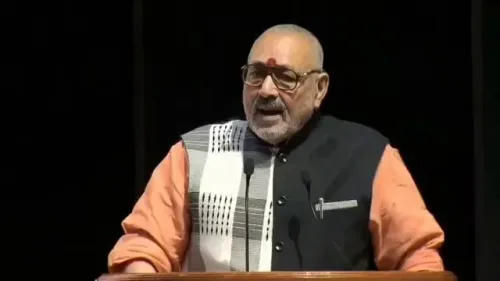
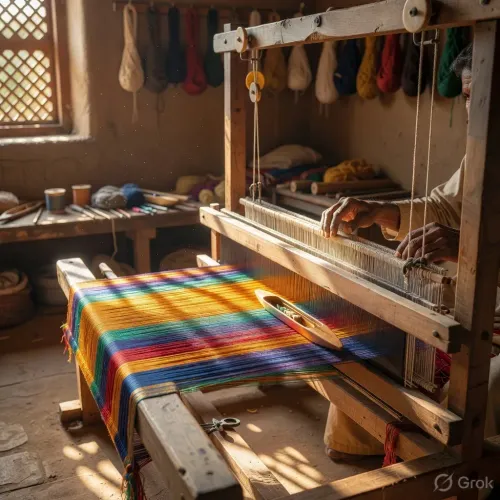
Union Textiles Minister Giriraj Singh on Monday, 27 July 2026 called on citizens to adopt khadi and handloom products, arguing that consumer support for artisan-made goods is essential to strengthening the livelihoods of lakhs of weavers and preserving India's cultural heritage.
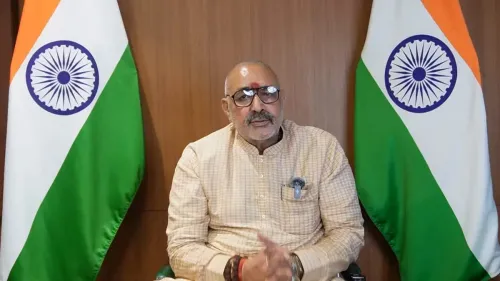
Posting on X in Hindi, the minister wrote: 'Adaraniya Pradhanmantri Shri Narendra Modi ji ke netritva mein khadi, handloom aur hamare bunkaaron ko nayi pehchaan, naye bazaar aur naye avsar mil rahe hain.' ['Under the leadership of respected Prime Minister Shri Narendra Modi, khadi, handloom and our weavers are getting new identity, new markets and new opportunities.'] He added that it is now the public's responsibility to adopt products made by artisans' hands and become their support, a step that will strengthen the livelihoods of lakhs of craftspeople, preserve cultural heritage, and give new strength to the resolve of Atmanirbhar Bharat. The post carried the hashtag #VocalForLocal.
Context
The minister's appeal comes as the Ministry of Textiles continues to position khadi and handloom as twin pillars of rural employment and national self-reliance. Giriraj Singh, who oversees policy for both sectors as Union Textiles Minister, has consistently framed consumer choices as a form of direct economic support for artisan communities. The post reflects a recurring government communication strategy of mobilising public sentiment alongside formal policy measures.
The Vocal for Local campaign was first highlighted by Prime Minister Narendra Modi in 2020 as part of post-pandemic economic recovery measures, encouraging Indians to prefer domestically produced goods. Since then, it has become a standing refrain in government messaging around traditional crafts, small industries, and rural livelihoods.
Policy Backdrop
The Atmanirbhar Bharat Abhiyan, launched in May 2020, placed explicit emphasis on local manufacturing, traditional crafts, and reducing import dependence. Khadi and handloom were identified early as sectors where state support — through procurement mandates, e-commerce integration, and export promotion — could generate large-scale rural employment. The Khadi and Village Industries Commission (KVIC), a statutory body under the Ministry of Textiles, has been the primary vehicle for channelling market support and institutional backing to weavers and artisans.
The National Handloom Development Programme, operational since the early 2010s, has sought to improve weaver incomes and expand market access. Government policy since 2014 has progressively linked cultural heritage preservation with economic self-reliance, framing traditional sectors as active contributors to national manufacturing goals rather than welfare beneficiaries.
Stakeholders and Impact
The direct beneficiaries of sustained consumer demand for khadi and handloom products are the lakhs of handloom weavers and khadi artisans spread across rural India, for whom craft-based income often constitutes a primary or supplementary livelihood. States with dense weaver populations — including Uttar Pradesh, West Bengal, Andhra Pradesh, Telangana, and Assam — have the most at stake in any expansion of market linkages. The minister's call to citizens to 'become their support' positions individual purchasing decisions as a complement to state-level schemes, effectively distributing the responsibility for artisan welfare beyond government budgets.
For the broader textile ecosystem, sustained demand signals can influence investment decisions in handloom clusters, affect KVIC's sales targets, and shape future budget allocations for the sector in upcoming parliamentary sessions.
What's Next
The government's stated intent to expand markets and opportunities for weavers is likely to be tested in forthcoming budget discussions and parliamentary sessions, where allocations to the Ministry of Textiles and KVIC will indicate the scale of institutional backing behind the minister's public appeal. Observers will also watch for new e-commerce tie-ups or public procurement mandates that could translate the #VocalForLocal sentiment into structural market access for artisan communities. Whether consumer adoption follows ministerial appeals at scale remains the key variable in determining the campaign's economic impact.
Point of View
The minister attempts to build a demand-side constituency for handloom and khadi that supplements supply-side state spending. This approach, consistent since 2020's Vocal for Local launch, serves both as political messaging and as a pressure valve for sectors where government budgets alone cannot guarantee market depth. The real test of this strategy lies not in social media traction but in whether structural market linkages — procurement mandates, e-commerce integration, export channels — are expanded in the next budget cycle.
NationPress
25 Oct 2026
Frequently Asked Questions
What did Giriraj Singh say about khadi and handloom weavers?
Union Textiles Minister Giriraj Singh on 27 July 2026 called on citizens to adopt products made by khadi and handloom artisans, saying this would strengthen the livelihoods of lakhs of craftspeople, preserve cultural heritage, and advance the Atmanirbhar Bharat resolve.
What is the Vocal for Local campaign in India?
Vocal for Local is a campaign promoted by Prime Minister Narendra Modi since 2020 that encourages Indians to prefer domestically produced goods, with a particular emphasis on traditional crafts, khadi, and handloom products to support rural artisans and reduce import dependence.
What is Atmanirbhar Bharat and how does it relate to textiles?
Atmanirbhar Bharat Abhiyan, launched in May 2020, is India's self-reliance initiative focused on boosting domestic manufacturing and reducing imports. In the textiles sector, it has supported khadi and handloom through market linkages, e-commerce integration, and public procurement mandates managed by the Ministry of Textiles and KVIC.
What is the role of KVIC in supporting weavers?
The Khadi and Village Industries Commission (KVIC) is a statutory body under the Ministry of Textiles that promotes khadi production, provides market support, and channels employment and institutional backing to rural weavers and artisans across India.
Who is Giriraj Singh and what ministry does he head?
Giriraj Singh is a senior BJP leader, Lok Sabha MP from Begusarai in Bihar, and currently serves as India's Union Minister of Textiles, overseeing policy for khadi, handloom, and weaver welfare.