Giriraj Singh champions heritage and handicrafts under Make In India

Synopsis
Union Textiles Minister Giriraj Singh on 6 June 2026 invoked India's craft heritage on X, framing traditional textiles as both cultural legacy and economic driver under Make In India and Vocal for Local — signalling continued ministerial focus on artisan-led manufacturing.
Key Takeaways
Union Textiles Minister Giriraj Singh posted on 6 June 2026 linking India's cultural heritage to modern development under the Textiles and Handicraft sectors.
The post was tagged #MakeInIndia and #VocalForLocal , invoking two flagship central government manufacturing and self-reliance programmes.
Make In India was launched in September 2014 with textiles among its priority sectors; Vocal for Local was amplified under the Atmanirbhar Bharat package of May 2020 .
The ministry's mandate covers both export promotion and welfare of textile artisans and handicraft producers across rural clusters nationwide.
Analysts will watch for follow-up announcements on national textile policy updates, cluster funding, or artisan welfare scheme expansions.
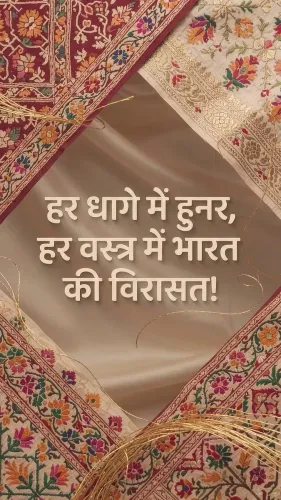
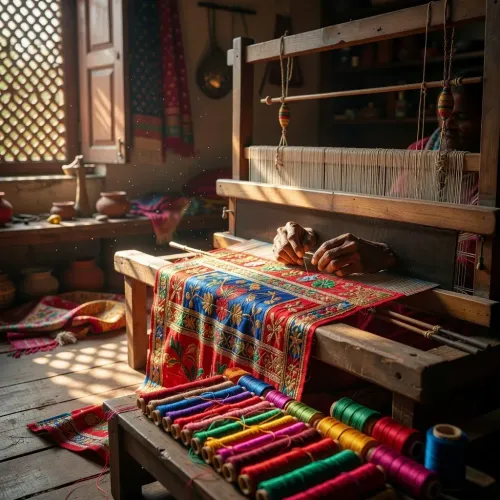
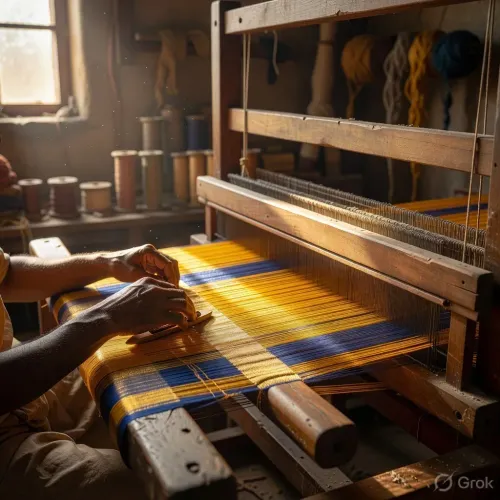
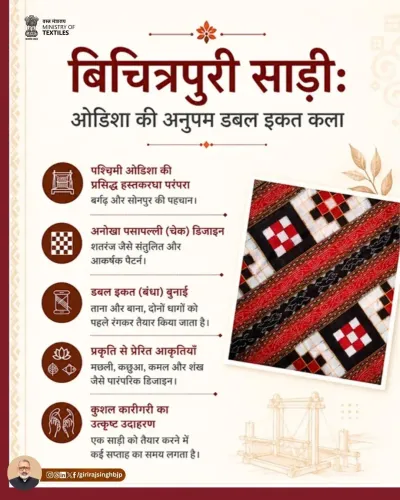
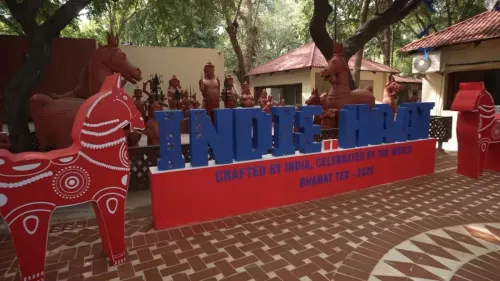
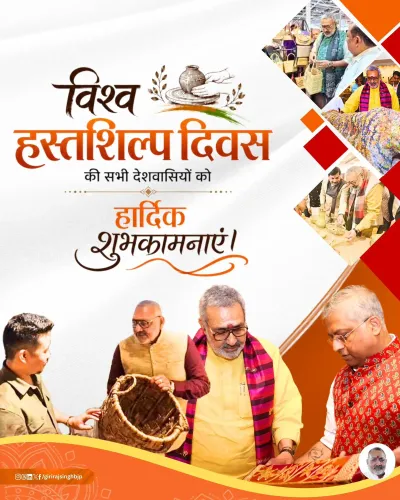
Union Textiles Minister Giriraj Singh on Saturday, 6 June 2026, invoked India's traditional craft identity in a post on X, framing the country's textile and handicraft heritage as both a cultural legacy and a pillar of modern economic development. The minister's message, tagged under #Textiles, #Handicraft, #MakeInIndia, and #VocalForLocal, underscores the government's sustained push to position indigenous craftsmanship at the centre of national manufacturing ambitions.
Context
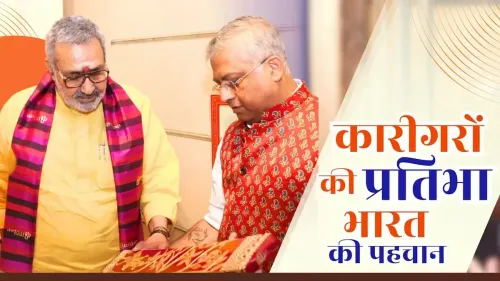
Singh's post reads: 'Purani sanskriti ki aadhunik pehchaan / Virasat bhi, vikas bhi' — translated as 'A modern identity rooted in ancient culture / Heritage as well as development.' The compact, slogan-like framing is characteristic of the minister's public communication style, using cultural pride as a bridge to economic policy goals. The dual emphasis on 'heritage' and 'development' signals that the ministry views traditional crafts not as relics but as live economic assets.
Policy Backdrop
The post's hashtags directly invoke two flagship central government programmes. Make In India, launched in September 2014, was designed to position India as a global manufacturing hub, with textiles and handicrafts among its priority sectors. Vocal for Local, amplified as part of the Atmanirbhar Bharat package announced in May 2020, extended that mandate by encouraging domestic consumption of indigenous goods and protecting the livelihoods of traditional artisans.
Successive governments have consistently framed traditional crafts as dual-purpose assets — cultural soft power abroad and employment generators at home, particularly in rural clusters across states such as Uttar Pradesh, Rajasthan, Gujarat, and West Bengal. The Textiles Ministry sits at the intersection of these objectives, overseeing both export promotion and artisan welfare schemes.
Stakeholders and Impact
The primary beneficiaries of policies anchored in this messaging are textile artisans and handicraft producers — a constituency numbering in the crores across India's handloom, khadi, and craft clusters. For these communities, ministerial visibility translates into expectations of budgetary support, cluster development funding, and market-linkage programmes. The 'heritage plus development' framing also appeals to an urban consumer base increasingly drawn to artisanal and sustainably produced goods.
Exporters and retail platforms that stock Indian handicrafts stand to benefit from any policy follow-through, as government promotion typically accompanies facilitation at trade fairs, e-commerce onboarding for weavers, and geographical indication (GI) tag enforcement — all tools the Textiles Ministry has deployed in recent years.
What's Next
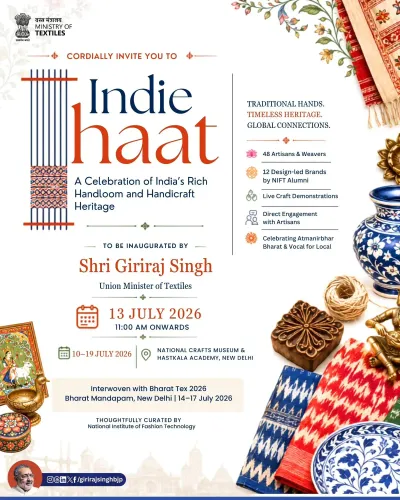
Analysts watching the ministry will look for concrete follow-up: possible announcements of updated national textile policy provisions, fresh funding allocations for state-level handicraft clusters under ongoing Make In India phases, or expanded artisan registration drives under welfare schemes. Singh's public framing of the issue on a weekend suggests the ministry may be building communication momentum ahead of a formal policy or event announcement. The broader pattern of linking cultural identity to manufacturing self-reliance is likely to remain a defining theme of the ministry's outreach through the current parliamentary term.
Point of View
Vikas bhi' formulation mirrors the broader Modinomics vocabulary that pairs pride in India's civilisational past with a forward-looking manufacturing agenda. For the minister, who represents a Bihar constituency with strong handloom traditions, this messaging also has direct electoral resonance. The consistency of this framing across successive policy cycles suggests it has become structural — not merely rhetorical — to how the ministry justifies resource allocation to handicraft clusters.
NationPress
24 Oct 2026
Frequently Asked Questions
What did Giriraj Singh post about textiles on 6 June 2026?
Union Textiles Minister Giriraj Singh posted on X on 6 June 2026, describing India's textile and handicraft sector as 'a modern identity rooted in ancient culture — heritage as well as development,' tagging the message under Make In India and Vocal for Local.
What is the Make In India scheme and how does it relate to textiles?
Make In India is a national manufacturing initiative launched in September 2014 to boost domestic production and exports. Textiles and handicrafts are among its priority sectors, with the scheme supporting cluster development, export promotion, and artisan livelihoods.
What does Vocal for Local mean for Indian handicraft producers?
Vocal for Local, promoted under the Atmanirbhar Bharat package announced in May 2020, encourages consumers to buy indigenous products. For handicraft producers, it translates into government-backed market promotion, e-commerce onboarding, and visibility at trade fairs.
Who are the main beneficiaries of India's textile heritage policies?
The primary beneficiaries are textile artisans and handicraft producers — numbering in the crores — working in handloom, khadi, and craft clusters across states such as Uttar Pradesh, Rajasthan, Gujarat, and West Bengal.
What policy announcements could follow Giriraj Singh's post on handicrafts?
Observers will watch for updated national textile policy provisions, fresh funding for state-level handicraft clusters under Make In India, expanded artisan registration under welfare schemes, or announcements tied to upcoming trade events.