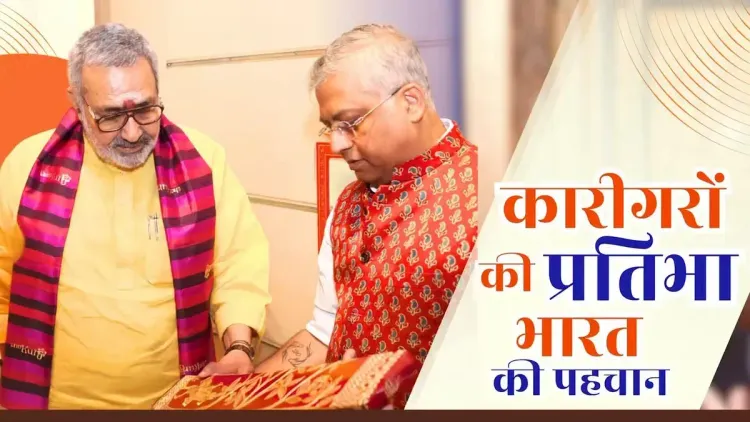
Giriraj Singh visits 'The Kunj', hails handicraft artisans
Synopsis
Union Textiles Minister Giriraj Singh visited 'The Kunj' on June 6, 2026, praising talented Indian artisans and calling the platform an emerging global stage for handicrafts. He reaffirmed the government's full commitment to developing India's handicraft heritage and taking it to new heights.
Key Takeaways
Union Textiles Minister Giriraj Singh visited 'The Kunj' on June 6, 2026 and observed the work of skilled Indian artisans firsthand.
Singh described the platform as an 'emerging global stage' where Indian craftspeople are showcasing their art.
The minister reaffirmed the government's commitment to developing handicrafts and elevating this 'invaluable heritage' to new heights.
The Ministry of Textiles oversees handicraft promotion, export facilitation, and artisan welfare across India.
Handicrafts have been a priority sector under the Make in India initiative since 2014 , with focus on cluster development, GI protection, and global market access.
The sector employs millions of artisans, many of them women and members of marginalised communities, making ministerial engagement significant for rural livelihoods.
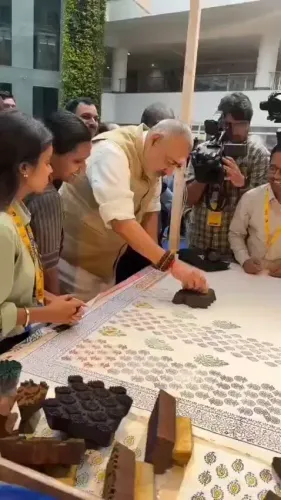
Union Textiles Minister Giriraj Singh on Saturday, June 6, 2026, visited a platform called 'The Kunj' and witnessed the craft skills of several talented Indian artisans firsthand, reaffirming his ministry's commitment to elevating the country's handicraft heritage to new global heights.
Context
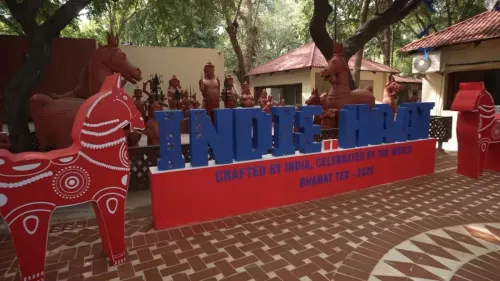
Posting on X, Minister Singh described his visit to 'The Kunj' in Hindi, writing that he saw 'the outstanding talent of many promising craftspeople of the country up close.' He called the platform an emerging 'global stage' where skilled artisans are showcasing their art. The post was accompanied by a video, offering viewers a glimpse of the craftsmanship on display.
In his words: 'यह मंच एक वैश्विक पटल के रूप में उभर रहा है' — 'This platform is emerging as a global stage' — where Indian craftspeople are presenting their art to the world. He added that the government is 'fully dedicated and committed to the development of handicrafts and taking this invaluable heritage to new heights.'
Policy Backdrop
The Ministry of Textiles is the nodal body for policy on handlooms and handicrafts in India, overseeing promotion, export facilitation, and artisan welfare. Handicrafts have long been treated as both a cultural asset and a significant employment generator, particularly for rural and semi-urban communities across artisan clusters in states such as Uttar Pradesh, Rajasthan, West Bengal, and Kashmir.
Since the launch of the Make in India initiative in 2014, textiles and handicrafts have been identified as priority sectors for manufacturing growth and export expansion. Successive administrations have linked artisan clusters to export markets and pursued Geographical Indication (GI) protection for traditional crafts to preserve their authenticity and commercial value. The current government's approach continues this lineage, with an added emphasis on digital and global market access for craftspeople.
Stakeholders and Impact
India's handicraft sector employs millions of artisans — the majority of them women and members of marginalised communities — making ministerial attention to the sector significant for livelihoods beyond mere cultural symbolism. Textile MSMEs and artisan cooperatives stand to benefit from platforms that connect them directly with domestic and international buyers.
Platforms that provide global visibility to Indian craftspeople serve a dual purpose: preserving traditional knowledge systems while integrating artisans into contemporary value chains. Skill upgradation programmes and market-linkage initiatives backed by the ministry are central to this effort. GI tags, cluster development, and participation in international trade fairs have been key tools in this broader strategy.
What's Next
Observers will watch for concrete follow-through in the form of Union Budget allocations for handicraft development schemes and any new cluster-level announcements tied to the ministry's stated commitment. India's participation at major international trade platforms — where artisan products can reach global buyers — will be another indicator of how seriously the government pursues the 'global stage' vision Singh articulated.
The minister's public engagement with artisan communities and craft platforms signals that handicrafts will remain a visible policy priority for the Ministry of Textiles in the months ahead, with the government keen to position India's craft heritage as a competitive cultural-economic asset on the world stage.
Point of View
The minister signals that the textiles portfolio is being actively used to build a narrative around India's soft power and rural employment. The emphasis on 'global visibility' also aligns with the government's broader export-push agenda, where cultural products are increasingly positioned alongside manufactured goods. Whether this translates into measurable budget allocations or new scheme launches will determine if the rhetoric has policy teeth.
NationPress
21 Oct 2026
Frequently Asked Questions
What is 'The Kunj' that Giriraj Singh visited?
'The Kunj' is a platform that Union Textiles Minister Giriraj Singh visited on June 6, 2026, describing it as an emerging global stage for Indian handicraft artisans to showcase their skills. The specific nature and location of the venue have not been officially detailed in public records.
What did Giriraj Singh say about Indian handicrafts?
Singh said he witnessed the outstanding talent of several promising craftspeople up close during his visit, called the platform an emerging global stage for artisans, and reaffirmed that the government is fully dedicated to developing handicrafts and taking this invaluable heritage to new heights.
What is the Ministry of Textiles doing for handicraft artisans in India?
The Ministry of Textiles oversees promotion, export facilitation, skill upgradation, cluster development, and Geographical Indication protection for handicraft artisans across India, with handicrafts identified as a priority sector under the Make in India initiative since 2014.
How many artisans work in India's handicraft sector?
India's handicraft sector employs millions of artisans, a significant proportion of whom are women and members of marginalised communities, making it one of the largest employment generators in the rural and semi-urban informal economy.
What should we watch for next in India's handicrafts policy?
Key indicators to watch include Union Budget allocations for handicraft development schemes, new cluster development announcements by the Ministry of Textiles, and India's participation at major international trade fairs where artisan products can reach global buyers.