Giriraj Singh flags rising global demand for Indian textiles
Synopsis
Union Textiles Minister Giriraj Singh says rising global demand for Indian cotton textiles, handicrafts and carpets is opening fresh opportunities for weavers, artisans and entrepreneurs — signalling confidence in India's bid to expand its share of world textile trade.
Key Takeaways
Union Textiles Minister Giriraj Singh posted on 19 October 2026 highlighting the Indian textile industry's strengthening global identity.
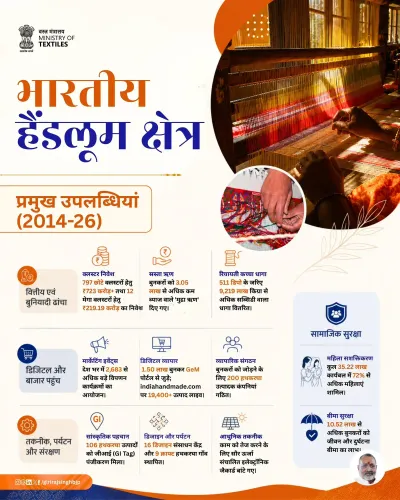
He specifically named cotton textiles, handicrafts and carpets as segments driving new opportunities for weavers, artisans and entrepreneurs.
The Amended Technology Upgradation Fund Scheme (ATUFS) , active since 2016 , provides capital subsidies to modernise textile units and boost export competitiveness.
PM MITRA textile parks represent the next phase of the government's scale-up strategy, integrating the full textile value chain in greenfield hubs.
Upcoming quarterly textile export data from the Ministry of Commerce will be a key indicator of whether current demand momentum is translating into sustained market share gains.
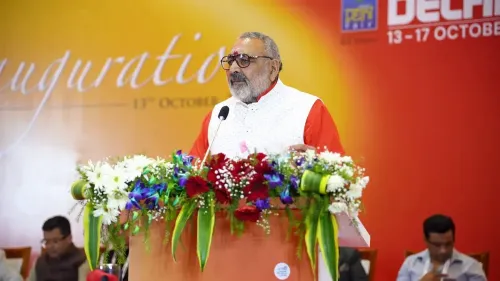
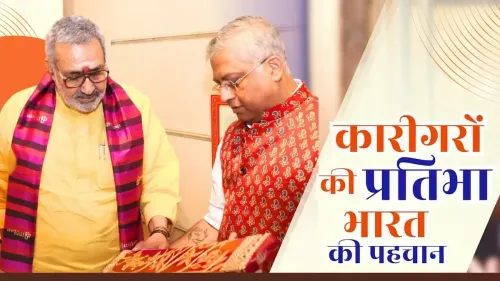
India's textile sector — from handwoven cotton to hand-knotted carpets — is carving out a sharper identity in world markets, and Union Textiles Minister Giriraj Singh wants every weaver, artisan and entrepreneur to know the window is open. On Monday, 19 October 2026, the Minister posted on X, pointing to surging global demand across the country's diverse textile product range as a direct driver of fresh opportunity for those at the grassroots of the industry.
Writing in Hindi, Singh observed: 'Bharatiya vastra udyog vaishvik bazaar mein apni pahchaan mazboot kar raha hai' — 'The Indian textile industry is strengthening its identity in the global market.' He specifically named cotton textiles, handicrafts and carpets as segments where rising international demand is unlocking new possibilities for weavers, artisans and entrepreneurs.
Why cotton, handicrafts and carpets are at the centre of the push
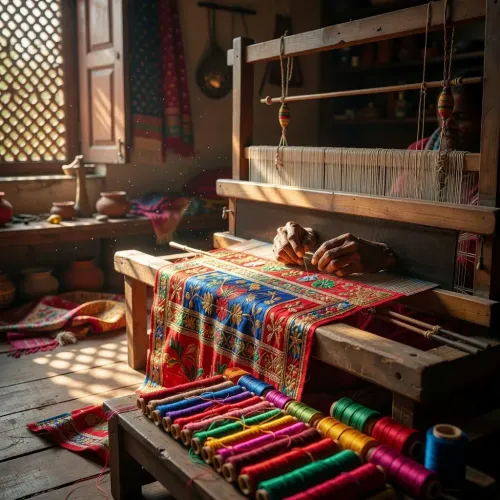
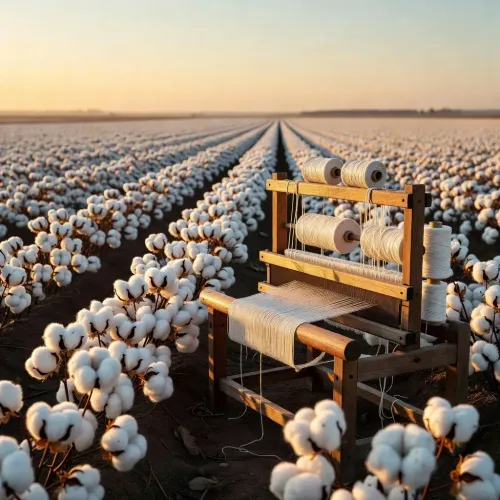
These three segments are not chosen at random. Cotton textiles are India's highest-volume export fabric, handicrafts carry the artisan economy of millions of rural households, and hand-knotted carpets — particularly from Uttar Pradesh, Kashmir and Rajasthan — command premium pricing in Western markets. Together, they span both scale and craft, making them the twin engines of any serious export-growth story.
The Ministry of Textiles has backed this ambition with infrastructure. The Amended Technology Upgradation Fund Scheme (ATUFS), running since 2016, channels capital subsidies to modernise textile manufacturing units — lifting quality, cutting waste, and making Indian product more competitive on global shelves. Cluster development programmes and production-linked incentives have added further layers of support for organised and semi-organised players alike.
PM MITRA parks and the next phase of scale
The broader manufacturing push now points toward the PM MITRA (Mega Integrated Textile Region and Apparel) parks — greenfield textile hubs designed to bring spinning, weaving, processing and garketing under one roof. Market watchers are tracking when the Ministry and the Ministry of Commerce release the next set of quarterly textile export figures, which will either confirm or test the optimism in the Minister's post.
Singh's message, short but pointed, lands at a moment when rival manufacturing nations are competing hard for the same orders. India's answer, the Minister signals, is its unmatched diversity — from mill-made cotton cloth to a carpet that takes a master weaver six months to finish. That combination of volume and craft is not easy to replicate. The question is whether the infrastructure now being built turns this moment of demand into durable market share.
Point of View
Not just export-led corporate gain. In the run-up to any textile export data release, ministerial messaging of this kind sets the interpretive frame — strong numbers will be claimed as vindication, soft ones cushioned by the 'identity-building' language already in circulation. The PM MITRA park timeline will be the real test of whether this optimism has structural backing.
NationPress
19 Oct 2026
Frequently Asked Questions
What did Giriraj Singh say about Indian textiles?
On 19 October 2026 , Union Textiles Minister Giriraj Singh said the Indian textile industry is strengthening its identity in the global market, with rising demand for cotton textiles, handicrafts and carpets creating new opportunities for weavers, artisans and entrepreneurs.
Which Indian textile products have high global demand?
According to the Minister's post, cotton textiles, handicrafts and carpets are among the Indian textile products seeing strong international demand, spanning both mass-market and premium craft segments.
What is the ATUFS scheme in India's textile sector?
The Amended Technology Upgradation Fund Scheme (ATUFS) , running since 2016 , provides capital subsidies to textile manufacturing units to modernise operations, improve quality and boost India's export competitiveness.
What are PM MITRA textile parks?
PM MITRA (Mega Integrated Textile Region and Apparel) parks are planned greenfield hubs that aim to bring the entire textile value chain — spinning, weaving, processing and garketing — under one roof to drive scale and efficiency.
How is India trying to increase its share of global textile trade?
India is pursuing a multi-pronged approach including the ATUFS modernisation scheme , cluster development programmes, production-linked incentives, and the upcoming PM MITRA textile parks to raise competitiveness across both high-volume cotton and traditional craft segments.