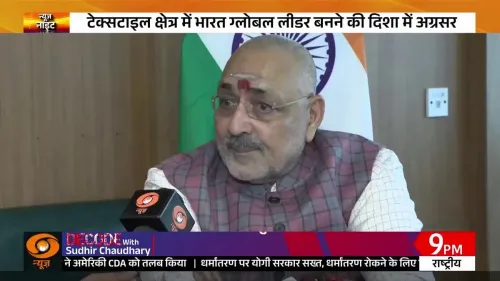
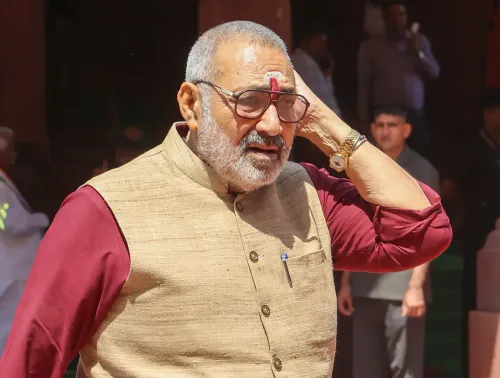
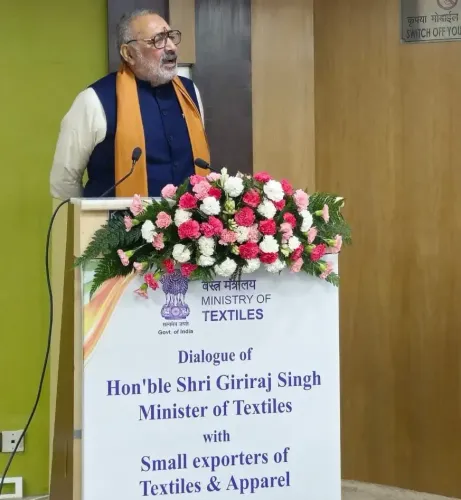
Giriraj Singh flags textiles' role in India's 35-cr jobs push by 2030
Synopsis
Union Textiles Minister Giriraj Singh cited projections of over 35 crore new jobs in India by 2030, positioning the textile and apparel sector as a key contributor and calling for skill development and stronger industry alignment to unlock that potential.
Key Takeaways
Union Textiles Minister Giriraj Singh posted on October 24, 2026 citing a projection of over 35 crore new employment opportunities in India by 2030 .
He identified the textile and apparel sector as a major contributor to this projected job creation, with significant scale-up potential in coming years.
The minister stressed that skill development and stronger coordination between skilling programs and industry are key to converting projections into actual jobs.
The PLI scheme for textiles , launched in 2021 , underpins current efforts to expand manufacturing capacity and employment in the sector.
Future Ministry of Textiles budget allocations and policy updates will be closely watched for concrete skilling and hiring incentive measures.
Thirty-five crore new jobs by 2030 — that is the scale of economic ambition Union Textiles Minister Giriraj Singh put on record on Saturday, October 24, 2026, citing projections that frame India's growth story as a generational opportunity for its youth. And at the heart of that story, he argues, sits the textile and apparel sector.
Posting in Hindi on X, the minister wrote: '2030 तक भारत में 35 करोड़ से अधिक नए रोजगार के अवसर सृजित होने का अनुमान' — ('More than 35 crore new employment opportunities are estimated to be created in India by 2030') — painting what he called a 'new picture of the country's economic progress and a bright future for its youth.' He was explicit that the textile and apparel sector is 'an important part of this development journey,' carrying the capacity for 'large-scale job creation in the years ahead.' Skill development and stronger industry alignment, he added, would give these opportunities 'new momentum.'
Textiles as a labour engine — the case Singh is making
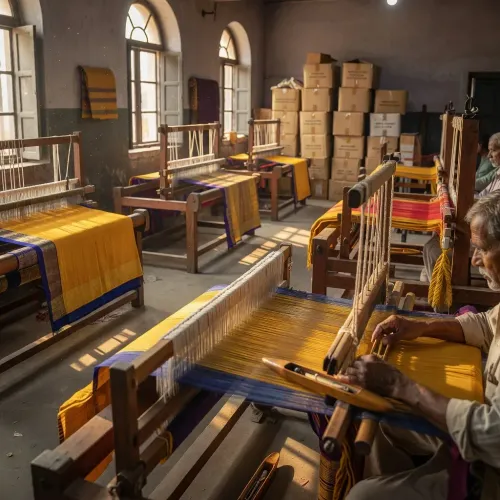
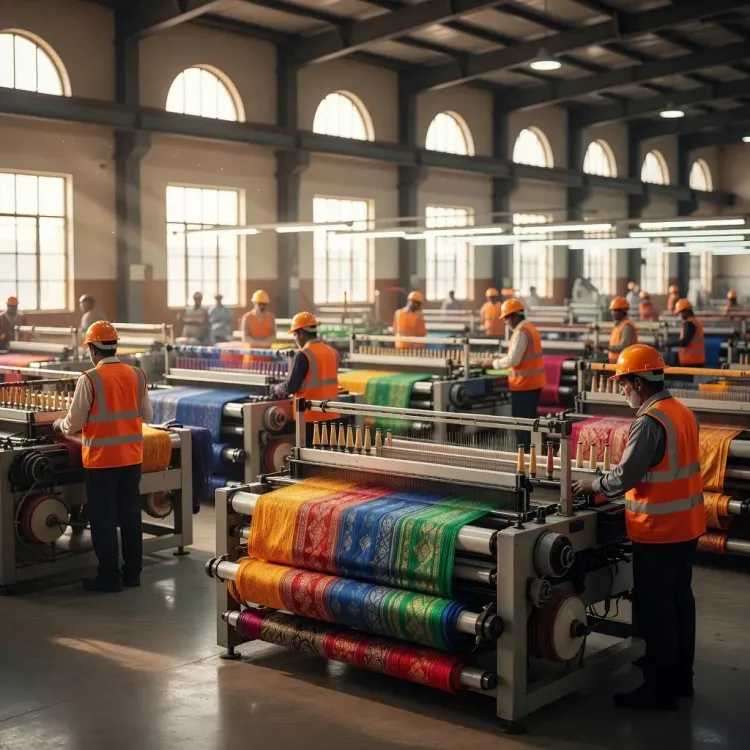
The textile and apparel industry has long been one of India's most labour-intensive sectors, second only to agriculture in employment terms. It accounts for a significant share of the country's merchandise exports, and successive governments have treated it as a natural pipeline for absorbing a young, growing workforce — particularly women and workers from states like Bihar, Uttar Pradesh, Gujarat, and Tamil Nadu.
The Production Linked Incentive (PLI) scheme for textiles, launched in 2021, was designed precisely to scale manufacturing capacity and trigger fresh hiring across the value chain — from spinning and weaving to garment finishing. Singh, as the minister who now stewards that scheme, is positioning the sector as a structural contributor to any macro employment target, not just a secondary beneficiary.
Skill alignment: where the gap — and the bet — lies
The minister's emphasis on 'skill development and better industry coordination' is a nod to a persistent challenge: India generates workers faster than it can certify and deploy them in organised manufacturing. Bridging that gap has been the stated goal of multiple skilling missions, but actual alignment between course curricula and shop-floor requirements in textiles mills and apparel export units has remained uneven.
Future budgets and policy signals from the Ministry of Textiles will be watched for concrete moves — whether that means expanded apprenticeship mandates, cluster-level training centres, or incentivised hiring linked to skilling outcomes. The minister's framing today sets an expectation that those specifics must follow.
India's 2030 employment ambition is vast. Whether textiles can deliver a meaningful slice of it depends on the unglamorous work of wiring skill pipelines to factory floors — and Singh has now made that a public commitment to measure against.
Point of View
Framing the 2030 jobs story around a labour-intensive, regionally widespread sector like textiles is also smart electoral geography: it speaks directly to workers across Bihar, UP, and the garment-belt states. The real test, however, is whether ministerial framing translates into measurable policy specifics — PLI uptake, skilling enrollment, and export volume growth — rather than remaining aspirational messaging. Analysts will watch the next Union Budget for whether the Ministry of Textiles secures allocations that match the ambition Singh is now publicly staking out.
NationPress
24 Oct 2026
Frequently Asked Questions
What is the projected number of new jobs in India by 2030?
Union Textiles Minister Giriraj Singh cited a projection of over 35 crore (350 million) new employment opportunities in India by 2030, though this figure has not been independently verified from established public records.
What is Giriraj Singh's role in the Indian government?
Giriraj Singh is the Union Minister of Textiles, a senior BJP leader, and the Lok Sabha Member of Parliament from Begusarai, Bihar.
How does the textile sector contribute to employment in India?
The textile and apparel sector is one of India's most labour-intensive industries, providing jobs to millions of workers — especially women and workers from states like Bihar, UP, Gujarat, and Tamil Nadu — and is a major contributor to merchandise exports.
What is the PLI scheme for textiles?
The Production Linked Incentive (PLI) scheme for textiles was launched in 2021 to boost manufacturing capacity and drive employment generation in the textile and apparel sector.
What does skill development have to do with textile sector jobs?
Minister Giriraj Singh highlighted that stronger alignment between skill development programs and textile industry requirements is essential to converting India's employment potential into actual jobs, addressing a persistent gap between trained workers and factory-floor needs.