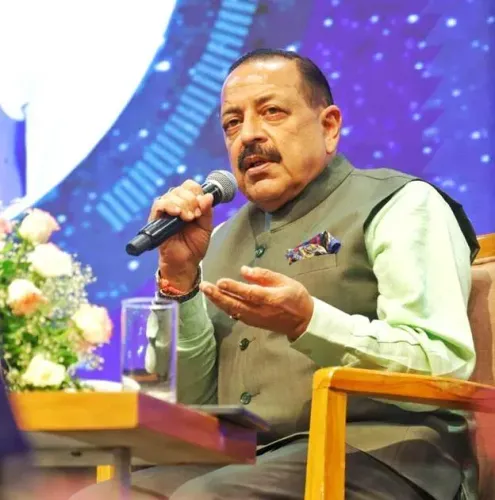
CM Yogi backs IndiaAI and Quantum Missions for tech self-reliance
Synopsis
CM Yogi Adityanath's office amplified India's IndiaAI Mission (Rs 10,372 crore) and National Quantum Mission (Rs 6,003 crore over eight years), underlining the push for indigenous AI capabilities and quantum research across computing, communication, sensing and materials.
Key Takeaways
The Chief Minister's Office of UP publicly endorsed both the IndiaAI Mission and National Quantum Mission on 24 October 2026 .
The IndiaAI Mission carries an allocation of Rs 10,372 crore , announced in Union Budget 2024-25, targeting indigenous AI and computing infrastructure.
The National Quantum Mission was approved in April 2023 with Rs 6,003 crore over eight years for quantum computing, communication, sensing, and materials.
Combined public investment across both missions exceeds Rs 16,000 crore .
Both missions explicitly focus on indigenous capability-building — not just technology adoption — including trained human resources and industrial capacity.
Uttar Pradesh's alignment signals potential state-level implementation, including research centres and skilling initiatives.
India's two most ambitious frontier-technology bets — one worth Rs 10,372 crore and the other Rs 6,003 crore — got a fresh public endorsement from Uttar Pradesh Chief Minister Yogi Adityanath on Saturday, 24 October 2026, as his office underlined the central government's push to make India genuinely self-reliant in artificial intelligence and quantum technology.
The Chief Minister's Office of Uttar Pradesh quoted CM Yogi Adityanath highlighting that the IndiaAI Mission is driving the development of indigenous AI capabilities, expanding computing infrastructure, fostering innovation, and building a secure, responsible AI ecosystem. On the quantum front, the post noted that the National Quantum Mission is accelerating research across quantum computing, quantum communication, quantum sensing, and quantum materials — while simultaneously scaling industrial capacity and producing trained human resources.
Two missions, two massive bets on India's tech future
The National Quantum Mission was approved by the Union Cabinet in April 2023 with an outlay of Rs 6,003 crore over eight years — one of the largest government commitments to quantum research anywhere in Asia. The IndiaAI Mission followed in the Union Budget 2024-25, backed by Rs 10,372 crore, specifically targeting AI model development, GPU computing infrastructure, and a domestic innovation pipeline. Together, the two programmes represent a combined public investment of over Rs 16,000 crore in technologies widely seen as defining the next decade of economic and strategic power.
The framing matters: both missions are explicitly anchored in swadeshi (indigenous) capability — not just adoption of foreign tools, but building India's own stack from the ground up. That distinction is central to how policymakers pitch these programmes to researchers, startups, and global investors.
Why UP's alignment with central tech missions signals more than symbolism
Uttar Pradesh, India's most populous state, has increasingly positioned itself as a destination for technology investment under CM Yogi's administration. When the state's top office publicly amplifies central missions in AI and quantum, it signals potential ground-level implementation — including proposed research centres, startup ecosystems, and skilling pipelines that could translate national allocations into state-level jobs and infrastructure.
AI researchers, quantum scientists, and deep-tech startups are the immediate stakeholders. But the longer arc reaches further: a domestically built AI and quantum capability reduces India's dependence on foreign compute and proprietary algorithms — a strategic priority that cuts across defence, finance, healthcare, and governance.
The race to own frontier technology is no longer a distant ambition on a government whitepaper. With over Rs 16,000 crore committed and the country's most populous state publicly in step, India's quantum-and-AI play is moving from announcement to architecture — and the pressure to show results is real.
Point of View
The state signals intent to attract deep-tech investment and talent, complementing its existing push in data centres and IT infrastructure. The emphasis on 'secure and responsible AI' also echoes a global regulatory moment, suggesting Indian policymakers are conscious of the governance dimension — not just the economic one. The real test will be whether state-level implementation announcements follow the political endorsement.
NationPress
24 Oct 2026
Frequently Asked Questions
What is the IndiaAI Mission?
The IndiaAI Mission is a central government initiative announced in Union Budget 2024-25 with an allocation of Rs 10,372 crore. It aims to build indigenous AI capabilities, expand computing infrastructure, promote innovation, and establish a secure and responsible AI ecosystem in India.
What is the National Quantum Mission and how much is its budget?
The National Quantum Mission was approved by the Union Cabinet in April 2023 with an outlay of Rs 6,003 crore over eight years. It supports research in quantum computing, quantum communication, quantum sensing, and quantum materials, while also developing industrial capacity and trained personnel.
What did CM Yogi Adityanath say about AI and quantum technology?
CM Yogi Adityanath, through the Chief Minister's Office of Uttar Pradesh, highlighted the central government's focus on developing indigenous AI capabilities via the IndiaAI Mission and accelerating quantum research and industrial capacity through the National Quantum Mission.
Why is Uttar Pradesh talking about central AI and quantum missions?
State governments including Uttar Pradesh have publicly aligned with central technology programmes, signalling intent to facilitate ground-level implementation such as research centres, startup ecosystems, and skilling pipelines tied to the national missions.
How much has India invested in AI and quantum technology combined?
India has committed over Rs 16,000 crore across the two flagship missions — Rs 10,372 crore for the IndiaAI Mission and Rs 6,003 crore over eight years for the National Quantum Mission.