India's AI and quantum push to reshape global tech competitiveness: Dr Jitendra Singh
Synopsis
India's National Quantum Mission has crossed more than half its targets in under three years — and that's just one data point in a broader frontier-tech surge. Science Minister Dr Jitendra Singh's remarks at a New Delhi conclave frame AI, nuclear, space, and quantum not as aspirational goals but as live strategic assets shaping India's economic and security posture.
Key Takeaways
Dr Jitendra Singh declared India a rising force in frontier technologies at a media conclave in New Delhi on 26 June .
The National Quantum Mission (NQM) , launched in 2023 , has already surpassed 50% of its targeted outcomes within three years.
Significant advances have been made in quantum-secure communication , with applications in defence, cyber security, and strategic communications.
Artificial intelligence is being positioned as a cross-sector enabler spanning governance, healthcare, education, and industry.
Nuclear energy is being reframed as a key enabler of India's digital and AI infrastructure, supporting the country's clean energy transition.
India is investing in digital infrastructure , computing capacity, and data resources to build a robust technology ecosystem.
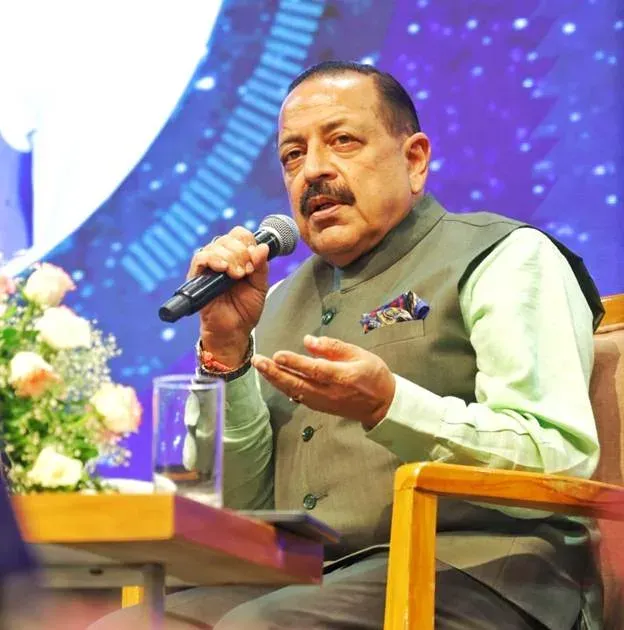
Union Minister of State (Independent Charge) for Science and Technology Dr Jitendra Singh on Friday, 26 June declared that India is rapidly emerging as a major force in frontier technologies, asserting that artificial intelligence, nuclear, space, and quantum technologies will define the contours of future economic growth and global competitiveness. Speaking at a media conclave in New Delhi, the minister outlined the country's accelerating progress across several critical technology domains.
National Quantum Mission Hits Key Milestones
The National Quantum Mission (NQM), launched in 2023, has already achieved more than half of its targeted outcomes within just three years, according to Dr Singh. Substantial progress has been recorded in quantum-secure communication — a field with far-reaching applications in defence, strategic communications, cyber security, and the protection of sensitive information. The pace of delivery signals a structural shift in how India is approaching deep-tech development.
India's Position Among Leading Tech Nations
'India today stands at a stage where it is progressing alongside leading nations in several critical technology domains and is steadily building capabilities that will define the next era of economic growth, national security and global competitiveness,' Dr Singh said. He underscored that space, nuclear, and quantum technologies will play a decisive role in shaping the future world order — influencing not only economic advancement but also strategic strength and geopolitical positioning. 'Countries that fall behind in these technologies risk falling behind in both development and security,' he warned.
AI as a Cross-Sector Enabler
On artificial intelligence, Dr Singh said AI is fast becoming an essential tool across every sector, with growing influence over governance, industry, education, healthcare, research, and public service delivery. India is simultaneously strengthening the supporting ecosystem through investments in digital infrastructure, computing capacity, data resources, and reliable energy systems, he noted. This comes amid a global race to dominate AI infrastructure, where computing power and data availability are increasingly viewed as strategic assets.
Nuclear Energy's Role in the Digital Economy
The minister highlighted that the growing demand for advanced computing, data centres, and digital services will require robust and dependable energy sources. In this context, nuclear energy is expected to play an increasingly important role in supporting India's technology-driven growth while contributing to the country's clean energy transition. Notably, this positions nuclear not merely as a power source but as an enabler of India's digital ambitions — a framing that aligns with global trends where tech giants are revisiting nuclear to power AI infrastructure.
Inclusive Growth at the Core
Dr Singh emphasised that technological progress has become the principal driver of growth in the modern world, and no nation can sustain long-term development without embracing innovation and frontier technologies. He added that India is pursuing this transformation while remaining committed to inclusive growth, democratic values, and social welfare — a signal that the government views frontier tech not as an elite pursuit but as a broad-based development lever. With the NQM ahead of schedule and AI investments scaling up, India's frontier tech ambitions are moving from policy rhetoric to measurable outcomes.
Point of View
But the harder question is what the remaining outcomes are and whether they include deployable systems or just laboratory benchmarks. India's frontier-tech narrative has long been strong on ambition and softer on verifiable delivery timelines. The nuclear-as-AI-infrastructure framing is the most underreported signal here — it mirrors moves by US hyperscalers and suggests India's planners are thinking several steps ahead. Whether the regulatory and investment ecosystem can keep pace with that vision is the real test.
NationPress
25 Sept 2026
Frequently Asked Questions
What is the National Quantum Mission and how much progress has India made?
The National Quantum Mission (NQM) is India's flagship programme to develop quantum technologies, launched in 2023. According to Science Minister Dr Jitendra Singh, the mission has already achieved more than half of its targeted outcomes within three years, with notable advances in quantum-secure communication for defence and cyber security applications.
Why does Dr Jitendra Singh say frontier technologies are critical for India?
Dr Singh argues that AI, quantum, nuclear, and space technologies will define the next era of economic growth, national security, and global competitiveness. He warned that countries falling behind in these domains risk losing ground in both development and security — framing frontier tech as a strategic imperative, not merely a scientific pursuit.
How is India planning to power its AI and digital infrastructure?
India is investing in digital infrastructure, computing capacity, and data resources to support its AI ambitions. Nuclear energy has been highlighted as a key reliable energy source to meet the growing power demands of data centres and advanced computing — aligning India's clean energy transition with its digital growth strategy.
What role will AI play in India's governance and public services?
According to Dr Singh, artificial intelligence is becoming an essential tool across every sector, with increasing influence over governance, industry, education, healthcare, research, and public service delivery. The government is building the supporting ecosystem through infrastructure and energy investments to scale AI adoption nationally.
How does India's quantum technology progress compare globally?
Dr Singh stated that India is now progressing alongside leading nations in several critical technology domains. The NQM's ahead-of-schedule delivery on quantum-secure communication is cited as evidence, though independent benchmarking against global peers has not been detailed in official statements.