CM Sai Slams Congress for Walking Out on Amit Shah
Synopsis
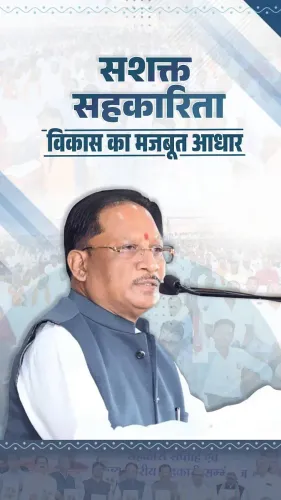
Chhattisgarh CM Vishnu Deo Sai attacked Congress on 10 August 2026, accusing the opposition of walking out on Amit Shah's parliamentary replies rather than engaging. Tagging Kiren Rijiju and using the hashtag #राहुल_भागना_नहीं, Sai argued that democratic accountability demands the courage to listen, not just to question.
Key Takeaways
Chhattisgarh CM Vishnu Deo Sai posted a sharp attack on Congress on 10 August 2026 , accusing the opposition of fleeing Parliament instead of hearing ministerial replies.
Union Home Minister Amit Shah was cited as a minister always ready to answer questions from students and on national issues.
Sai argued that democracy requires not just the right to question but the 'patience and courage' to listen to answers.
The hashtag #राहुल_भागना_नहीं ('Rahul, don't run') directly targeted Rahul Gandhi and Congress's parliamentary conduct.
Kiren Rijiju , Union Parliamentary Affairs Minister, was tagged, indicating coordinated government messaging.
The criticism echoes a long-running BJP pattern of framing opposition walkouts during the 17th and 18th Lok Sabha as evasion rather than protest.
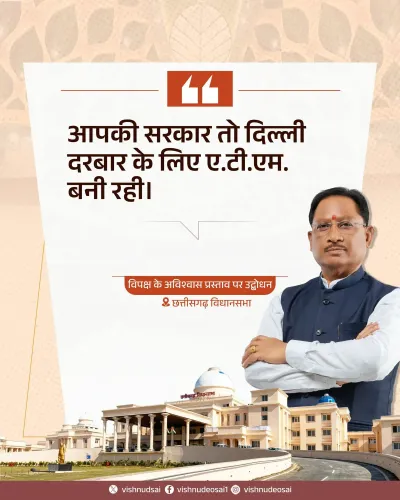
When a minister stands ready to answer — and the opposition walks out — who is really afraid of accountability? Chhattisgarh Chief Minister Vishnu Deo Sai fired that question at the Congress on Monday, 10 August 2026, accusing the opposition of fleeing Parliament rather than hearing out Union Home Minister Amit Shah.
In a sharply worded post in Hindi, CM Sai wrote: 'लोकतंत्र में सवाल करना जितना जरूरी है, उतना ही जरूरी है कि सवाल पूछने वालों के पास जवाब सुनने का धैर्य और साहस भी हो' — 'In a democracy, asking questions is as important as having the patience and courage to listen to the answers.' The hashtag he attached — #राहुल_भागना_नहीं ('Rahul, don't run') — left little doubt about his primary target.
Shah's Open-Door Record vs. Opposition Walkouts
Sai's post positions Amit Shah as a minister perpetually willing to engage — on student questions, on national issues, on anything put to him on the floor. That framing is deliberate. BJP has spent years building a narrative around Shah's parliamentary availability, contrasting it with what the party describes as the Congress's habit of staging walkouts instead of sitting through ministerial replies. The charge is not new, but it lands with recurring force. During the 17th and 18th Lok Sabha, opposition parties — Congress prominently among them — walked out of proceedings on multiple occasions, including during debates on Manipur violence and the electoral bonds controversy. BJP has consistently framed those exits not as protest but as evasion.The 'Rahul Bhaagna Nahi' Barb
Rahul Gandhi, tagged implicitly through the hashtag, is the face BJP most often reaches for when making this argument. The 'running away' jibe has a long shelf life in BJP political messaging — it resurfaces whenever Parliament sees a high-decibel walkout or a Congress boycott of a ministerial reply. By pairing the hashtag with a principled-sounding statement about democratic responsibility, Sai threads a needle: the rhetoric feels philosophical, but the targeting is surgical. The post also tags Kiren Rijiju, the Union Parliamentary Affairs Minister, signalling that the criticism is coordinated within the government's parliamentary management apparatus, not just a solo broadside from a state chief minister. In Indian parliamentary politics, the ruling party and the opposition have traded this particular accusation for decades — 'you disrupt' versus 'you steamroll.' What changes is the intensity, and in a session marked by high political polarisation, the intensity is rarely low. The next Parliament session will tell whether Congress responds on the floor or lets the hashtag do the talking for BJP.Point of View
Making it harder for Congress to respond without appearing defensive. By invoking Amit Shah's supposed openness and attaching Rahul Gandhi's name via hashtag, the message serves dual purposes: defending the government's record and keeping pressure on the Congress leader's public image. The tagging of Kiren Rijiju suggests this is part of a coordinated parliamentary session communication strategy, not an isolated state-level comment. It fits a broader BJP arc of portraying itself as the party of answers while casting the opposition as the party of disruption.
NationPress
11 Aug 2026
Frequently Asked Questions
Why did CM Vishnu Deo Sai criticise Congress in Parliament?
CM Sai accused Congress of walking out of Parliament instead of listening to replies by Union Home Minister Amit Shah, arguing that democratic accountability requires both asking questions and having the patience to hear answers.
What does the hashtag #राहुल_भागना_नहीं mean?
The Hindi hashtag translates to 'Rahul, don't run' and is a BJP political barb directed at Congress leader Rahul Gandhi, implying he and his party avoid parliamentary debates by staging walkouts.
Has Congress walked out of Parliament sessions before?
Yes. During the 17th and 18th Lok Sabha, Congress and other opposition parties staged multiple walkouts on issues including Manipur violence and electoral bonds, which BJP has consistently criticised as evasion of debate.
Why was Kiren Rijiju tagged in CM Sai's post?
Kiren Rijiju serves as Union Parliamentary Affairs Minister, and his tagging suggests the criticism of Congress's parliamentary conduct was part of a broader, coordinated government messaging effort.
What is Amit Shah's role in the Indian Parliament?
Amit Shah serves as India's Union Minister of Home Affairs and Minister of Cooperation. BJP frames him as a minister who is consistently available to answer questions in both Lok Sabha and Rajya Sabha.