Dr. Jitendra Singh: AI, Nuclear, Space, Quantum Key to India's Future

Synopsis
At a FiresideChat on June 26, 2026, Science Minister Dr. Jitendra Singh warned that AI, nuclear, space and quantum technologies will decide nations' development and security futures, framing them as non-negotiable pillars of India's strategic and economic competitiveness.
Key Takeaways
Union Science and Technology Minister Dr.
Jitendra Singh identified AI, nuclear, space and quantum as the four technologies that will determine future growth and geopolitical positioning.
He warned that countries falling behind in these technologies risk losing ground in both development and national security .
India's National Quantum Mission carries a Rs 6,003 crore outlay approved in April 2023 , running through 2031 .
The Indian Space Policy 2023 and IN-SPACe reforms have expanded private sector participation in India's space sector.
The minister's statement aligns India's technology strategy with dual-use doctrines adopted by the US, China and EU .
Key milestones to watch include the IndiaAI Mission rollout, Quantum Mission disbursements, and technology dialogues with Quad partners.
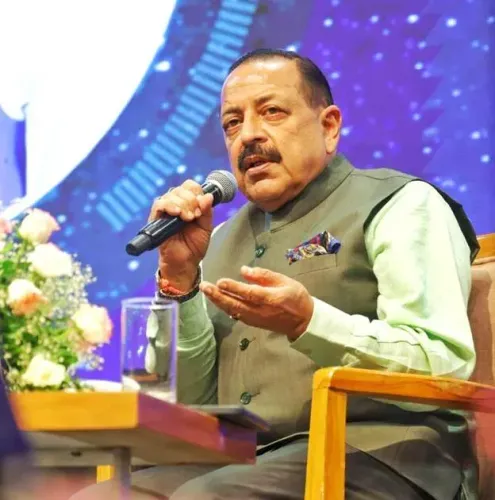
Union Science and Technology Minister Dr. Jitendra Singh on Friday, June 26, 2026, declared that artificial intelligence, nuclear technology, space, and quantum technologies will define the boundaries of future growth, global competitiveness, and geopolitical positioning, warning that nations lagging in these domains risk falling behind in both development and national security. The minister made the remarks during a #FiresideChat session, sharing his statement on X.
Context
Dr. Singh quoted directly: 'AI, Nuclear, Space and Quantum technologies will determine the contours of future growth, global competitiveness and geopolitical positioning. Countries that fall behind in these technologies, risk falling behind in both development and national security.' The framing positions these four technology verticals not merely as scientific pursuits but as pillars of statecraft and strategic deterrence.
The statement reflects a dual-use logic — that the same technologies powering economic growth also underpin a nation's defence posture and diplomatic leverage. This is a position increasingly adopted by major powers, including the United States, China, and European Union member states, since the late 2010s.
Policy Backdrop
India has built a layered policy architecture around these four domains. The National Quantum Mission, approved by the Cabinet in April 2023, carries an outlay of Rs 6,003 crore to develop indigenous quantum computers, communication systems, and sensors through 2031. The mission is designed to reduce India's dependence on foreign quantum hardware and position the country as a first-mover in quantum-secured communications.
On the space front, the Indian Space Policy 2023 and reforms under IN-SPACe have opened the sector to private players, with ISRO continuing to anchor strategic and civilian launch capabilities. The Department of Atomic Energy, through institutions such as BARC, manages India's nuclear research and power generation alongside its strategic programme. Meanwhile, NITI Aayog's National Strategy for AI, released in June 2018 under the #AIforAll banner, laid the early roadmap that has since been reinforced by the IndiaAI Mission.
Together, these initiatives represent India's attempt to pursue strategic autonomy across technology domains simultaneously — a departure from earlier sequential, sector-by-sector approaches.
Stakeholders and Impact
The minister's framing carries direct implications for scientific researchers, defence forces, and deep-tech startups operating in these verticals. For the startup ecosystem, policy signals from a minister of Dr. Singh's rank can shape funding priorities, regulatory timelines, and the pace of public procurement.
For India's defence establishment, the convergence of AI, quantum, and space capabilities is increasingly central to next-generation warfare doctrines — from autonomous systems to quantum-encrypted communications and satellite-based intelligence. The minister's linkage of development and national security in a single breath underscores that these are no longer siloed portfolios.
What's Next
Observers will watch for concrete milestones under the IndiaAI Mission and National Quantum Mission, including disbursement timelines and the establishment of quantum computing research hubs. Bilateral technology dialogues with Quad partners — the US, Japan, and Australia — as well as with the EU, are likely arenas where India's positioning in these four domains will be tested and calibrated. The next Union Budget will be a key indicator of whether allocations match the strategic ambition the minister has articulated.
Point of View
Quantum, space and nuclear in a single breath, he reinforces the government's view that these are not sectoral priorities but instruments of national power. The timing is notable: India is deepening technology partnerships with Quad allies while simultaneously investing in indigenous capability through missions like NQM and IndiaAI, seeking to avoid dependence on any single partner. The framing of development and security as inseparable outcomes suggests the ministry is building a political case for sustained, large-scale public investment in these domains ahead of budget deliberations.
NationPress
25 Sept 2026
Frequently Asked Questions
What did Dr. Jitendra Singh say about AI and quantum technology?
Dr. Jitendra Singh said that AI, nuclear, space and quantum technologies will determine the contours of future growth, global competitiveness and geopolitical positioning, and that countries falling behind in these areas risk losing ground in both development and national security.
What is India's National Quantum Mission?
The National Quantum Mission is a Cabinet-approved programme with an outlay of Rs 6,003 crore, sanctioned in April 2023, aimed at developing indigenous quantum computers, communication systems and sensors in India through 2031.
Why is quantum technology important for India's national security?
Quantum technology enables quantum-secured communications, advanced sensing and computing capabilities that are increasingly central to defence and intelligence operations, making it a strategic priority alongside AI and space for India's security planners.
What is the IndiaAI Mission?
The IndiaAI Mission is India's national initiative to accelerate artificial intelligence research, adoption and infrastructure, building on the AI strategy first outlined in NITI Aayog's 2018 National Strategy for AI under the #AIforAll framework.
How does India's space policy support its technology ambitions?
The Indian Space Policy 2023 and the IN-SPACe regulatory framework have opened India's space sector to private companies, complementing ISRO's strategic and civilian programmes and positioning India as a competitive player in the global space economy.