CM Yogi Calls for Safe, Trustworthy and Public-Centred Tech
Synopsis
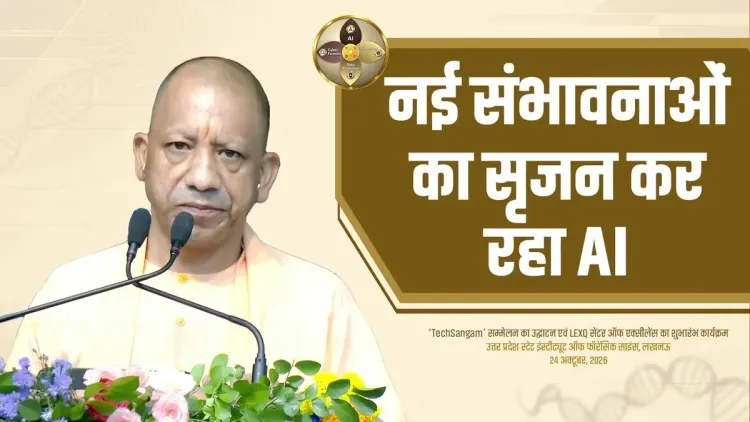
Chief Minister Yogi Adityanath of Uttar Pradesh called for technology to be made secure, trustworthy, and in the public interest, urging collective deliberation on responsible digital governance as the state deepens its e-governance footprint.
Key Takeaways
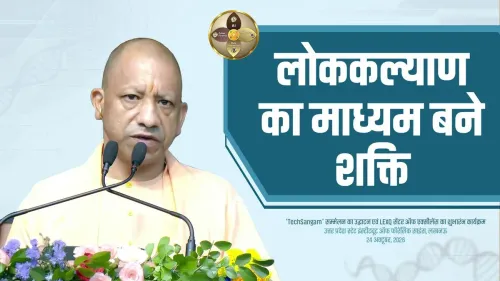
CM Yogi Adityanath stated that today's challenge is not just developing technology but making it secure, trustworthy, and in the public interest.
The statement was shared by the Chief Minister's Office of Uttar Pradesh on 24 October 2026 .
CM Yogi called for collective deliberation on how all stakeholders can work together toward responsible technology use.
Uttar Pradesh has been an active participant in the Digital India programme since 2015 , operating e-governance services across 75 districts .
The three-part framework — surakshit , vishwasneey , lokhitkari — addresses security, reliability, and public-interest design as distinct governance challenges.
Technology without accountability is just power without a leash. The Chief Minister's Office of Uttar Pradesh shared a pointed statement by Chief Minister Yogi Adityanath on Saturday, 24 October 2026, framing the central challenge of the digital age in stark, practical terms: building powerful technology is only half the job — making it secure, reliable, and genuinely useful for ordinary people is the harder half.
In the statement, CM Yogi said: 'Today's challenges are not only about developing technology, but also about making that power secure, trustworthy, and in the public interest. There is a need to reflect on how we can all work together in this direction.' The remarks — delivered as part of a speech — land at a moment when India's state governments are simultaneously racing to digitise services and grappling with the vulnerabilities that digitisation introduces.
The three-part test CM Yogi set for technology
CM Yogi's formulation is deliberate: surakshit (secure), vishwasneey (trustworthy), and lokhitkari (in the public interest). These three words are not interchangeable — they represent three distinct failure modes that have haunted technology deployment in Indian governance. Security breaches erode citizen data; unreliable platforms erode citizen trust; and systems built without public-interest design erode citizen access. Naming all three together signals an awareness that each dimension requires its own policy response.
Uttar Pradesh, India's most populous state with over 240 million people, has a direct stake in getting this balance right. The state has been an active participant in the Digital India programme launched in 2015, rolling out e-governance platforms, citizen service portals, and digital infrastructure across its 75 districts. The scale of that infrastructure also means the scale of risk — from data governance gaps to cybersecurity vulnerabilities — is proportionally large.
A call for collective deliberation, not a lone directive
What stands out in the Chief Minister's framing is the phrase 'how we can all work together.' Rather than issuing a top-down directive, the statement is an invitation — to state officials, technology developers, civil society, and citizens — to co-create solutions. That consultative register is notable in a context where technology policy in India has often been made at the centre and cascaded downward.
Indian state leaders have periodically raised similar concerns, but few have distilled them into a single, deployable formula as crisply as this. The statement could presage formal state-level consultations on cybersecurity frameworks, data governance rules, or responsible AI deployment standards specific to Uttar Pradesh — areas where states have growing room to act alongside central policy.
The question CM Yogi has placed on the table is simple and urgent: if the technology is powerful but neither safe nor honest nor fair, who exactly does it serve? The answer, his statement implies, had better be everyone — or the work is not finished.
Point of View
Trustworthy, and in the public interest — reflects a growing awareness among Indian state governments that digital expansion without governance guardrails creates political and civic liabilities. For Uttar Pradesh, a state managing one of the largest sub-national e-governance footprints in the world, this is not an abstract philosophy but an operational imperative. The consultative tone suggests the Chief Minister may be laying rhetorical groundwork for a state-level policy framework on data governance or cybersecurity, potentially positioning UP as a model for responsible digitisation ahead of national conversations on AI and data regulation.
NationPress
24 Oct 2026
Frequently Asked Questions
What did CM Yogi Adityanath say about technology?
CM Yogi Adityanath said that today's challenges are not only about developing technology but also about making it secure, trustworthy, and in the public interest, calling for collective deliberation on how all stakeholders can work together in this direction.
What is Uttar Pradesh's role in India's Digital India programme?
Uttar Pradesh has been an active participant in the Digital India programme since its launch in 2015, deploying e-governance platforms and citizen service portals across its 75 districts as part of national digital infrastructure efforts.
What does 'lokhitkari' mean in CM Yogi's technology statement?
'Lokhitkari' means 'in the public interest' in Hindi. CM Yogi used it alongside 'surakshit' (secure) and 'vishwasneey' (trustworthy) to describe the three qualities that technology must possess beyond mere technical capability.
Why is CM Yogi calling for collective action on technology governance?
CM Yogi's statement frames technology governance as a shared challenge requiring input from state officials, developers, and citizens — signalling a consultative approach rather than top-down directives on issues like cybersecurity and data governance.
Could UP introduce new technology governance policies after CM Yogi's statement?
The statement could foreshadow state-level consultations or policy documents on cybersecurity, data governance, or responsible technology use in Uttar Pradesh, though no specific policy announcement has been made yet.