CM Yogi credits technology integration for UP Police's new identity
Synopsis
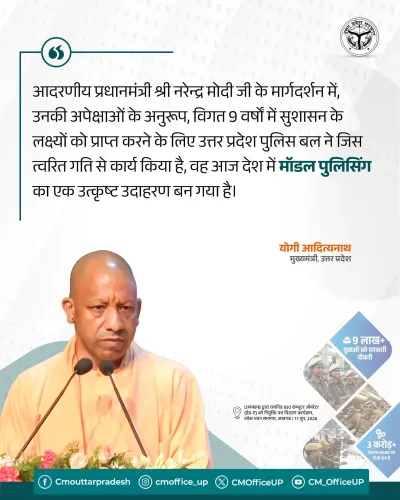
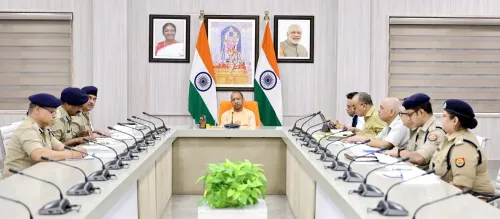
Uttar Pradesh Chief Minister Yogi Adityanath attributed UP Police's improved public reputation to the deep integration of technology into both policy thinking and day-to-day police operations, framing tech-driven reform as his government's core law-and-order doctrine.
Key Takeaways
CM Yogi Adityanath posted on 1 October 2026 crediting technology integration for UP Police's new identity.
He distinguished between two levels of tech adoption: at the level of 'thought' (विचार) and 'practice' (व्यवहार), arguing both are necessary for results.
UP Police serves India's most populous state , covering over 240 million people , making institutional reform here nationally significant.
The Chief Minister framed tech-driven policing as a governance doctrine, not merely an operational upgrade.
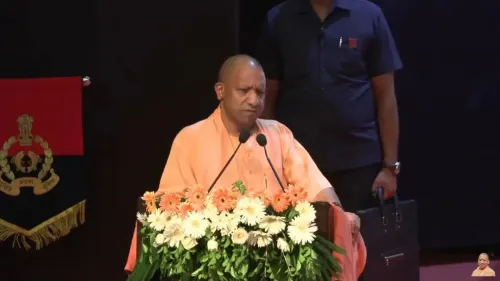
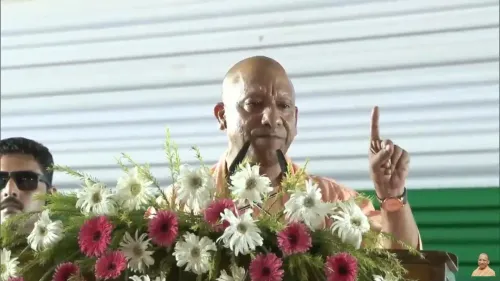
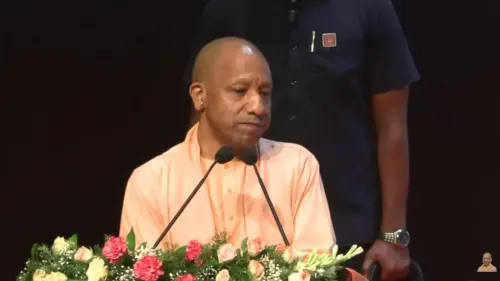
The post included a video, suggesting a formal event or presentation context behind the remark.
Law and order remains a central election issue in Uttar Pradesh, giving the claim political as well as administrative weight.
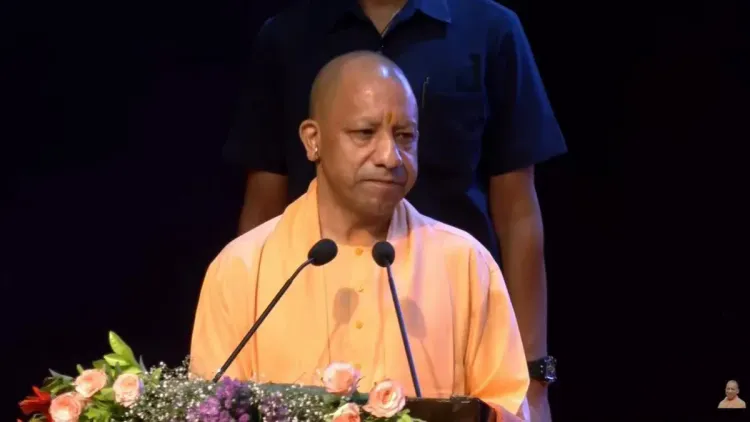
When thought and practice converge with technology, results follow — and Uttar Pradesh Chief Minister Yogi Adityanath says that is exactly the story of UP Police's transformed reputation. In a post on X on Thursday, 1 October 2026, the Chief Minister pointed to tech-driven reform as the engine behind the force's rising public standing.
CM Yogi wrote in Hindi: 'जब विचार और व्यवहार में टेक्नोलॉजी का समावेश होता है तो वह परिणाम भी उपलब्ध करवाता है।' ('When technology is integrated into thought and practice, it also delivers results.') He added that the identity UP Police has built today is a direct outcome of precisely this approach.
Technology as the turning point for UP Police
The remark is more than a pat on the back — it frames a governing philosophy. Embedding technology at both the policy-design level ('विचार', thought) and the day-to-day operational level ('व्यवहार', practice) is the formulation CM Yogi is offering as the blueprint. The implication is structural: reform that does not go deeper than hardware or apps will not stick; it has to change how officers think and act.
UP Police, which covers India's most populous state with a population of over 240 million people, has historically faced scrutiny over accountability, response times, and public trust. A shift in that perception — if it holds — would represent one of the more significant institutional turnarounds in Indian law enforcement.
What 'results' the Chief Minister is pointing to
The post does not itemise specific metrics, but the language of 'identity' ('पहचान') suggests CM Yogi is speaking to a reputational shift rather than a single data point. The video attached to the post likely elaborates on recent milestones — but the verbal message alone plants a clear political and administrative stake in the ground: this government owns the technology-reform story of UP Police, and it is claiming that the model works.
For a state that heads into every election cycle with law-and-order as a primary battleground, that claim carries weight well beyond the ceremonial. The Chief Minister's framing turns a policing update into a statement of governance doctrine — tech integration is not an add-on, it is the core.
Whether independent audits of crime data, conviction rates, or citizen-satisfaction surveys bear out the optimism remains the live question — but Yogi Adityanath has drawn the line clearly: results are the proof, and he is pointing to UP Police as exhibit one.
Point of View
Surveillance infrastructure, digital FIRs — as proof of administrative efficiency in Uttar Pradesh. By attributing UP Police's reputational shift to tech integration at both the ideation and implementation levels, he is staking a claim that separates his administration from predecessors accused of politicising the force. The framing also pre-empts opposition critiques: if 'results' are the metric, the conversation is shifted from alleged human-rights concerns to crime statistics, where the government controls the narrative. Ahead of any future electoral cycle, this is as much brand-building for the administration as it is a policing update.
NationPress
1 Oct 2026
Frequently Asked Questions
What did CM Yogi Adityanath say about UP Police on 1 October 2026?
CM Yogi Adityanath stated that when technology is integrated into both thought and practice, it delivers results, and credited this approach for the identity and reputation UP Police has built.
How has technology changed UP Police under CM Yogi?
CM Yogi argues that embedding technology at both the policy-design and day-to-day operational levels has transformed how UP Police functions and is perceived publicly, though specific metrics were not cited in this particular post.
Why is UP Police reform significant for India?
UP Police serves Uttar Pradesh, India's most populous state with over 240 million residents. Any meaningful institutional reform in its police force carries national significance for law enforcement standards.
What is CM Yogi's governance philosophy on law and order?
Yogi Adityanath has consistently positioned technology integration — from digital FIRs to surveillance infrastructure — as the foundation of his administration's law-and-order approach, arguing that tech must change both thinking and behaviour within the force.
Is law and order a key issue in Uttar Pradesh elections?
Yes. Law and order has historically been a primary electoral battleground in Uttar Pradesh, making any government claim about policing improvements a politically significant statement beyond its administrative content.