CM Yogi Declares UP Police Has Transformed Since 2017
Synopsis
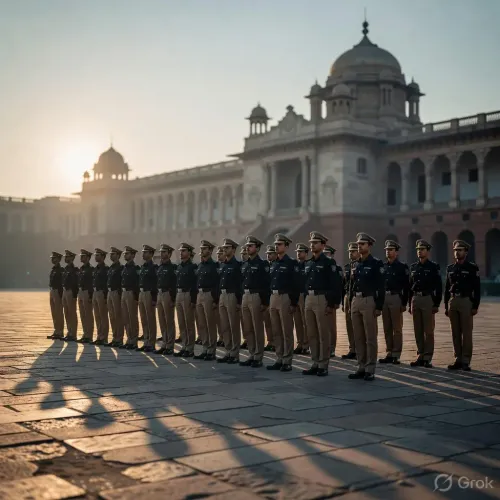
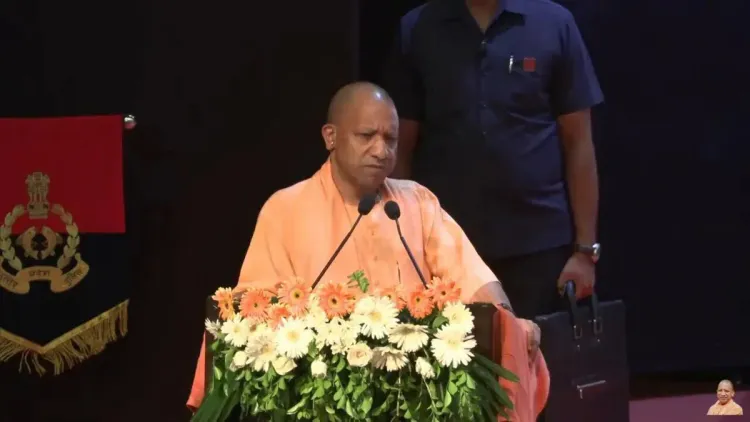
Uttar Pradesh Chief Minister Yogi Adityanath declared on X that the state police force has fundamentally changed under his watch, invoking the BJP government's nine-year law-and-order record ahead of Independence Day 2026.
Key Takeaways
CM Yogi Adityanath posted on X on August 14, 2026 , stating 'The old UP Police is no more.' The statement directly invokes the BJP government's 2017 mandate in Uttar Pradesh , when law and order was the party's core election promise.
The post arrived on the eve of Independence Day , amplifying its symbolic resonance.
The 'new UP Police' narrative has been a consistent pillar of the Yogi administration's public messaging since 2017 .
Critics have raised due-process concerns around the state's policing record, a debate this declaration is likely to reignite.
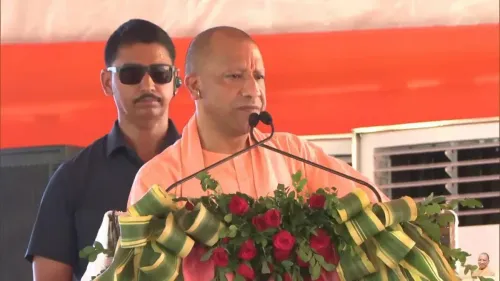
Nine years after sweeping to power on a law-and-order mandate, Uttar Pradesh Chief Minister Yogi Adityanath has drawn a sharp line between the state's past and present — posting on X on August 14, 2026, with a message that lands like a campaign statement and a governance claim at once: 'Ab purani UP Police nahin hai' — 'The old UP Police is no more.'
A Slogan Rooted in Nine Years of Policing Overhaul
When the BJP came to power in Uttar Pradesh in March 2017, law and order was the centrepiece of its pitch to voters. The state had a reputation for high crime, communal tension, and a police force seen by many as compromised by political interference. Chief Minister Yogi Adityanath made it his signature issue — and has returned to it repeatedly ever since.
The post, brief as it is, carries the weight of that nine-year arc. It is not a policy announcement — it is a verdict, delivered by the Chief Minister himself, on his own administration's record.
What the 'New UP Police' Narrative Claims
Since 2017, the Uttar Pradesh government has consistently projected a narrative of tougher policing: encounters, anti-mafia drives, and crackdowns on organised crime have been central to its public messaging. The phrase 'new UP Police' has become shorthand in state politics for this claimed transformation — a force, the government argues, that is more accountable, more assertive, and less susceptible to the patronage networks that once defined it.
The post arrives on the eve of Independence Day, August 15 — a moment when such declarations carry additional symbolic weight, framing law-enforcement reform as part of a broader national renewal.
The Debate This Post Will Reignite
Not everyone reads the transformation the same way. Critics of the government have long argued that the 'new UP Police' narrative papers over due-process concerns, particularly around the state's encounter record. What the Chief Minister frames as decisive action, civil liberties voices frame as accountability gaps. That debate is unlikely to quieten after a four-word post — if anything, a declaration this blunt tends to sharpen it.
Watch for state crime statistics and any forthcoming announcements on police recruitment or training as the metrics against which this claim will ultimately be tested.
Point of View
Repeating the 'transformed UP Police' narrative ahead of Independence Day serves a dual purpose: it reinforces his core brand identity and pre-empts opposition critiques heading into future electoral cycles. The timing also fits a broader BJP pattern of framing state governance achievements as expressions of national strength. Whether the claim holds up to scrutiny depends on which metrics one privileges — encounter statistics and organised-crime arrests, or civil-liberties benchmarks — and that tension is precisely what makes this a live political fault line, not a settled question.
NationPress
29 Sept 2026
Frequently Asked Questions
What did CM Yogi Adityanath post about UP Police?
On August 14, 2026 , CM Yogi Adityanath posted on X saying 'Ab purani UP Police nahin hai' — meaning 'The old UP Police is no more' — asserting that the force has been fundamentally transformed under his government.
How has UP Police changed since 2017?
Since the BJP government came to power in Uttar Pradesh in 2017 , the state administration has emphasised anti-mafia drives, encounter operations, and crackdowns on organised crime as evidence of a reformed and more assertive police force.
Why is CM Yogi talking about UP Police on August 14?
The post was made on the eve of Independence Day, August 15 , a moment when governance achievements are often highlighted, giving the law-and-order declaration additional symbolic weight.
What are the criticisms of the 'new UP Police' narrative?
Civil liberties groups and opposition voices have raised concerns about due-process standards, particularly around the state's encounter record, arguing that the 'new UP Police' framing does not adequately address accountability gaps.
What should we watch for after this UP Police statement?
Future releases of Uttar Pradesh state crime data and any government announcements on police recruitment or training programmes will be the clearest indicators of whether the transformation claim is backed by measurable outcomes.