CM Yogi holds up UP Police as a national law-order benchmark
Synopsis
Chief Minister Yogi Adityanath claimed on 6 November 2026 that crime victims across India wish UP Police had been present at their moment of crisis — framing nine years of anti-mafia operations as a national policing benchmark.
Key Takeaways
CM Yogi Adityanath posted on 6 November 2026 asserting that victims of crimes anywhere in India wish UP Police had been present to deter attackers.
The post references 'hooligans and mafia' losing their audacity — a direct callback to the state's sustained anti-organised-crime drives since March 2017 .
UP's anti-mafia campaign has included police encounters, property demolitions, and asset recovery operations across nine years of BJP rule.
The framing is explicitly national, positioning UP Police as a model for other states rather than a local force.
Such messaging typically intensifies ahead of electoral cycles, when governance records are contested as campaign credentials.
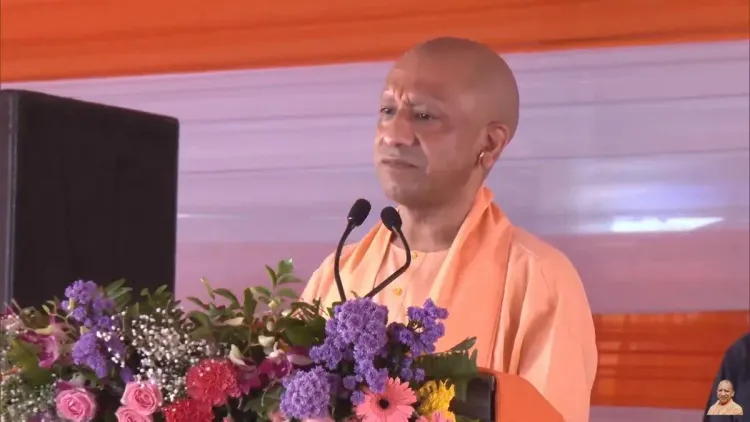
Whenever crime strikes anywhere in India, says Uttar Pradesh Chief Minister Yogi Adityanath, the first cry of the victim is the same: had UP Police been here, these gangsters and mafia would never have dared this far. That pointed assertion, posted on X on 6 November 2026, captures the core of the Yogi administration's brand — that nine years of relentless anti-crime operations in India's most populous state have made its police force a byword for deterrence.
In the original Hindi, CM Yogi wrote: 'देश के अंदर कहीं कोई घटना घटित होती है तो पीड़ित की ओर से एक ही आवाज आती है कि यूपी पुलिस होती तो इन गुंडों और माफियाओं का इतना दुस्साहस नहीं होता...' — 'Wherever an incident occurs inside the country, the only voice that comes from the victim's side is: had UP Police been there, these hooligans and mafia would not have had this much audacity.'
Nine years of anti-mafia operations — what the record shows
Since March 2017, when Yogi Adityanath first took office, the Uttar Pradesh government has run sustained campaigns against organised crime — police encounters, large-scale demolitions of illegally acquired properties, and recovery of assets linked to named mafia networks. The administration has repeatedly publicised these operations as proof that political will, backed by police force, can break entrenched criminal ecosystems that flourished for decades.
The imagery the Chief Minister invokes — victims wishing UP Police had been present — is a rhetorical inversion of the state's older reputation. For much of the preceding decade, Uttar Pradesh was held up in national conversation as a cautionary tale on crime and lawlessness. The Yogi government has worked methodically to flip that narrative, and Friday's post is the latest instalment of that project.
A message aimed well beyond Lucknow
The framing is explicitly national in scope: 'anywhere inside the country,' not just within UP's borders. That phrasing positions the state police not as a local force but as a standard against which policing elsewhere should be measured — a pointed, implicit contrast with states governed by opposition parties where high-profile crimes have recently drawn public anger.
Such messaging typically sharpens ahead of electoral cycles, when governance credentials become campaign currency. The release of annual national crime statistics is a moment this narrative is likely to be amplified further, as both the ruling party and its critics parse the numbers for their own arguments.
The question that hangs in the air is whether crime data, when it arrives, will confirm the deterrence story — or complicate it. Either way, CM Yogi has made UP Police the centrepiece of his governance identity, and the country is watching.
Point of View
The message bypasses data disputes and lands on emotion, which is far harder to rebut. The timing, with national crime figures due and electoral calendars looming, suggests this is not an isolated social media moment but the opening note of a sustained campaign pitch. Whether annual crime data ultimately validates or complicates the deterrence narrative will determine how durable this framing proves.
NationPress
6 Nov 2026
Frequently Asked Questions
What did CM Yogi Adityanath say about UP Police on 6 November 2026?
He claimed that whenever a crime occurs anywhere in India, victims express the wish that UP Police had been present, arguing that the force's record against gangsters and mafia networks has made it a national deterrent.
What anti-mafia operations has the Uttar Pradesh government carried out since 2017?
Since March 2017 the state government has run sustained campaigns including police encounters, demolitions of illegally acquired properties, and large-scale recovery of assets linked to named organised-crime networks.
Why is CM Yogi comparing UP Police to policing in other states?
The Chief Minister's framing positions UP as a governance model, implicitly contrasting his administration's approach with states where high-profile crimes have drawn public anger — a contrast that typically intensifies ahead of elections.
How has Uttar Pradesh's law-and-order reputation changed under Yogi Adityanath?
The state, once widely cited as a cautionary example on crime, has been rebranded by the Yogi administration through visible anti-crime operations; the government argues the mafia networks that operated freely for years have been systematically dismantled.
What will determine whether Yogi's law-and-order claims hold up nationally?
Annual national crime statistics are the key data point: when released, they will be parsed by both the ruling party and opposition as evidence for or against the deterrence narrative CM Yogi is building.