Yogi Adityanath: UP shifted from mafia rule to law and order since 2017
Synopsis
On the seventh day of Navratri, CM Yogi Adityanath used a post on X to claim UP's most dramatic governance shift in a decade — police response time cut from 65 minutes to 5, women's workforce participation tripled to 36%, and what he calls a wholesale dismantling of mafia rule since 2017. The remarks double as political messaging ahead of future electoral cycles in India's most populous state.
Key Takeaways
CM Yogi Adityanath claimed Uttar Pradesh has moved from mafia-driven lawlessness to a 'fear-free environment' since BJP came to power in 2017 .
Average police response time reportedly fell from 65 minutes in 2016 to five minutes under the current government.
Women's labour force participation in UP said to have risen from 12 per cent to over 36 per cent .
Key women's safety schemes cited: Mission Shakti , Integrated 1090 Helpline , Women's Beat Policing , and Safe City Project .
CM Yogi linked improved security to a threefold growth in the state's GSDP and per capita income, though these figures are unverified independently.
Remarks were made on the seventh day of Navratri via a post on social media platform X .
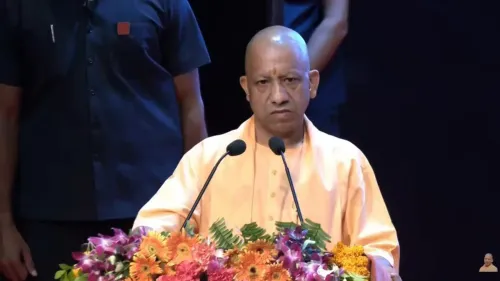
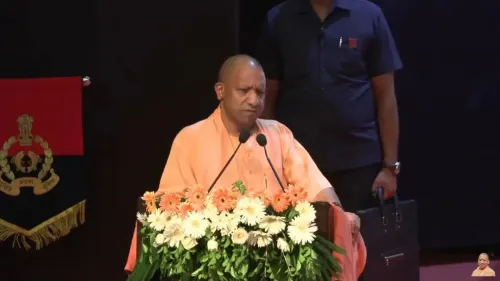
Uttar Pradesh Chief Minister Yogi Adityanath on Saturday, 17 October 2026, asserted that the state had undergone a fundamental transformation in its law-and-order landscape since the Bharatiya Janata Party (BJP) came to power in 2017, moving from what he described as a climate of fear and criminal dominance to a 'fear-free environment' under his government's zero-tolerance approach.
The Chief Minister made the remarks in a post on social media platform X on the seventh day of Navratri, extending festival greetings to citizens while invoking the divine form of Goddess Kaalratri — traditionally associated with the destruction of evil — to draw a parallel with his administration's crackdown on organised crime.
What Yogi Said About the Pre-2017 Era
'Before the year 2017, the fear and chaos born of terror by mafia elements akin to Raktabija, rioters, and criminals had cast a dark shadow over the state, erecting serious obstacles in the path of sisters and daughters' safety, education, and self-reliance,' CM Yogi said.
He claimed that over 9.5 years, the BJP's double-engine government — a term the party uses to denote aligned BJP administrations at both the state and Centre — had applied a zero-tolerance policy towards crime that had, in his words, 'suppressed these demonic forces, establishing the rule of law and a fear-free environment in the state.'
Women's Safety Initiatives Cited as Evidence
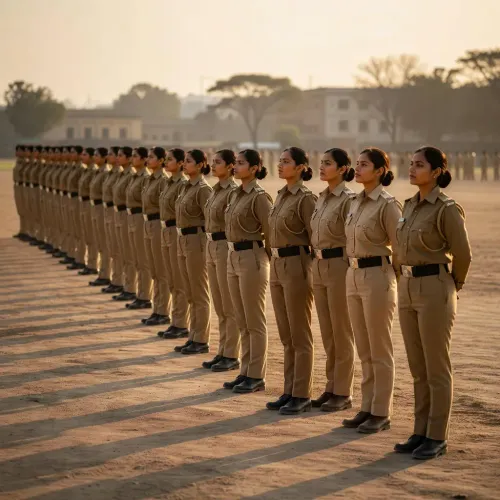
The Chief Minister highlighted several state-level programmes aimed at strengthening women's security, including Mission Shakti, the Integrated 1090 Helpline, Women's Beat Policing, and the Safe City Project. He said these initiatives had extended safety measures beyond homes to streets, schools, colleges, workplaces, and other public spaces.
Among the most specific claims was a reported improvement in police response time. According to CM Yogi, the average response time — which stood at 65 minutes in 2016 — had been brought down to just five minutes, which he described as 'clear proof' of the administration's commitment to public safety. 'Inspired by this very sense of security, women today are fearlessly working even in night shifts,' he added.
Economic Gains Linked to Security Improvements
CM Yogi also tied the law-and-order narrative to broader economic outcomes, citing a rise in women's labour force participation from 12 per cent to over 36 per cent as evidence of a wider social and economic shift. 'The rise in women's labour force participation from 12 per cent to over 36 per cent is proof that the state's feminine power, transforming into economic strength, is imparting new momentum to Uttar Pradesh's economic development,' he said.
He further linked women's growing participation in agriculture, industry, services, and entrepreneurship to what he described as a threefold growth in Uttar Pradesh's Gross State Domestic Product (GSDP) and per capita income — though independent verification of these figures was not immediately available.
Context and Political Significance
This comes amid the BJP's broader effort to project Uttar Pradesh — India's most populous state and a critical electoral battleground — as a governance success story. Critics and opposition parties have periodically challenged the government's crime data, arguing that improvements in reported figures do not always reflect ground realities, particularly in rural districts. Nonetheless, the BJP has made law-and-order a central plank of its political messaging in the state ahead of future electoral cycles.
With Navratri providing a high-visibility platform, CM Yogi's remarks appear designed to reinforce the narrative of transformation while building outreach among women voters — a constituency the BJP has increasingly courted in Uttar Pradesh.
Point of View
Particularly the leap in women's workforce participation from 12% to 36% and the five-minute police response time, are striking and deserve independent scrutiny; state-reported metrics in UP have historically been contested by opposition parties and civil society researchers. What is clear is that the BJP has successfully framed Uttar Pradesh's political narrative around the 'before 2017 / after 2017' divide, and Yogi is doubling down on that framing with measurable — if unverified — numbers. Whether the data holds up to third-party audit will determine how durable this narrative proves to be.
NationPress
17 Oct 2026
Frequently Asked Questions
What did CM Yogi Adityanath say about Uttar Pradesh's law-and-order transformation?
CM Yogi Adityanath said that before 2017, Uttar Pradesh was gripped by fear caused by mafia elements and criminals, but the BJP's double-engine government had since established the rule of law and created a fear-free environment through a zero-tolerance policy on crime. He made the remarks in a post on social media platform X on the seventh day of Navratri.
How much has police response time improved in Uttar Pradesh, according to Yogi?
According to CM Yogi, the average police response time in Uttar Pradesh fell from 65 minutes in 2016 to just five minutes under the BJP government. He described this as clear proof of the administration's commitment to public safety and emergency response.
What women's safety schemes has the Yogi government cited as key achievements?
The Yogi government has highlighted Mission Shakti, the Integrated 1090 Helpline, Women's Beat Policing, and the Safe City Project as flagship initiatives. CM Yogi claims these programmes have extended women's security to streets, schools, colleges, and workplaces across the state.
What is the claim about women's labour force participation in Uttar Pradesh?
CM Yogi claimed that women's labour force participation in Uttar Pradesh rose from 12 per cent to over 36 per cent under his government, which he attributed to improved safety conditions enabling women to access employment, including night shifts. Independent verification of this figure was not immediately available.
Why did CM Yogi invoke Goddess Kaalratri in his Navratri post?
CM Yogi drew a symbolic parallel between Goddess Kaalratri's mythological victory over evil forces and his government's crackdown on criminals and mafia elements in Uttar Pradesh. The invocation was part of Navratri festival greetings shared on platform X, linking religious symbolism to his law-and-order governance narrative.