Textiles Ministry holds cyber and e-waste workshop in Delhi
Synopsis
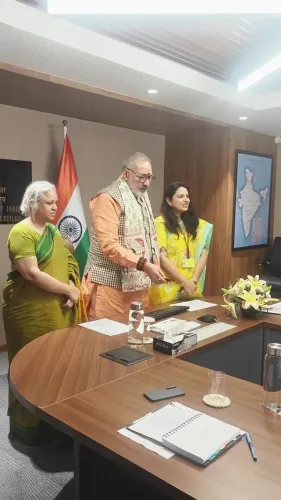
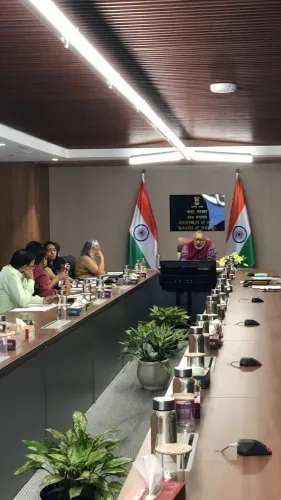
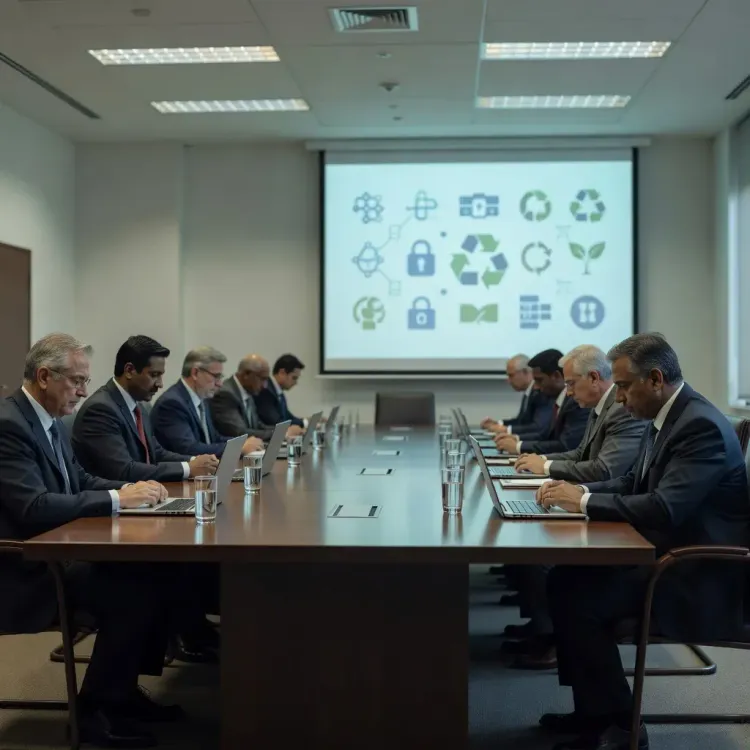
The Ministry of Textiles held an awareness workshop in New Delhi on cyber threats and e-waste management, Minister Giriraj Singh announced on 17 October 2026, linking digital security with environmental responsibility under a single initiative for ministry officials and staff.
Key Takeaways
Union Textiles Minister Giriraj Singh announced a ministry-organised workshop in New Delhi on 17 October 2026 .
The workshop addressed two themes simultaneously: protection against cyber threats and proper e-waste disposal .
The initiative aligns with India's E-Waste (Management) Rules, 2016 and the National Cyber Security Policy, 2013 .
Ministry officials and textile sector staff were the target audience for the session.
Central ministries have increasingly run similar internal awareness drives as part of broader digital governance and sustainability goals.
Follow-up guidelines on e-waste compliance for establishments under the ministry's purview may be the next step to watch.
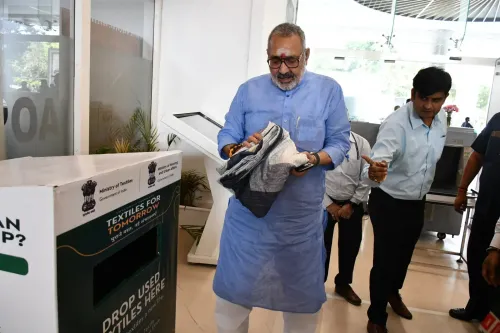
Cybersecurity vigilance and responsible disposal of electronic waste are not just good habits — they are fast becoming non-negotiable standards for every government office in India. Union Textiles Minister Giriraj Singh flagged exactly this on Saturday, 17 October 2026, announcing that the Ministry of Textiles had organised a dedicated awareness workshop in New Delhi to address both cyber threats and e-waste management among ministry personnel.
Posting in Hindi, the Minister wrote: 'डिजिटल सुरक्षा के प्रति सतर्कता और ई-कचरे का उचित निपटान सुरक्षित कार्यप्रणाली और पर्यावरण संरक्षण के लिए बेहद आवश्यक है' — 'Vigilance on digital security and proper disposal of e-waste are absolutely essential for safe working practices and environmental protection.' The workshop, he noted, brought these two concerns together under one roof for the first time at the ministry level.
Why cyber threats and e-waste landed on the same agenda
The pairing is deliberate and logical. End-of-life electronic devices — old computers, hard drives, servers — carry residual data that can be exploited if not wiped and disposed of properly. Handling them carelessly creates both an environmental hazard and a cybersecurity gap. By addressing the two issues in a single session, the Ministry of Textiles is signalling that safe digital governance and green office practices are two sides of the same coin.
India's regulatory framework already covers both fronts. The E-Waste (Management) Rules, 2016, issued by the Ministry of Environment, Forest and Climate Change, set out mandatory protocols for the collection, recycling and disposal of electronic waste. The National Cyber Security Policy, 2013, meanwhile, directs all government bodies to build awareness about digital threats and protect critical information infrastructure. The Textiles Ministry workshop is, in effect, a field-level step toward compliance with both frameworks.
A pattern spreading across central ministries
The Ministry of Textiles is not alone in running such programmes. Central ministries have increasingly conducted internal workshops on e-waste handling and cybersecurity in recent years, part of a broader push to align government offices with national sustainability and digital-governance goals. What makes this workshop notable is its explicit dual focus — merging environmental compliance with digital hygiene — rather than treating each as a separate administrative checkbox.
For a ministry that oversees one of India's most electronics-intensive industrial supply chains — from computerised looms to digital design systems — keeping staff alert to both risks carries real operational weight. Ministry officials and textile-sector staff were the primary audience for the New Delhi session.
What the ministry's move could signal next
Observers will now watch whether the Textiles Ministry formalises follow-up guidelines on e-waste compliance for establishments under its purview, and whether similar dual-track awareness programmes are extended to other central ministries. If the model travels, it could quietly sharpen the government's posture on two of its most pressing governance challenges simultaneously — one green, one digital.
One workshop, two critical responsibilities. That is a template worth replicating.
Point of View
The initiative also serves a softer political purpose: projecting the ministry as a proactive, responsible actor beyond its core sectoral brief. If similar programmes cascade across ministries, they could quietly strengthen India's compliance record under both its e-waste rules and its national cyber security framework. The real test will be whether this remains a one-off event or seeds a durable, enforceable policy for government establishments.
NationPress
17 Oct 2026
Frequently Asked Questions
What was the Ministry of Textiles workshop in New Delhi about?
The Ministry of Textiles organised an awareness workshop in New Delhi focused on protecting against cyber threats and ensuring proper e-waste management among ministry officials and staff.
Why is e-waste management important for government offices in India?
Old electronic devices can carry residual sensitive data, posing a cybersecurity risk if not properly disposed of, and improper disposal also causes environmental harm. India's E-Waste (Management) Rules, 2016 make proper disposal a legal requirement for organisations.
What is India's policy on e-waste disposal?
The E-Waste (Management) Rules, 2016, issued by the Ministry of Environment, Forest and Climate Change, set mandatory protocols for the collection, recycling and disposal of electronic waste in India.
Who is Giriraj Singh and what ministry does he head?
Giriraj Singh is a senior BJP leader, Lok Sabha MP from Begusarai in Bihar, and currently serves as India's Union Minister of Textiles.
Are other Indian ministries running similar cybersecurity and e-waste workshops?
Yes, central ministries have increasingly conducted internal workshops on e-waste handling and cybersecurity in recent years as part of broader digital governance and sustainability efforts, though the dual-focus format adopted by the Textiles Ministry is notable.