Giriraj Singh maps India's textile push to $350 bn by 2030
Synopsis
Union Textiles Minister Giriraj Singh has published an article outlining India's roadmap to a $350 billion textile industry and $100 billion in exports by 2030, built on circular economy, green manufacturing, recycling, handloom and skill development pillars under PM Modi's leadership.
Key Takeaways
Union Textiles Minister Giriraj Singh published a detailed article in Prabhat Khabar on 29 September 2026 on India's textile sector strategy.
The government targets a $350 billion textile industry and $100 billion in exports by 2030 .
Key pillars include 'Waste to Wealth', circular economy, the Tex Eco framework, green manufacturing, and scientific textile waste management.
The Production Linked Incentive (PLI) Scheme for Textiles (approved 2021) and NITI Aayog's circular economy frameworks underpin the policy architecture.
Handloom promotion and Skill India Mission training are integral to the roadmap alongside industrial-scale manufacturing.
The strategy is framed within the broader Atmanirbhar Bharat and Make in India agendas, with EU sustainability requirements adding urgency.
A $350 billion textile industry and $100 billion in exports by 2030 — those are the numbers Union Textiles Minister Giriraj Singh has put on the table in a wide-ranging article published on Tuesday, 29 September 2026, laying out India's most ambitious roadmap yet for the sector. The piece, appearing in Hindi daily Prabhat Khabar, frames the ambition not merely as an economic target but as a commitment to building a clean, circular, innovation-driven and globally competitive textile sector.
Writing in Hindi, Minister Singh argues that India's big preparation in the textile industry — 'वस्त्र उद्योग में भारत की बड़ी तैयारी' — 'is not merely an economic goal, but a resolve to build a clean, circular, innovation-rich and globally competitive textile sector.' He credits the direction set by Prime Minister Narendra Modi, and lays out the pillars supporting that resolve: 'Waste to Wealth', circular economy principles, the 'Tex Eco' framework, green manufacturing, recycling, handloom, skill development, and the scientific management of textile waste.
From waste to wealth: the circular economy bet
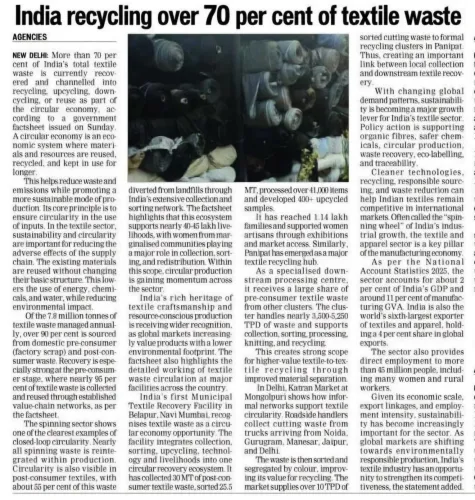
The 'Waste to Wealth' thread running through Singh's piece reflects a policy direction that has been building since 2021, when NITI Aayog advanced circular economy and waste-reduction frameworks for industry. In the textile context, that means turning fabric offcuts, post-consumer clothing and chemical effluents into raw material rather than landfill. The EU's tightening sustainability requirements for imported garments have made this not just an environmental virtue but a hard commercial necessity for Indian exporters.
The 'Tex Eco' framework Singh references signals an integrated approach — linking environmental standards directly to manufacturing incentives. This sits alongside the Production Linked Incentive (PLI) Scheme for Textiles, approved in 2021, which was designed to attract fresh investment into apparel and technical textiles and scale up exports. Green manufacturing and recycling infrastructure are the next layer being added to that foundation.
Handloom and skills: the human backbone
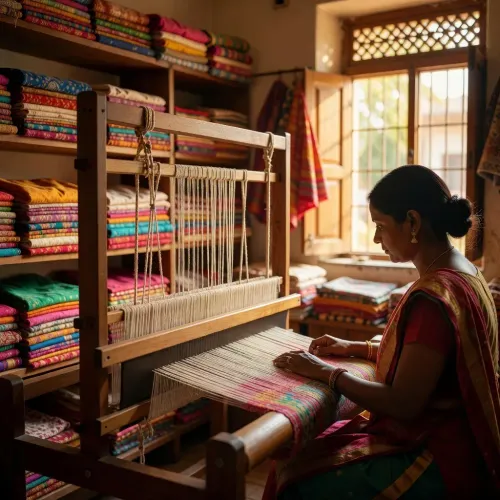
Alongside the industrial-scale targets, Singh's article highlights handloom and skill development — a reminder that any credible $350 billion vision must account for the millions of artisans and workers who form the sector's base. The National Handloom Development Programme and the Skill India Mission, active since 2015, have supported traditional textile clusters for over a decade; Singh's framing suggests these are not legacy programmes to be phased out but active contributors to the circular and sustainable model.
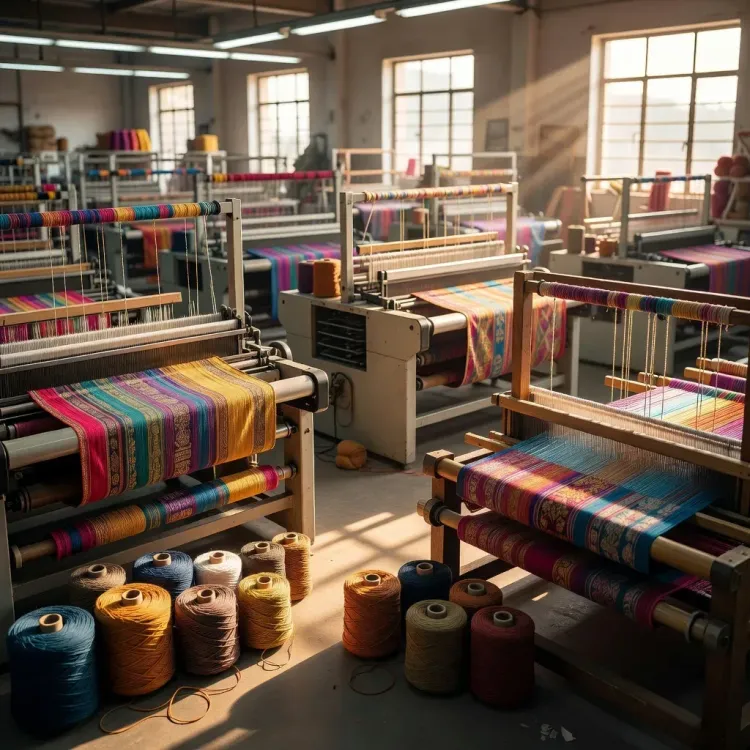
Textile MSMEs, handloom weavers, skilled workers and exporters are all named beneficiaries of this integrated push — a coalition that spans the artisan lane and the automated factory floor simultaneously.
Where the $350 billion target fits India's bigger manufacturing story
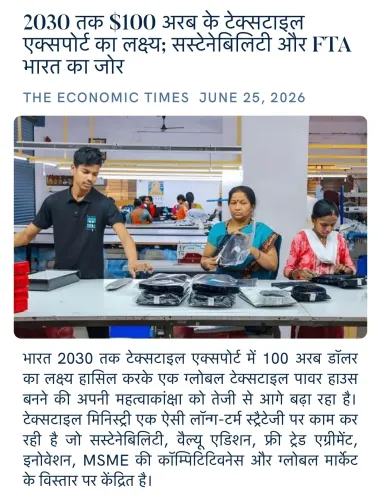
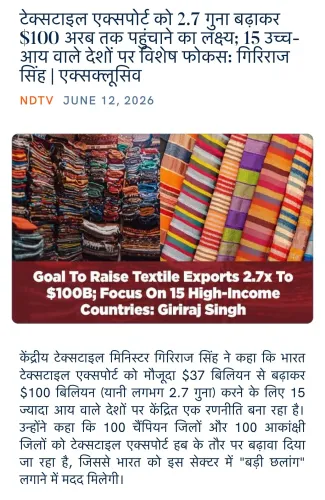
The scale of ambition Singh articulates places textiles squarely within the larger Atmanirbhar Bharat and Make in India frameworks — the government's decade-long effort to expand domestic manufacturing and reduce import dependence. Textiles are a natural fit: the sector is labour-intensive, export-oriented, and central to rural livelihoods. Hitting $100 billion in exports would require roughly doubling current export levels, demanding simultaneous gains in productivity, quality compliance, and sustainability credentials.
The real test will come in the next Union Budget — whether allocations for green manufacturing infrastructure and recycling capacity match the rhetorical scale of the targets. An updated National Textile Policy is the policy instrument to watch.
Point of View
Raising the strategic stakes for India's export ambitions — domestically framing compliance as opportunity rather than burden is politically astute. The explicit linkage of circular economy, handloom and skill development signals an effort to build a cross-constituency coalition around what is otherwise a technocratic export target. The $350 billion headline figure, however, will be judged by the budget line items that follow — not the op-ed that precedes them. If the next fiscal allocation for green manufacturing infrastructure and recycling capacity is thin, the gap between vision and execution will widen.
NationPress
29 Sept 2026
Frequently Asked Questions
What is India's textile industry target for 2030?
Union Textiles Minister Giriraj Singh has cited a target of building a $350 billion textile industry and achieving $100 billion in textile exports by 2030 , as outlined in his article published on 29 September 2026.
What is the Tex Eco framework in India's textile policy?
'Tex Eco' is a framework mentioned by Minister Giriraj Singh as part of India's approach to integrating environmental standards with textile manufacturing incentives, aimed at promoting green and circular production.
What is India's Waste to Wealth initiative for textiles?
The 'Waste to Wealth' initiative seeks to convert textile waste — including fabric offcuts and post-consumer clothing — into reusable raw material, reducing landfill dependence and supporting a circular economy in the textile sector.
What is the PLI scheme for textiles in India?
The Production Linked Incentive (PLI) Scheme for Textiles , approved in 2021 , offers financial incentives to manufacturers to boost domestic production, attract investment and scale up exports in apparel and technical textiles.
How does handloom fit into India's textile export ambitions?
Handloom is explicitly included in Minister Singh's roadmap alongside industrial manufacturing, supported by the National Handloom Development Programme and the Skill India Mission , which have backed traditional textile clusters for over a decade.