Giriraj Singh visits Weave The Future 4.0 at Delhi Haat
Synopsis
Union Textiles Minister Giriraj Singh visited 'Weave The Future 4.0 – Upcycling Edition' at Delhi Haat in New Delhi on 13 July 2026, describing the initiative as a campaign to drive India's textile sector toward sustainability, innovation and a circular economy by linking traditional skills with modern practices.
Key Takeaways
Union Textiles Minister Giriraj Singh visited Weave The Future 4.0 – Upcycling Edition at Delhi Haat, New Delhi on 13 July 2026 .
The minister described the initiative as more than an exhibition — a 'powerful campaign' to advance sustainability and circular economy principles in Indian textiles.
The event's upcycling theme focuses on converting textile waste into higher-value products, aligning with global demand for eco-friendly supply chains.
Key stakeholders include textile artisans, MSME manufacturers and sustainable exporters, sectors central to India's employment and export earnings.
The ministry's broader policy toolkit includes the PLI scheme (2021) and ATUFS (2016) , both carrying sustainability mandates for the sector.
Future policy moves — including possible new PLI tranches or technology-upgradation incentives for sustainable textiles — are expected to follow.
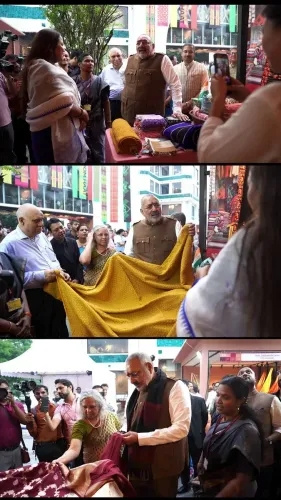
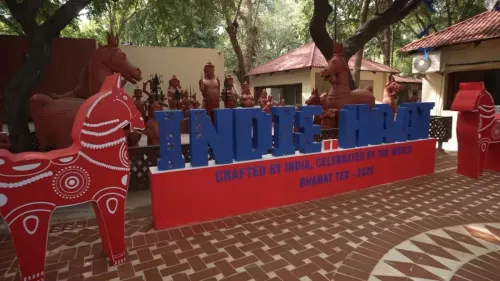
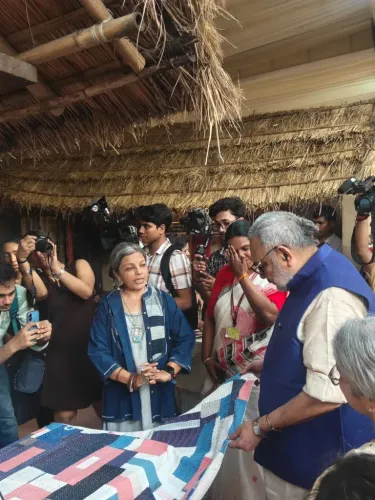
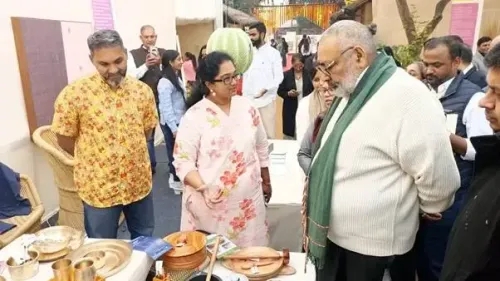
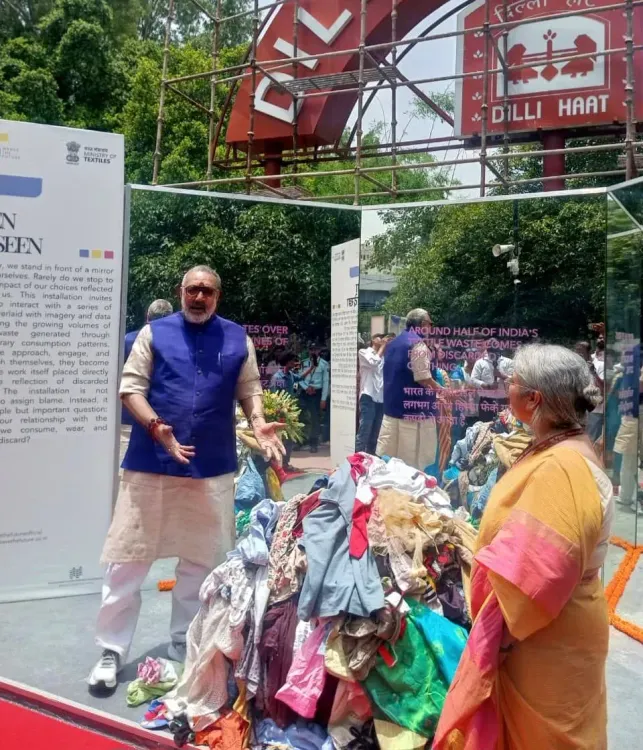
Union Textiles Minister Giriraj Singh on Monday, 13 July 2026 visited 'Weave The Future 4.0 – Upcycling Edition', an exhibition held at Delhi Haat in New Delhi, calling the initiative a powerful campaign to steer India's textile sector toward sustainability, innovation and a circular economy.
Posting on X, the minister said he was pleased to witness the event, describing it in Hindi as more than a mere exhibition — 'केवल एक प्रदर्शनी नहीं, बल्कि एक सशक्त अभियान' ('not merely an exhibition, but a powerful campaign'). He underlined that the initiative links traditional craftsmanship with modern thinking to promote responsible production, better resource use and a strong foundation for the future textile industry.
Context
Delhi Haat, the open-air market and exhibition venue that has long served as a showcase for India's handloom and craft traditions, hosted the fourth edition of the Weave The Future series under the Upcycling Edition theme. The choice of venue and theme signals a deliberate effort to position upcycling — the creative reuse of textile waste into higher-value products — at the centre of mainstream industry dialogue. Singh's visit lends ministerial weight to what the government frames as a movement rather than a one-off event.
Policy Backdrop
The Ministry of Textiles has in recent years anchored its strategy on two pillars: boosting manufacturing capacity through the Production Linked Incentive (PLI) scheme announced in 2021, and modernising units via the Amended Technology Upgradation Fund Scheme (ATUFS), launched in 2016. Both schemes carry an implicit sustainability mandate, encouraging cleaner production processes and better resource efficiency across textile mills and MSME units.
The Weave The Future series fits within this broader arc, translating policy intent into visible, ground-level engagement with artisans, designers and manufacturers. By centring the fourth edition on upcycling, the ministry is aligning domestic textile practice with global demand for circular, low-waste supply chains — a priority that major importing markets in Europe and North America have increasingly embedded in procurement standards.
Stakeholders and Impact
The initiative directly touches textile artisans, MSME manufacturers and sustainable exporters — three constituencies that together account for a substantial share of India's textile employment and foreign exchange earnings. For artisans, the upcycling focus creates new markets for skills that might otherwise be undervalued in a fast-fashion environment. For exporters, demonstrating circular-economy credentials can unlock premium segments in eco-conscious global markets.
India's textile sector is one of the largest in the world and a significant source of employment, particularly for women in rural and semi-urban areas. Policy emphasis on combining traditional skills with sustainable practices is therefore as much a livelihood question as an environmental one, with the potential to strengthen competitiveness without displacing existing craft ecosystems.
What's Next
Observers will watch for concrete follow-through: whether the Weave The Future platform leads to fresh scheme announcements, expanded PLI tranches for sustainable textiles, or new technology-upgradation incentives in the upcoming textiles budget cycle or parliamentary session. Minister Singh's visible engagement with the event suggests the ministry intends to keep circular-economy themes prominent in its policy communication in the months ahead.
Point of View
The minister is building a public narrative around circular economy well ahead of the next budget cycle, when fresh scheme announcements could follow. This fits a pattern in which the Ministry of Textiles uses high-visibility events to soften the ground for regulatory or incentive shifts. The emphasis on traditional skills alongside modern innovation also serves a political purpose: it positions the BJP-led government as a guardian of artisan livelihoods while simultaneously courting export-oriented industry.
NationPress
12 Oct 2026
Frequently Asked Questions
What is Weave The Future 4.0?
Weave The Future 4.0 – Upcycling Edition is the fourth edition of an exhibition and campaign held at Delhi Haat in New Delhi, focused on advancing sustainability, upcycling and circular-economy practices in India's textile sector.
What did Giriraj Singh say about Weave The Future 4.0?
Union Textiles Minister Giriraj Singh said he was pleased to witness the event and described it as not merely an exhibition but a powerful campaign to move the textile sector toward sustainability, innovation and a circular economy, linking traditional skills with modern thinking.
What is the circular economy in the context of Indian textiles?
In Indian textiles, the circular economy refers to practices such as upcycling waste fabric, reusing raw materials and designing products for longer life cycles, reducing environmental impact while creating new economic value for artisans and manufacturers.
What government schemes support sustainable textiles in India?
The Production Linked Incentive scheme for textiles, announced in 2021, and the Amended Technology Upgradation Fund Scheme, launched in 2016, are the primary central government instruments supporting modernisation and sustainability in India's textile sector.
Why is upcycling important for India's textile industry?
Upcycling allows India's textile sector to reduce waste, meet growing global demand for eco-friendly products and create premium market opportunities for artisans and exporters, strengthening competitiveness while addressing environmental concerns in one of the world's largest textile industries.