Giriraj Singh Reviews 12 Years of Textiles Ministry Gains
Synopsis
Union Textiles Minister Giriraj Singh held a press conference on 11 June 2026 to present 12 years of achievements under the Modi government, covering employment generation, technology upgradation, weaver empowerment, and key schemes including PLI, ATUFS, and PM-MITRA parks.
Key Takeaways
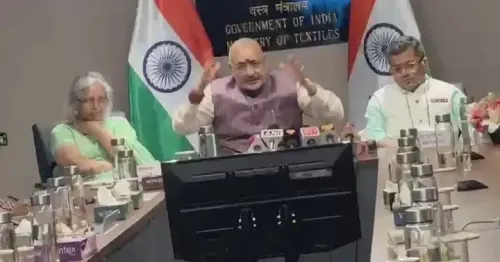
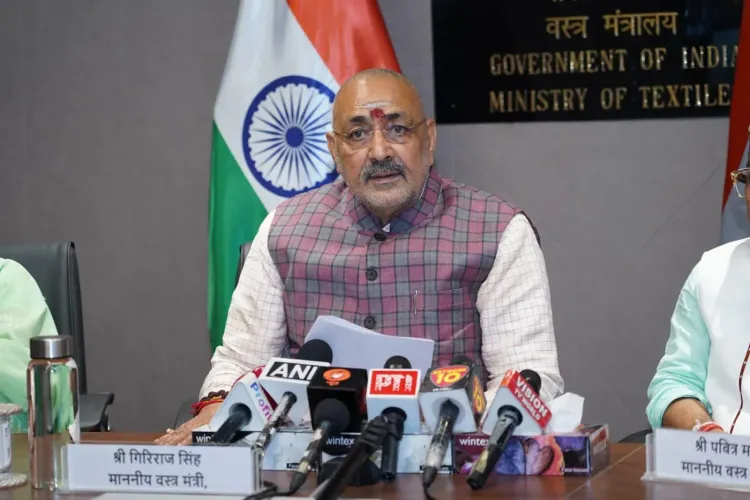
Union Textiles Minister Giriraj Singh held a press conference on 11 June 2026 to review 12 years of the Ministry of Textiles' work under PM Narendra Modi .
Key focus areas cited include employment generation, modern technology adoption, and empowerment of weavers and artisans .
The Amended Technology Upgradation Fund Scheme (ATUFS) , launched in 2015 , provided capital subsidies for machinery modernisation across textile units.
The PLI scheme for man-made fibre apparel , notified in 2021 , aims to attract investment and boost exports.
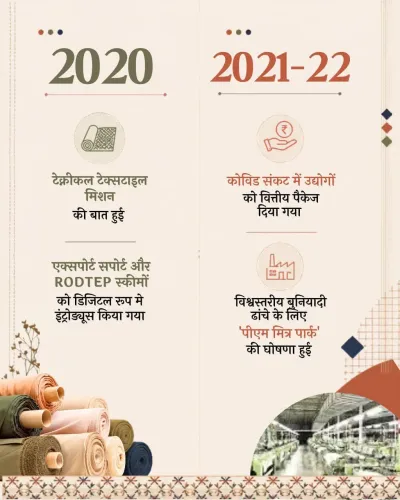
PM-MITRA parks , announced in the 2021-22 Union Budget , are designed to create integrated textile infrastructure clusters.
The ministry's agenda is explicitly linked to the Aatmanirbhar Bharat and Viksit Bharat 2047 policy frameworks.
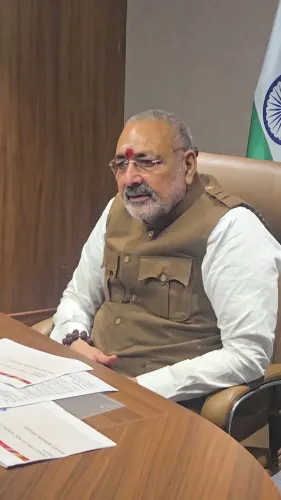
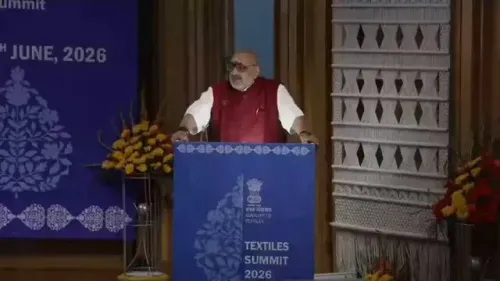
Union Textiles Minister Giriraj Singh on Thursday, 11 June 2026 addressed a press conference in New Delhi to present a comprehensive account of the Ministry of Textiles' achievements, transformative initiatives, and policy milestones over the past 12 years under the Narendra Modi government.
Context
Speaking at the press briefing, Giriraj Singh shared that the session covered the Ministry's work on employment generation, adoption of modern technologies, and the empowerment of weavers and artisans. In his post on X, he stated: 'माननीय प्रधानमंत्री श्री नरेन्द्र मोदी जी के नेतृत्व में वस्त्र क्षेत्र ने अभूतपूर्व प्रगति की है' ('Under the leadership of honourable Prime Minister Shri Narendra Modi, the textile sector has made unprecedented progress'). The minister underlined that these efforts have given the sector a 'new identity and new momentum.'
The press conference served as a formal stocktaking exercise, with the minister framing the 12-year record as evidence of the government's commitment to public welfare, self-reliance, and nation-building.
Policy Backdrop
The government's textile policy since 2014 has rested on three interlocking pillars: technology modernisation, scale integration, and export competitiveness. The Amended Technology Upgradation Fund Scheme (ATUFS), launched in 2015, provided capital subsidies to textile units investing in modern machinery, directly addressing the sector's long-standing productivity gap.
In 2021, the government notified the Production Linked Incentive (PLI) scheme for man-made fibre apparel and fabrics, targeting fresh investment and a step-up in exports. The same year's Union Budget announced the PM Mega Integrated Textile Region and Apparel (PM-MITRA) parks — purpose-built infrastructure clusters designed to consolidate the entire textile value chain under one roof. These schemes collectively form the policy lineage that the minister's press conference sought to highlight.
Both the Aatmanirbhar Bharat initiative, launched in 2020, and the long-term Viksit Bharat 2047 vision document identify textiles as a priority labour-intensive sector, linking domestic value-chain strengthening to broader manufacturing self-reliance goals.
Stakeholders and Impact
The textile sector is among India's largest employers, with weavers, handloom artisans, garment workers, and export-oriented MSMEs forming the primary beneficiary base of the schemes reviewed at the press conference. Empowerment of this constituency has been a recurring theme in the ministry's public communications, with the minister specifically naming 'bunakaron evam karigaron ka sashaktikaran' ('empowerment of weavers and artisans') as a core objective.
Textile exporters and small manufacturers stand to benefit from the PLI disbursements and PM-MITRA infrastructure as the government pushes to raise India's share in global apparel and fabric trade. The minister's emphasis on 'modern technologies' signals continued policy attention to upgrading production capacity beyond traditional handloom clusters.
What's Next
Parliamentary scrutiny of the 2026-27 textiles budget allocation is expected to be the next major checkpoint, with industry bodies watching closely for fresh guidelines on PM-MITRA park execution timelines and the release of pending PLI disbursements. The minister's framing of the press conference around a 12-year arc — coinciding with the Modi government's tenure — also signals that the ruling party intends to make the textile sector's transformation a centrepiece of its governance narrative ahead of future electoral cycles. The government has reiterated that it will 'continue to work with the resolve of public welfare, self-reliance, and nation-building.'
Point of View
Politically significant sector ahead of the electoral cycle. By anchoring the 12-year narrative to PM Modi's leadership and invoking Aatmanirbhar Bharat and Viksit Bharat 2047, the ministry is positioning textiles not merely as an industrial portfolio but as a vehicle for broader nation-building messaging. The emphasis on weaver and artisan empowerment is also a pointed outreach to a constituency spread across electorally sensitive states including Bihar, Uttar Pradesh, and West Bengal. Whether the policy pipeline — particularly PM-MITRA execution and PLI disbursements — can match the rhetorical ambition will be the real test in the months ahead.
NationPress
25 Sept 2026
Frequently Asked Questions
What did Giriraj Singh announce at the textiles press conference on 11 June 2026?
Giriraj Singh did not announce new schemes but presented a review of the Ministry of Textiles ' achievements over 12 years under PM Modi, covering employment, technology upgradation, weaver empowerment, and schemes such as PLI, ATUFS, and PM-MITRA parks.
What is the PM-MITRA textile park scheme?
PM Mega Integrated Textile Region and Apparel (PM-MITRA) parks were announced in the 2021-22 Union Budget to build integrated textile infrastructure clusters that consolidate the full value chain — from fibre to finished garment — in dedicated locations across India .
What is the PLI scheme for textiles in India?
The Production Linked Incentive (PLI) scheme for man-made fibre apparel and fabrics was notified in 2021 to attract fresh investment into the textile sector and boost India's exports of synthetic and blended fabrics and garments.
What is Viksit Bharat 2047 and how does it relate to textiles?
Viksit Bharat 2047 is the government's long-term vision for India to become a developed economy by its centenary of independence. Textiles are identified as a key employment-intensive sector in this framework, with schemes like PLI and PM-MITRA aligned to its manufacturing and export targets.
Who is Giriraj Singh and what ministry does he hold?
Giriraj Singh is a senior BJP leader, Lok Sabha MP from Begusarai, Bihar , and currently serves as Union Minister of Textiles in the Narendra Modi government.