Giriraj Singh highlights 12 years of Textiles Ministry under Modi
Synopsis
Union Textiles Minister Giriraj Singh has shared a 12-year achievements review of the Ministry of Textiles under PM Narendra Modi, highlighting flagship schemes including ATUFS and PLI for man-made fibre, as the sector employs over 45 million people across India.
Key Takeaways
Union Textiles Minister Giriraj Singh posted a 12-year achievements summary of the Ministry of Textiles on 11 June 2026 .
The review covers the period since May 2014 , when the Modi government first came to power.
Key schemes highlighted include the Amended Technology Upgradation Fund Scheme (ATUFS) launched in 2015 and the PLI scheme for man-made fibre apparel introduced in 2021 .
The textiles sector employs over 45 million people in India, making it one of the country's largest employment generators.
Key stakeholders include textile workers , MSME exporters and handloom weavers .
The next Union Budget allocations and a possible revision of the National Textile Policy are being watched closely.
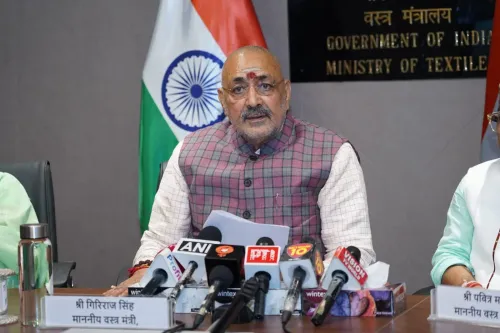
Union Textiles Minister Giriraj Singh on Thursday, 11 June 2026 shared a compiled account of the Ministry of Textiles' achievements over 12 years under the leadership of Prime Minister Narendra Modi, posting the summary on his official X account alongside a broadcast link.
Context
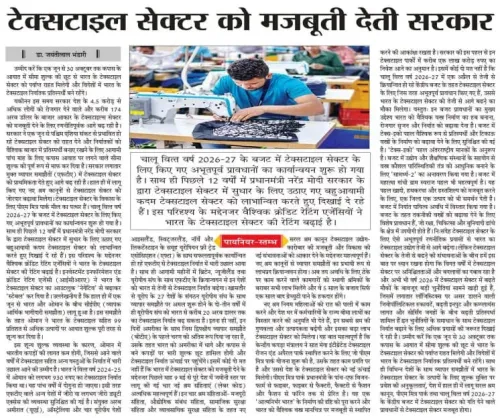
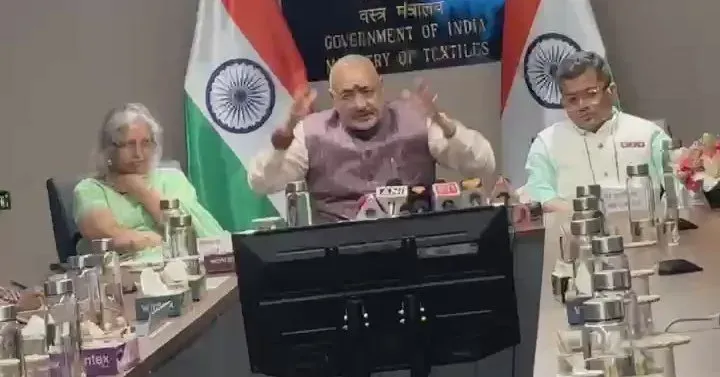
The post, written in Hindi, reads: 'माननीय प्रधानमंत्री श्री नरेन्द्र मोदी जी के नेतृत्व में भारत सरकार के वस्त्र मंत्रालय की 12 वर्षों की उपलब्धियाँ' — translated as 'Achievements of the Ministry of Textiles of the Government of India over 12 years under the leadership of honourable Prime Minister Shri Narendra Modi Ji.' The post was accompanied by an image and a link to a live broadcast on the X platform, signalling the ministry's intent to document and publicise a decade-plus of sectoral progress.
The communication fits an established pattern of central ministries releasing compiled performance reports, particularly as the Modi government completes its twelfth year in office since May 2014. Such reviews typically consolidate scheme outcomes, export milestones and employment data for public dissemination.
Policy Backdrop
The Ministry of Textiles has rolled out several flagship interventions since 2014. The Amended Technology Upgradation Fund Scheme (ATUFS), launched in 2015, aimed at modernising textile processing units by providing capital subsidies to eligible manufacturers. In 2021, the government introduced the Production Linked Incentive (PLI) scheme for man-made fibre apparel and technical textiles, seeking to attract large-scale investment and boost domestic manufacturing capacity.
Successive Union Budgets over this period have sought to integrate textile value chains — spanning cotton farming, spinning, weaving, processing and garment manufacturing — with the twin goals of raising exports and generating employment. The sector employs over 45 million people, making it one of India's largest employers outside agriculture.
Stakeholders and Impact
The constituencies most directly affected by ministry policy include textile workers, MSME exporters, and handloom weavers — segments that have been the stated focus of multiple central schemes. Handloom weavers, in particular, have been targeted through dedicated welfare and marketing support programmes under the ministry's ambit.
For MSME exporters, schemes like ATUFS and PLI were designed to improve competitiveness against rival manufacturing hubs in Bangladesh, Vietnam and China. The ministry's periodic performance communications serve both an accountability function and a political signalling role ahead of budget sessions or electoral cycles.
What's Next
Attention will now turn to the next Union Budget allocations for the textiles sector and any revision of the National Textile Policy, which has been under discussion for an update. Official export and employment data from the ministry is also awaited to substantiate the claims made in the twelve-year review.
As Giriraj Singh consolidates the ministry's record, the broadcast linked in his post may offer granular figures on scheme disbursements, export growth and job creation — numbers that will be closely scrutinised by industry bodies and the parliamentary opposition alike.
Point of View
Timed to consolidate the BJP government's governance narrative as it enters its thirteenth year in office. By anchoring the post to PM Modi's leadership, Giriraj Singh reinforces the party's centralised credit-claiming strategy on economic and welfare outcomes. The textiles sector — with its deep rural and MSME footprint — is a politically sensitive constituency, and such reviews are designed as much for voter messaging as for policy accountability. Whether the broadcast's underlying data withstands independent scrutiny will determine how durable this narrative proves in the next budget and electoral cycle.
NationPress
19 Sept 2026
Frequently Asked Questions
What are the 12-year achievements of the Ministry of Textiles under Modi?
The Ministry of Textiles under PM Modi has implemented schemes such as the Amended Technology Upgradation Fund Scheme (ATUFS) in 2015 and the Production Linked Incentive (PLI) scheme for man-made fibre apparel in 2021. A detailed broadcast summarising the full 12-year record was shared by Minister Giriraj Singh on 11 June 2026, though granular figures are yet to be independently verified.
Who is Giriraj Singh and what ministry does he head?
Giriraj Singh is a senior BJP leader and Lok Sabha MP from Begusarai, Bihar, currently serving as Union Minister of Textiles in the Modi government.
What is the PLI scheme for textiles in India?
The Production Linked Incentive (PLI) scheme for man-made fibre apparel and technical textiles was introduced in 2021 to attract large-scale investment, boost domestic manufacturing and improve India's competitiveness in global textile markets.
How many people does India's textile sector employ?
India's textile sector employs over 45 million people, making it one of the largest employment generators in the country outside of agriculture.
What is the ATUFS scheme in India's textile sector?
The Amended Technology Upgradation Fund Scheme (ATUFS), launched in 2015, provides capital subsidies to textile processing units to support their modernisation and upgrade manufacturing capabilities.