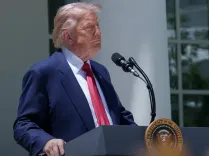
Giriraj Singh Highlights 12 Years of Textile Sector Growth
Synopsis
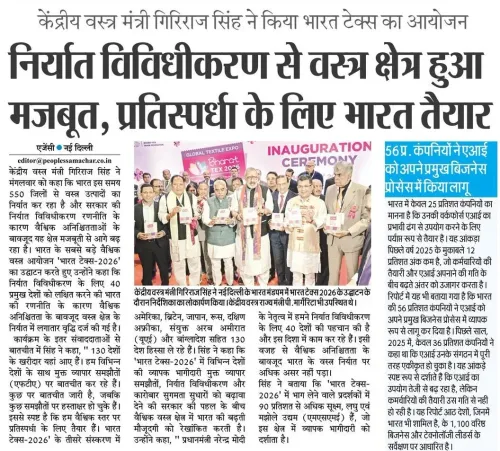
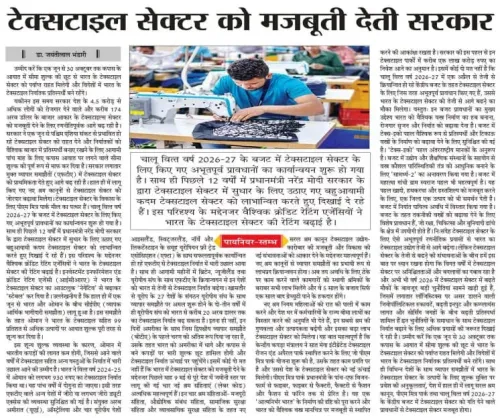
Union Textiles Minister Giriraj Singh has attributed historic growth and expansion of India's textile sector over the past 12 years to the BJP government's vision, political will, and policies including Make in India and the PLI scheme for man-made fibres.
Key Takeaways
Giriraj Singh , Union Textiles Minister, posted on 27 May 2026 crediting the BJP government for 12 years of historic textile sector growth.
The Make in India initiative, launched in September 2014 , identified textiles and apparel as priority manufacturing and export sectors.
The Production Linked Incentive (PLI) scheme for man-made fibre apparel and fabrics was notified in 2021 to boost investment in the textile value chain.
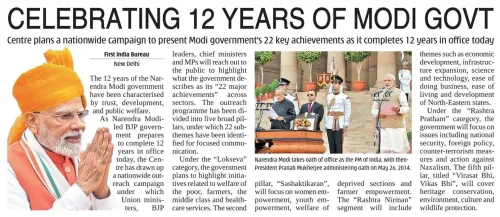
The post is part of a coordinated BJP communications effort marking over 12 years of the party's governance at the Centre.
The National Textile Policy revision and annual export data from the Ministry of Textiles are the key upcoming benchmarks for the sector.
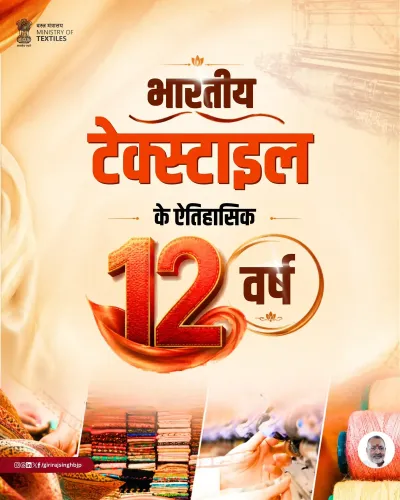
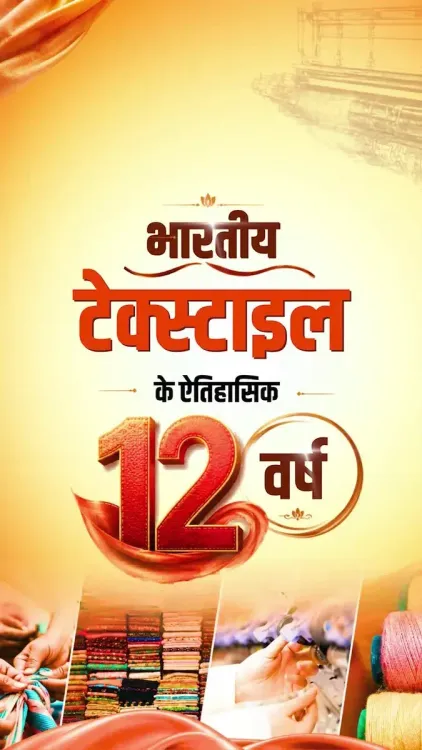
Union Textiles Minister Giriraj Singh on Wednesday, 27 May 2026 credited the BJP government's vision, political will, and policy framework for what he described as historic growth and expansion of India's textile sector over the past 12 years. The minister posted on X, marking the occasion with the hashtags #Glorious12Years and #12YearsOfProgress, underlining the ruling party's broader effort to highlight its manufacturing record.
Context
Singh's post, written in Hindi, states: 'BJP sarkar ke naye vision, majboot ichchhashakti aur sahi neetiyon ke saath Bharatiya Textile kshetra ka pichhle 12 varshon mein hua aitihasik vikas aur vistar' — translated as, 'Historic development and expansion of the Indian textile sector over the past 12 years, driven by the BJP government's new vision, strong political will, and correct policies.' The post was accompanied by a video, which the minister appears to have used to illustrate the sector's trajectory under the present dispensation.
The reference to 12 years aligns with the BJP's return to power at the Centre in May 2014, making this part of a coordinated communications push by party leaders and ministers to mark over a decade of governance. The textile sector has been a recurring focal point of this narrative, given its importance to employment and exports.
Policy Backdrop
The government's approach to textiles since 2014 has rested on several pillars. The flagship Make in India initiative, launched in September 2014, specifically targeted textiles and apparel as priority sectors for domestic manufacturing scale-up and export promotion. Foreign direct investment norms were liberalised, technology upgradation funds were expanded, and integrated textile parks were developed to attract investment across the value chain.
A significant policy addition came in 2021 with the notification of the Production Linked Incentive (PLI) scheme for man-made fibre apparel and fabrics. The PLI scheme was designed to draw large-scale investment into segments where India had historically lagged global competitors, particularly in synthetic and technical textiles. These measures form part of the broader Atmanirbhar Bharat framework, which seeks to reduce import dependence and strengthen domestic supply chains.
Stakeholders and Impact
India's textile sector is among the country's largest employers, supporting millions of workers — from cotton farmers and handloom weavers to large apparel exporters. Textile exporters and apparel manufacturers are the primary beneficiaries of the policy interventions cited by the minister, as incentives under PLI and Make in India are directed at scaling up production capacity and improving global competitiveness.
The sector is also a key foreign exchange earner. Policymakers have consistently positioned India as an alternative sourcing destination to China in global textile supply chains, a case that has gained traction amid ongoing supply-chain diversification by international buyers. The minister's post reinforces the government's messaging that structural policy continuity — rather than ad hoc interventions — has driven this positioning.
What's Next
Attention in the textile policy space is now on the release of a revised National Textile Policy, which is expected to set medium-term targets for exports, employment, and investment. Annual export figures from the Ministry of Textiles will serve as a key benchmark against which the claims of historic growth can be independently assessed. As the government approaches its anniversary milestones, further ministerial communications on sectoral achievements are expected in the weeks ahead.
Point of View
Tying a sectoral narrative to a political milestone rather than announcing a new policy. The invocation of 'vision, will, and correct policies' is a standard BJP framing device, and the textile sector — with its visibility in employment and exports — is a natural vehicle for it. What the post does not do is provide verifiable metrics, which means the claim of 'historic development' remains an assertion until the Ministry releases updated export and investment data. The broader significance lies in the signal it sends: the government intends to keep textiles central to its economic identity heading into the next phase of its term.
NationPress
22 Sept 2026
Frequently Asked Questions
What has Giriraj Singh said about India's textile sector?
Giriraj Singh, Union Textiles Minister, stated that the BJP government's vision, political will, and correct policies have driven historic growth and expansion of India's textile sector over the past 12 years.
What is the Make in India scheme and how does it relate to textiles?
Make in India is a flagship manufacturing initiative launched in September 2014 that identified textiles and apparel as priority sectors for domestic production scale-up, FDI liberalisation, and export promotion.
What is the PLI scheme for textiles in India?
The Production Linked Incentive scheme for man-made fibre apparel and fabrics was notified in 2021 to attract large-scale investment into synthetic and technical textile segments where India lagged global competitors.
Why is the textile sector important to India's economy?
The textile sector is one of India's largest employers, a major foreign exchange earner, and a key pillar of the Atmanirbhar Bharat supply-chain strategy, making it central to both economic and political messaging.
What is the National Textile Policy and when will it be released?
The revised National Textile Policy is an upcoming government document expected to set medium-term targets for textile exports, employment, and investment, and is being closely watched by industry stakeholders.