Giriraj Singh flags technical textiles as pillar of Viksit Bharat
Synopsis
Union Textiles Minister Giriraj Singh declared technical textiles a key pillar of India's development on 9 July 2026, citing its growing use across agriculture, healthcare, drones and aerospace, and linking the sector's expansion to the Viksit Bharat 2047 vision under PM Modi.
Key Takeaways
Union Textiles Minister Giriraj Singh on 9 July 2026 called technical textiles a foundational sector for India's development.
The minister cited applications spanning agriculture, health, construction, drones, aviation and aerospace .
The National Technical Textiles Mission , approved in 2020 , carries an outlay of Rs 1,480 crore to drive R&D, skilling and exports.
The PLI Scheme for Textiles (notified 2021 ) explicitly covers man-made fibre and technical textile segments to attract investment.
A dedicated export promotion council for technical textiles has been operational since 2018 under the Ministry of Textiles .
Singh framed the sector's growth as integral to PM Modi's Viksit Bharat 2047 goal of a fully developed India by the centenary of independence.
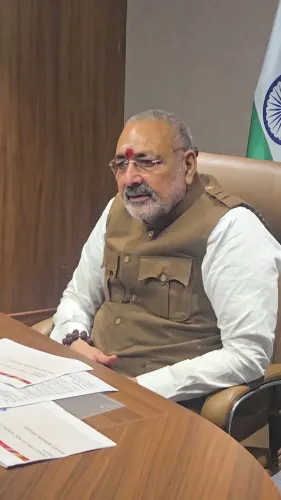
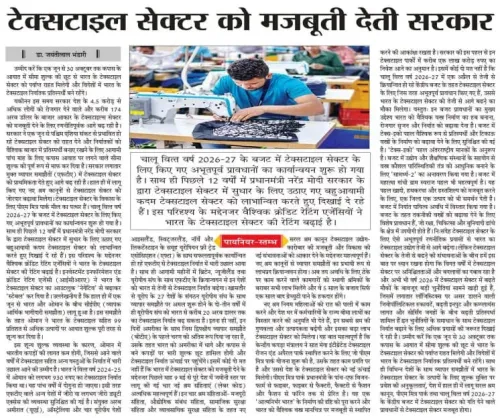
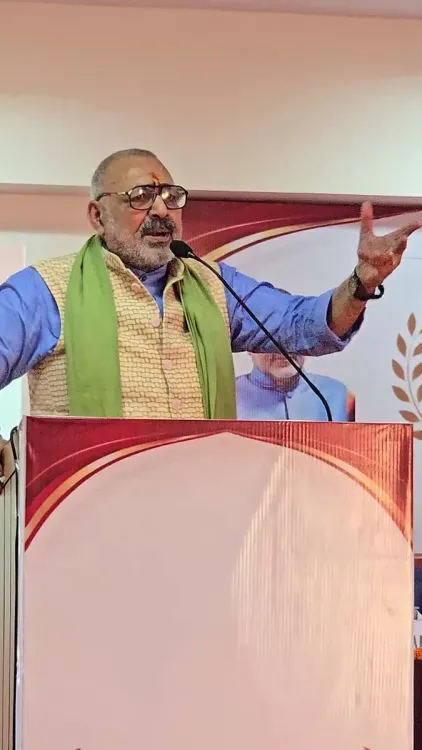
Union Textiles Minister Giriraj Singh on Thursday, 9 July 2026, highlighted technical textiles as a foundational sector for India's development, asserting that its applications now span agriculture, healthcare, construction, drones, aviation and aerospace. Singh underscored that the sector's expansion is central to realising Prime Minister Narendra Modi's Viksit Bharat 2047 vision of transforming India into a developed nation by the centenary of independence.
Posting in Hindi on X, the minister wrote: 'टेक्निकल टेक्सटाइल आज भारत के विकास का एक महत्वपूर्ण आधार बन चुका है' ('Technical textiles have today become an important foundation of India's development'). He added that under Prime Minister Modi's leadership, India is advancing with new possibilities in the technical textiles sector, and that this progress is playing a key role in fulfilling the resolve of a developed India.
Context
Technical textiles are performance fabrics engineered for specific functional uses rather than aesthetics — covering agrotextiles, medtex, buildtech, mobiltech and aerotech, among other categories. Unlike conventional apparel and home textiles, these materials command higher value and serve industrial, defence and infrastructure end-uses. India has historically been a net importer of several high-end technical textile products, making domestic capacity-building a strategic priority.
Singh's post arrives as the government continues to push the sector under the broader Atmanirbhar Bharat and import-substitution framework, seeking to capture value-added segments that were previously dominated by foreign suppliers.
Policy Backdrop
The cornerstone policy instrument is the National Technical Textiles Mission (NTTM), approved by the Cabinet in 2020 with a four-year outlay of Rs 1,480 crore. The mission targets research and development, skilling, market development and export promotion in the segment. A dedicated export promotion council for technical textiles was established as far back as 2018 under the Ministry of Textiles.
The Production Linked Incentive (PLI) Scheme for Textiles, notified in 2021, explicitly included man-made fibre and technical textile segments to incentivise fresh investment and scale. These measures sit within the larger Make in India initiative, launched on 25 September 2014, which identified textiles among 25 priority manufacturing sectors.
Stakeholders and Impact
The primary beneficiaries of the push are textile manufacturers — from large integrated players to MSME exporters — who stand to gain from government-backed R&D support, skilling programmes and export incentives. End-user industries including agriculture, medical devices, civil aviation and infrastructure construction also benefit as domestically produced technical textiles become more accessible and competitively priced.
Broader economic gains are expected through reduced import bills, higher export earnings and job creation in a segment that requires more skilled labour than conventional weaving or garment stitching. The minister's framing of technical textiles within the #ViksitBharat2047 and #MakeInIndia hashtags signals that the sector will continue to receive policy attention as a vehicle for industrial upgrading.
What's Next
Analysts and industry stakeholders will watch the next Union Budget for fresh allocations under the National Technical Textiles Mission and any extension or enhancement of PLI incentives for the segment. Quarterly export data from the Ministry of Textiles will serve as the key metric to gauge whether the policy push is translating into tangible trade gains. With the 2047 development target anchoring the government's long-term narrative, technical textiles are likely to remain a headline sector in the ministry's communications and legislative agenda.
Point of View
The ministry is signalling that it intends to sustain policy momentum and budget allocations beyond the initial NTTM cycle. The emphasis on cross-sectoral applications, from drones to aerospace, also reflects a strategic pivot toward high-value, defence-adjacent manufacturing that aligns with the government's Atmanirbhar Bharat import-substitution agenda. For the ministry, amplifying this narrative ahead of budget discussions could help secure larger allocations for the NTTM's next phase.
NationPress
8 Oct 2026
Frequently Asked Questions
What is the National Technical Textiles Mission?
The National Technical Textiles Mission is a Cabinet-approved scheme launched in 2020 with an outlay of Rs 1,480 crore over four years to promote research, skilling, market development and export promotion in India's technical textiles sector.
What are technical textiles used for in India?
Technical textiles in India are used across a wide range of sectors including agriculture (agrotextiles for crop protection), healthcare (surgical fabrics, wound care), construction (geotextiles), drones, aviation and aerospace, making them a high-value, multi-industry segment.
What is Viksit Bharat 2047?
Viksit Bharat 2047 is the Indian government's long-term national goal, championed by Prime Minister Narendra Modi , to transform India into a fully developed economy by 2047 — the centenary of Indian independence.
How does the PLI scheme support technical textiles?
The Production Linked Incentive Scheme for Textiles , notified in 2021 , explicitly includes man-made fibre and technical textile segments, offering financial incentives to manufacturers who achieve defined production thresholds to encourage fresh investment and scale-up.
Who is Giriraj Singh and what ministry does he head?
Giriraj Singh is a senior BJP leader and Lok Sabha MP from Begusarai, Bihar , currently serving as Union Minister of Textiles in the Modi government.