CM Sai Pushes People-Centric Growth Model for Bastar
Synopsis
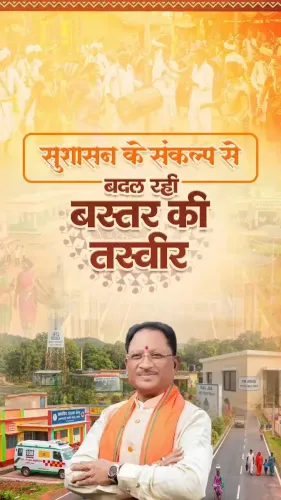
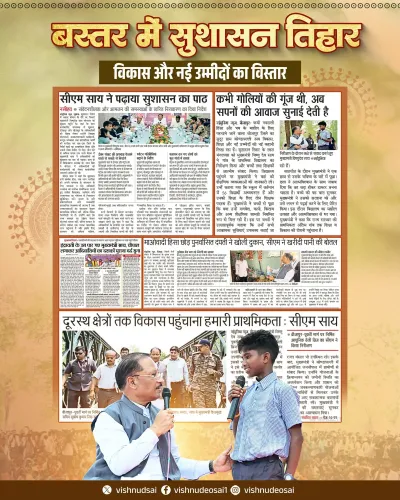
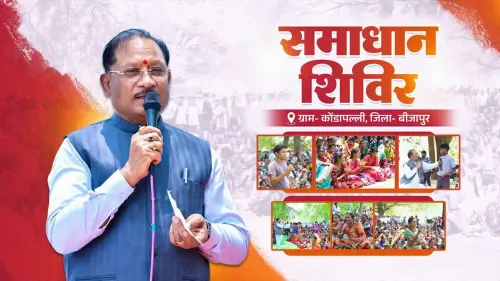
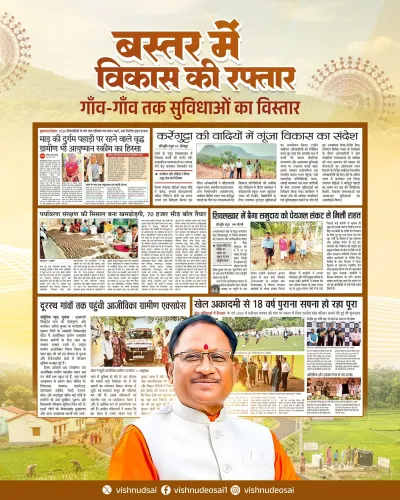
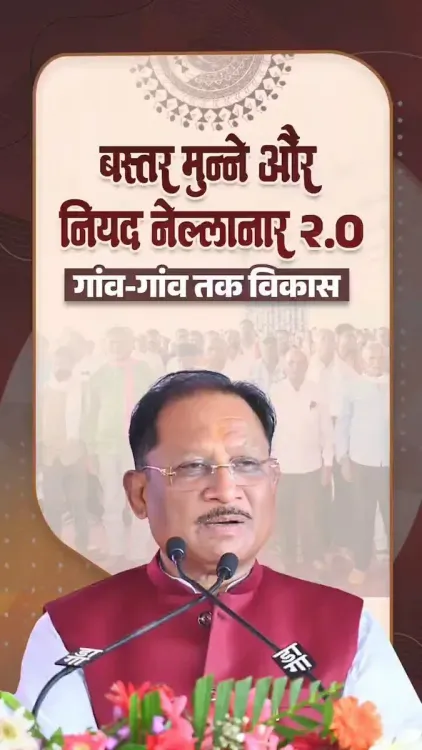
Chhattisgarh Chief Minister Vishnu Deo Sai on 9 July 2026 reaffirmed his government's people-centric development model for Bastar, framing inclusive growth in the tribal-majority, insurgency-affected region as the cornerstone of a 'developed Chhattisgarh.'
Key Takeaways
CM Vishnu Deo Sai on 9 July 2026 publicly committed to a people-centric development model for Bastar , southern Chhattisgarh.
Bastar covers seven districts with a predominantly tribal population and a long history of left-wing extremism.
The BJP government, in power since December 2023 , has placed Bastar development at the centre of its governance agenda.
Several Bastar districts were included in the central government's Aspirational Districts Programme launched in 2018 .
The 'Viksit Chhattisgarh' vision frames Bastar's inclusive growth as foundational to the state's overall development narrative.
Last-mile delivery to tribal and rural households remains the critical test for the government's stated model.
Chhattisgarh Chief Minister Vishnu Deo Sai on Thursday, 9 July 2026 reaffirmed his government's commitment to inclusive, people-first development in the Bastar region, stating that true progress is only complete when every family feels its impact and every citizen benefits from it.
Posting on X, CM Sai wrote in Hindi: 'Vikas tab poorn hota hai, jab uski anubhuti har parivaar kare aur uska laabh har naagrik tak pahunche.' ['Development is complete only when every family experiences it and every citizen receives its benefit.'] He added that by realising this people-centric development model in Bastar, the government is laying a strong and inclusive foundation for a 'developed Chhattisgarh.'
Context
Bastar is a sprawling region in southern Chhattisgarh comprising seven districts with a predominantly tribal population. For decades, it has been among the areas most affected by left-wing extremism in India, making conventional development delivery difficult and sporadic.
The region gained fresh national attention after the December 2023 assembly elections, when the incoming BJP government under CM Sai placed Bastar at the centre of its governance agenda, pledging to combine security operations with accelerated welfare and infrastructure delivery.
Policy Backdrop
The concept of 'janakendrit vikas' — people-centric development — draws on a longer policy lineage. The central government's Aspirational Districts Programme, launched in 2018, specifically included several Bastar districts to fast-track improvements in health, education, infrastructure, and financial inclusion metrics.
Chhattisgarh itself was carved out of Madhya Pradesh in November 2000 to address the long-standing development aspirations of its tribal heartland. CM Sai's framing of Bastar's growth as the 'foundation' of a developed Chhattisgarh echoes that original statehood rationale, now channelled through the current government's welfare-first approach.
Stakeholders and Impact
The primary beneficiaries of this stated model are the tribal communities and rural households spread across Bastar's seven districts. These populations have historically faced gaps in access to government schemes, healthcare, road connectivity, and livelihood support.
The government's emphasis on ensuring that 'every citizen' receives the benefit of development signals an intent to close last-mile delivery gaps — a persistent challenge in the region's difficult terrain. Civil society groups and local panchayat bodies are key on-ground actors whose capacity will determine how effectively these commitments translate into outcomes.
What's Next
Attention will now turn to the rollout timelines and fund utilisation for announced Bastar infrastructure and livelihood projects, as well as any district-level monitoring mechanisms the state government may introduce to track progress.
With CM Sai publicly positioning inclusive Bastar development as foundational to the broader 'Viksit Chhattisgarh' vision, the government's delivery record in the region is likely to become a key benchmark ahead of future electoral cycles in the state.
Point of View
The statement aligns with the national party line on last-mile welfare delivery while also addressing a constituency — Bastar's tribal voters — that has historically swung elections in the region. The framing of Bastar as the 'foundation' of state development is politically significant: it elevates a region long associated with conflict into a showcase for the government's governance model. How quickly on-ground outcomes follow this rhetorical commitment will determine whether the narrative holds through the next electoral test.
NationPress
9 Jul 2026
Frequently Asked Questions
What did Chhattisgarh CM Vishnu Deo Sai say about Bastar development?
On 9 July 2026, CM Vishnu Deo Sai said that development is only complete when every family feels its impact and every citizen benefits, and that his government is building an inclusive foundation for a developed Chhattisgarh by realising this people-centric model in Bastar.
What is the 'janakendrit vikas' model CM Sai referred to?
'Janakendrit vikas' means people-centric development — a governance approach that prioritises ensuring welfare schemes and infrastructure reach every citizen, particularly in underserved tribal and rural areas like Bastar.
Why is Bastar significant for Chhattisgarh's development?
Bastar is a seven-district region in southern Chhattisgarh with a majority tribal population and decades of left-wing extremist activity, making it one of the most challenging yet important areas for inclusive governance in the state.
What is the Aspirational Districts Programme and how does it relate to Bastar?
The Aspirational Districts Programme, launched by the central government in 2018, targets India's most underdeveloped districts for accelerated improvement in key indicators; several Bastar districts were included, making it a key policy instrument for the region's development.
When did the current BJP government take charge in Chhattisgarh?
The BJP government led by Vishnu Deo Sai took charge in Chhattisgarh in December 2023 after winning the state assembly elections, with a stated priority of ending Maoist influence through accelerated development in Bastar.