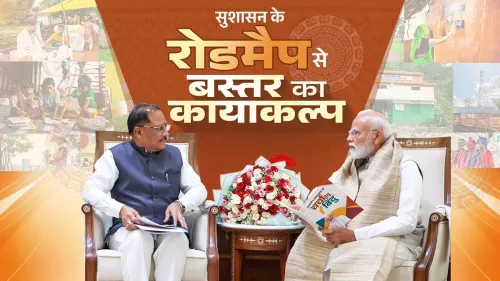
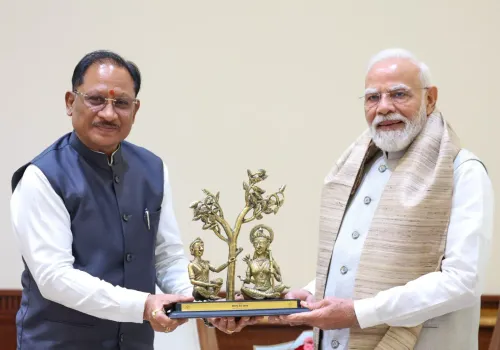
CM Sai presents Chhattisgarh roadmap at NITI Aayog 11th meet
Synopsis
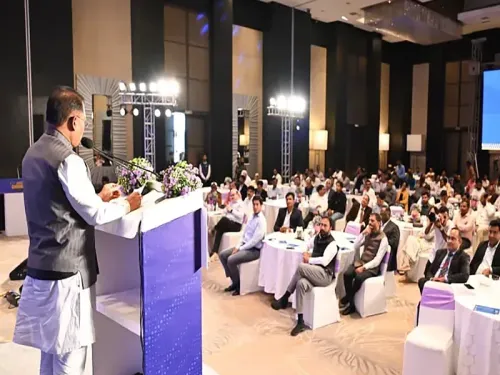
Chief Minister Vishnu Deo Sai attended NITI Aayog's 11th Governing Council meeting chaired by PM Modi and presented a roadmap to double Bastar tribal incomes, expand irrigation across 32,000 hectares, drive a dairy revolution, grow tourism, and attract AI and semiconductor investment in Chhattisgarh.
Key Takeaways
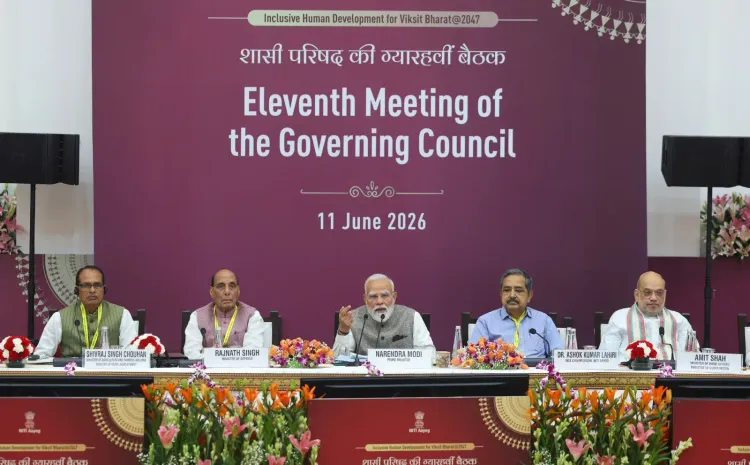
CM Vishnu Deo Sai represented Chhattisgarh at the 11th NITI Aayog Governing Council meeting chaired by PM Narendra Modi on 11 June 2026 .
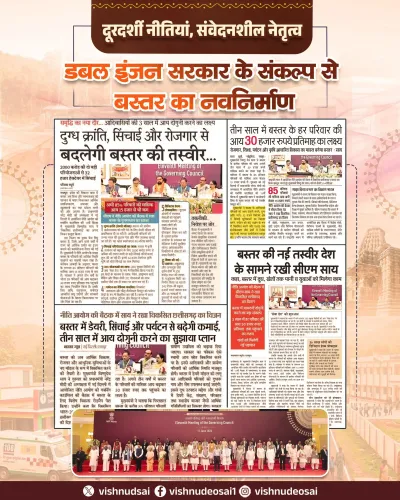
The state's roadmap targets doubling the income of tribal families in Bastar through agriculture, animal husbandry, forest produce, and small industries.
Irrigation infrastructure is proposed to be expanded across 32,000 hectares as part of the agricultural development push.
A 'milk revolution' (dairy development drive) and large-scale tourism industry are central pillars of the economic plan.
Investment in AI and semiconductor sectors is highlighted as a forward-looking diversification strategy for the state.
All proposals are framed within the Viksit Bharat 2047 vision of making Chhattisgarh a developed state by India's centenary of independence.
Chief Minister Vishnu Deo Sai of Chhattisgarh attended the 11th Governing Council meeting of NITI Aayog chaired by Prime Minister Narendra Modi on 11 June 2026, presenting a comprehensive development roadmap for the state that centred on doubling tribal incomes in Bastar, expanding irrigation, and attracting investment in emerging technology sectors.
Context
The Chief Minister's Office of Chhattisgarh announced that CM Sai placed before the Council a wide-ranging plan covering dairy development, expansion of irrigation facilities across 32,000 hectares, promotion of tourism as a major industry, and increased investment in AI and semiconductor sectors. The roadmap also outlined support for agriculture, animal husbandry, forest produce, and small industries as levers to strengthen rural household incomes.
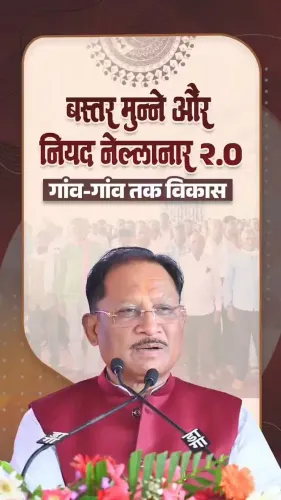
Addressing the Council, CM Sai said: 'Bastar, jo dashakon tak hinsa ki maar jhelta raha' ('Bastar, which bore the brunt of violence for decades') would now become a model of economic revival, employment, education, tourism, and agriculture-based development. He added that the state is working to strengthen the economic condition of rural families through farming, livestock, forest produce, small industries, and various government schemes.
Policy Backdrop
NITI Aayog was established in January 2015 to replace the Planning Commission and serve as the apex body for cooperative federalism, institutionalising regular Governing Council meetings between the Prime Minister and state chief ministers. These sessions allow states to align their priorities with centrally articulated national goals.
The Viksit Bharat 2047 vision — the central government's roadmap for India to achieve developed-nation status by the centenary of independence — forms the overarching framework within which states like Chhattisgarh are calibrating their own development targets. CM Sai stated that work is being accelerated to make Chhattisgarh a developed state in line with this national vision.
Bastar, a predominantly tribal region in southern Chhattisgarh, has for decades been associated with left-wing extremism. Since the mid-2000s, successive central and state governments have combined security operations with livelihood and infrastructure interventions in the region, and the current administration's focus signals a deepening shift toward integrated economic development.
Stakeholders and Impact
The most direct beneficiaries of the roadmap, as outlined by CM Sai, are tribal families in Bastar whose household incomes the state aims to double through farm-linked and non-farm livelihood programmes. Dairy producers and farmers across rural Chhattisgarh stand to gain from the proposed 'milk revolution' and expanded irrigation network covering 32,000 hectares.
Tourism entrepreneurs and MSMEs in the region could benefit from the state's intent to position tourism as a large-scale industry. The emphasis on AI and semiconductor investment signals an attempt to draw private capital into high-technology sectors, potentially creating skilled employment for younger residents of the state.
What's Next
Concrete progress will be tracked through state budget allocations and central scheme disbursements directed at irrigation, dairy infrastructure, and tourism projects in Bastar over the coming financial years. Subsequent NITI Aayog Governing Council meetings are expected to serve as checkpoints for measurable outcomes, including tribal income growth and the pace of private investment in technology sectors.
Chhattisgarh's presentation at the 11th Governing Council underscores the broader national pattern of former insurgency zones being repositioned as economic opportunity corridors — a transition whose success will ultimately be measured in household incomes and sustainable employment rather than policy declarations alone.
Point of View
Timed to align with the Viksit Bharat 2047 narrative that the BJP-led central government has made central to its second decade in power. The dual emphasis on traditional livelihoods and high-technology investment reflects a broader state-level strategy to attract both central scheme funding and private capital simultaneously. CM Sai's participation also reinforces the cooperative federalism optics that NITI Aayog meetings are designed to project, with states visibly adopting national goals as their own. Whether the ambition translates into measurable outcomes for Bastar's tribal households will be the real test of the roadmap's credibility.
NationPress
22 Sept 2026
Frequently Asked Questions
What did CM Vishnu Deo Sai present at the NITI Aayog meeting?
CM Vishnu Deo Sai presented a comprehensive development roadmap for Chhattisgarh at the 11th NITI Aayog Governing Council meeting, covering plans to double tribal incomes in Bastar, launch a dairy revolution, expand irrigation across 32,000 hectares, develop tourism as a major industry, and attract AI and semiconductor investment.
What is the 11th NITI Aayog Governing Council meeting?
The NITI Aayog Governing Council is the apex body for cooperative federalism in India, chaired by the Prime Minister and comprising all state chief ministers. Its 11th meeting was held on 11 June 2026, where states presented development roadmaps aligned with national goals.
What is the plan for Bastar's development?
The Chhattisgarh government plans to transform Bastar — a tribal-majority region that suffered decades of left-wing extremist violence — into a model of economic revival through agriculture, animal husbandry, forest produce, small industries, tourism, and employment generation.
What is Viksit Bharat 2047 and how does Chhattisgarh fit in?
Viksit Bharat 2047 is the central government's vision for India to become a developed nation by the centenary of independence in 2047. CM Sai stated that Chhattisgarh is working to become a developed state in line with this national vision, using the NITI Aayog roadmap as a guiding framework.
How much land will benefit from Chhattisgarh's new irrigation plan?
The Chhattisgarh government has proposed expanding irrigation facilities across 32,000 hectares as part of its agricultural development push presented at the 11th NITI Aayog Governing Council meeting.