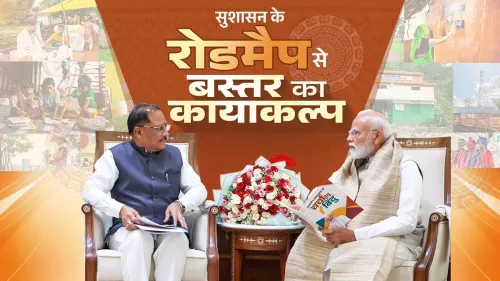
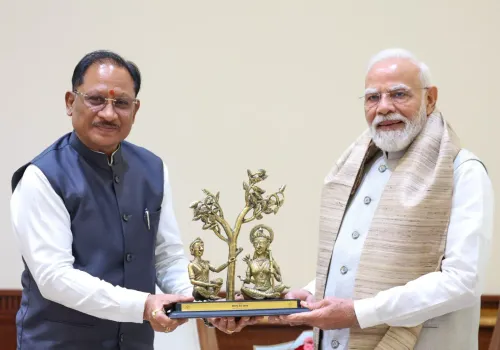
Bastar charts new identity via development: CM Sai at NITI Aayog meet
Synopsis
Bastar — long defined by Maoist conflict — is being repositioned as a development showcase. CM Vishnu Deo Sai's NITI Aayog pitch includes ₹2,000 crore in irrigation, a dairy-led White Revolution, and a target to lift 85% of families earning under ₹15,000 a month to ₹30,000 within three years. The ambition is real; the execution window, for once, may be too.
Key Takeaways
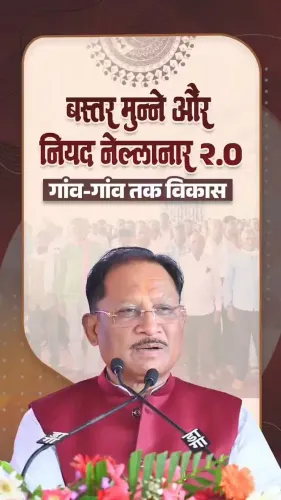
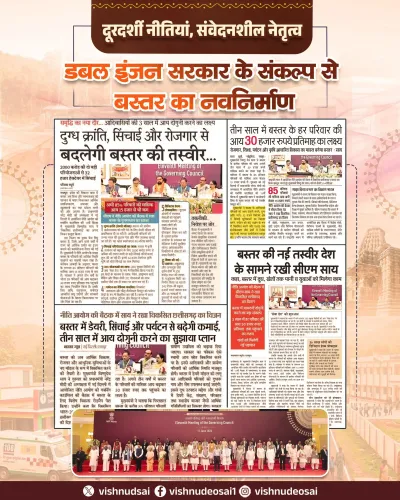
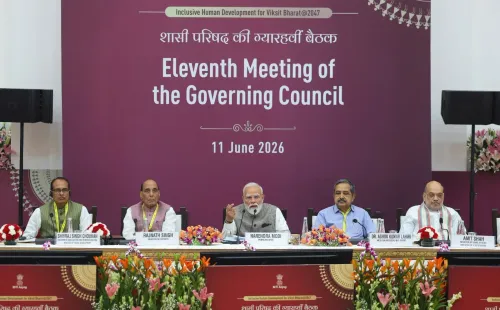
Chhattisgarh CM Vishnu Deo Sai presented Bastar's transformation roadmap at the 11th NITI Aayog Governing Council meeting on 12 June in New Delhi .
Two irrigation projects worth over ₹2,000 crore will cover 32,000 hectares in the Indravati river region.
The government targets raising monthly family income in Bastar to ₹30,000 within three years ; currently 85% of families earn below ₹15,000 .
A dairy-led 'White Revolution' will supply milch cows and buffaloes to tribal families to generate sustainable income and employment.
Investment in AI and semiconductors is part of the plan, aligning Chhattisgarh with the Viksit Bharat 2047 vision.
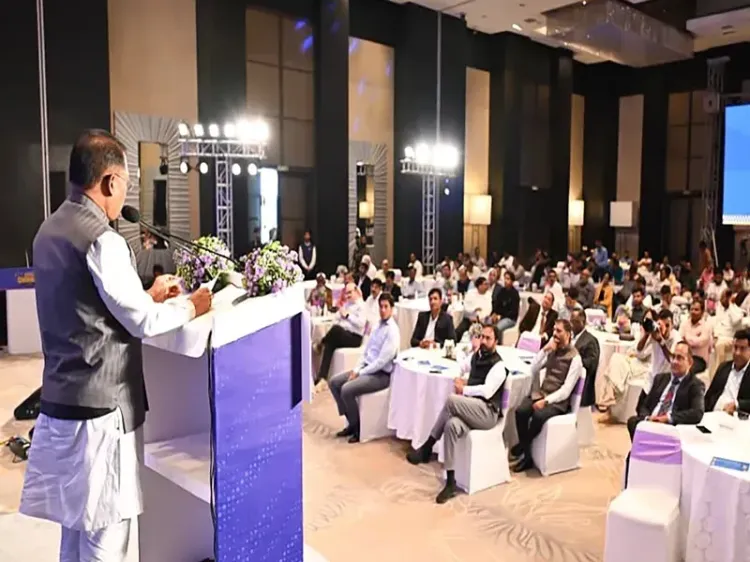
Chhattisgarh Chief Minister Vishnu Deo Sai on 12 June told the 11th NITI Aayog Governing Council meeting in New Delhi that Bastar is decisively moving away from its violent past and towards a future defined by development, employment and prosperity. Addressing a session chaired by Prime Minister Narendra Modi, Sai presented a comprehensive transformation roadmap for the region.
Key Announcements for Bastar
At the core of Sai's address was an ambitious action plan targeting a doubling of tribal family incomes, a 'White Revolution' through dairy expansion, and the extension of irrigation across 32,000 hectares. He also stressed investment in modern sectors including artificial intelligence and semiconductors, framing Chhattisgarh's growth within the national vision of Viksit Bharat 2047.
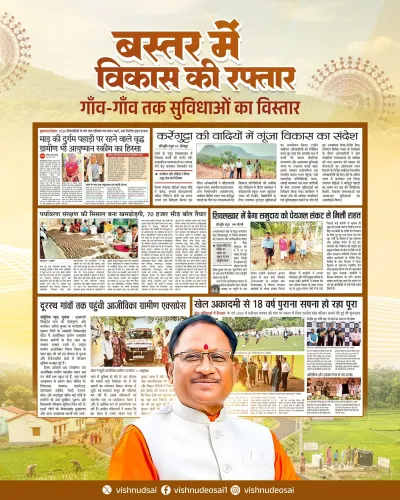
The Chief Minister outlined plans to boost milk production by supplying milch cows and buffaloes to tribal households, with the dairy model already being rolled out rapidly across Bastar. The initiative is expected to generate sustainable income, create jobs for women and youth, and spur ancillary activities such as dairy centres, milk collection, transportation and local market development.
Irrigation Push Worth Over ₹2,000 Crore
Two major irrigation projects valued at over ₹2,000 crore are being launched in the Indravati river region to ensure year-round water availability. Covering 32,000 hectares, the projects are designed to enable farmers to diversify beyond paddy into vegetables, fruits and cash crops, thereby raising agricultural productivity and household incomes.
Income Target and Social Transformation
Sai reiterated his government's goal of raising the monthly income of Bastar families to ₹30,000 within three years. Currently, nearly 85 per cent of families in the region earn less than ₹15,000 per month. Agriculture, animal husbandry, forest produce, small-scale industries and government schemes are expected to form the backbone of this economic shift.
Notably, the Chief Minister also highlighted digital health facility expansion to villages and efforts to connect youth with employment opportunities — signalling a broad-based approach to social uplift rather than a narrowly economic one.
Bastar's Broader Significance
For decades, Bastar was synonymous with Left-Wing Extremism, making development delivery in the region uniquely challenging. This comes amid a reported decline in Maoist violence, which state officials say has created a governance window that did not previously exist. Sai's presentation at the Governing Council — attended by Union ministers, Chief Ministers, Lieutenant Governors of Union Territories, and senior NITI Aayog officials — signals the Centre's intent to showcase Bastar as a turnaround story aligned with national development goals.
Whether the ambitious income and irrigation targets translate into verifiable ground-level outcomes will determine if Bastar's transformation becomes a replicable model for other conflict-affected regions.
Point of View
000 per month within three years is striking given that 85% of families currently earn below half that figure; the arithmetic demands not incremental improvement but structural transformation. The ₹2,000 crore irrigation outlay is credible in scale, but Bastar's challenge has historically been last-mile delivery, not announcements. The real test will be whether tribal communities see dairy income and crop diversification materialise on the ground, or whether Bastar's 'new identity' remains a Governing Council slide.
NationPress
13 Sept 2026
Frequently Asked Questions
What is Chhattisgarh's development plan for Bastar presented at the NITI Aayog meeting?
Chief Minister Vishnu Deo Sai presented a comprehensive plan at the 11th NITI Aayog Governing Council meeting on 12 June, covering dairy-led income generation, ₹2,000 crore irrigation projects across 32,000 hectares, digital health expansion, and investment in AI and semiconductors. The overarching goal is to double tribal family incomes and position Bastar as a model of economic resurgence.
What is the income target for Bastar families and what is the current situation?
The Chhattisgarh government has set a target of raising monthly family income in Bastar to ₹30,000 within three years. Currently, nearly 85% of families in the region earn less than ₹15,000 per month.
What are the irrigation projects announced for Bastar?
Two major irrigation projects worth over ₹2,000 crore are being launched in the Indravati river region, covering 32,000 hectares. They aim to ensure year-round water availability and help farmers diversify into vegetables, fruits and cash crops beyond paddy.
How will the dairy or 'White Revolution' initiative work in Bastar?
The government plans to supply milch cows and buffaloes to tribal families across Bastar as part of a rapidly expanding dairy model. The initiative is expected to create employment for women and youth and spur ancillary activities including dairy centres, milk collection and transportation.
How does the Bastar plan connect to the Viksit Bharat 2047 vision?
CM Sai explicitly framed Chhattisgarh's growth strategy — including investments in AI and semiconductors — within the national Viksit Bharat 2047 framework. The Bastar plan is being presented as a regional contribution to India's broader long-term development goals.