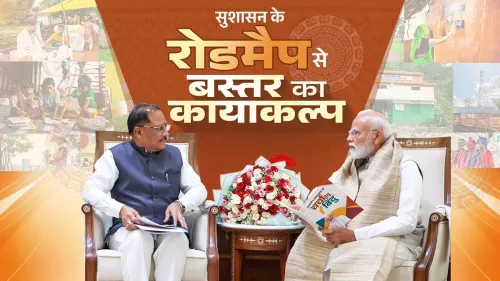
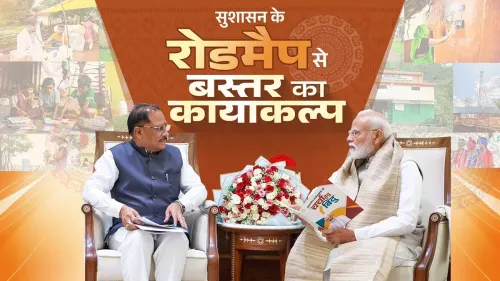
CM Sai Meets PM Modi, Pitches Bastar's Development Roadmap
Synopsis
Chhattisgarh Chief Minister Vishnu Deo Sai met PM Narendra Modi at Parliament House on 31 July 2026, presenting a multi-sector development blueprint for Bastar and seeking central support for a ₹10,500 crore urea plant, grid power for 461 villages, and an AIIA campus in the state.
Key Takeaways
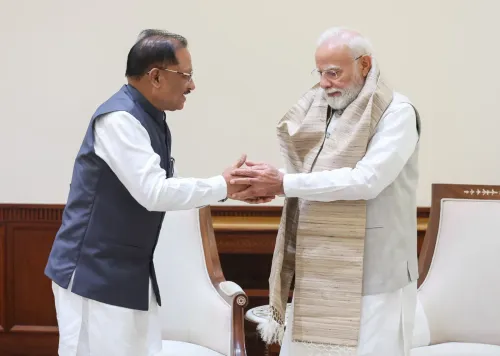
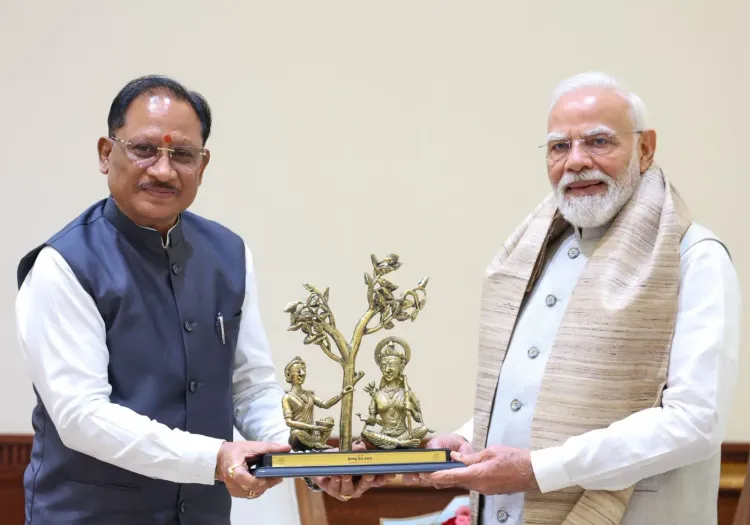
CM Vishnu Deo Sai held a courtesy meeting with PM Narendra Modi at Parliament House, New Delhi on 31 July 2026 .
Sai sought central backing for a ₹10,500 crore gas-based urea fertiliser plant in Rajnandgaon .
He pushed for permanent electricity grid connectivity to 461 villages in Bastar , a key step in the post-LWE development push.
The CM requested establishment of an All India Institute of Ayurveda (AIIA) in either Raipur or Bastar .
Sai invited PM Modi to a Lakhpati Didi Sammelan proposed in Raipur in 2027 , spotlighting women SHG empowerment in tribal districts.
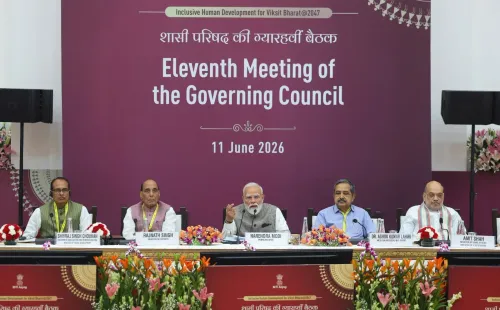
The meeting aligns Chhattisgarh's agenda with the Centre's Viksit Bharat 2047 framework, framing Bastar's transformation as a national priority.
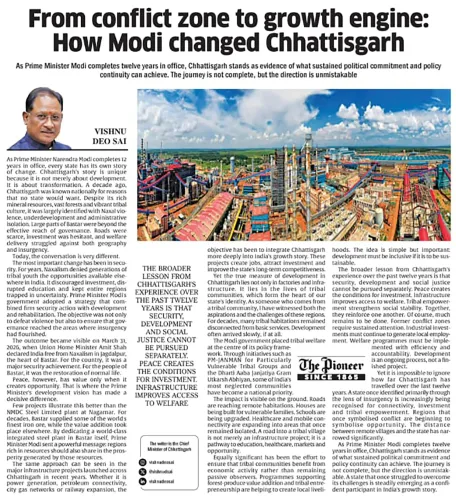
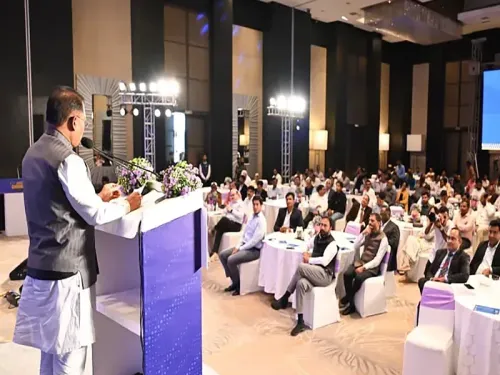
A comprehensive development agenda for one of India's most conflict-scarred regions landed on the Prime Minister's desk on Friday, 31 July 2026, when Chhattisgarh Chief Minister Vishnu Deo Sai called on Prime Minister Narendra Modi at Parliament House in New Delhi — laying out a multi-sector blueprint to transform Bastar from an LWE flashpoint into a growth corridor.
What Sai Put on the Table
The Chief Minister's office said the discussion ranged across education, health, connectivity, tourism, sports, industrial development, and tribal empowerment. Three proposals stood out for their scale. CM Sai sought central support for a ₹10,500 crore gas-based urea plant in Rajnandgaon — a project that, if approved, would rank among the largest fertiliser investments in central India and reduce the state's dependence on imported urea. He also pressed for permanent grid connectivity to 461 villages in Bastar, a move that would bring round-the-clock electricity to some of the division's most remote tribal hamlets for the first time.
The third ask carried symbolic weight: the establishment of an All India Institute of Ayurveda (AIIA) — the flagship autonomous institute under the Ministry of AYUSH — either in Raipur or Bastar. The AIIA, set up in 2010 to anchor Ayurvedic education and research, has so far been concentrated in northern India; a Chhattisgarh campus would extend its footprint into the tribal heartland.
Bastar's Long Road From Conflict to Connectivity
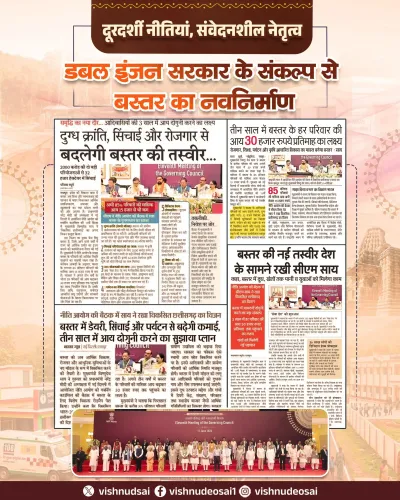
Bastar has spent decades at the centre of India's Left Wing Extremism challenge. The BJP government that took office in December 2023 under CM Sai made a deliberate pivot: pair security operations with visible development so that residents of Naxal-affected districts have a concrete stake in the state. The 461-village grid project is a direct expression of that logic — darkness has long been both a practical hardship and a recruitment tool for insurgents.
The broader framing CM Sai offered Modi was that Bastar is now moving toward 'shanti, vishwas aur sushasan' (peace, trust, and good governance), and that the state government is working with 'full commitment' to build a 'Viksit Chhattisgarh' in line with the Centre's 'Viksit Bharat' vision for 2047.
A 2027 Invitation and the Lakhpati Didi Link
CM Sai also invited PM Modi to attend a Lakhpati Didi Sammelan proposed for Raipur in 2027. The Lakhpati Didi scheme — scaled nationally from 2022-23 under the Deendayal Antyodaya Yojana-NRLM — targets women in Self-Help Groups to cross an annual income threshold of ₹1 lakh. Chhattisgarh's tribal districts, including Bastar, have been active SHG territory; a national convention hosted in Raipur would spotlight the state's progress on women-led economic empowerment.
The meeting follows a well-worn NDA playbook: state chief ministers travel to Delhi to seek project clearances and central funding, particularly for LWE-affected states where the Centre has both a security and a development stake. Whether the Rajnandgaon urea plant clears the Cabinet Committee on Economic Affairs, and whether the Bastar grid project gets fast-tracked under central electrification schemes, will be the real test of how much of Friday's roadmap translates into ground-level change.
Bastar has been promised development before. The difference this time, the Chhattisgarh government argues, is that the security situation has shifted enough to make the investment viable. The Centre's response will say a great deal about whether it agrees.
Point of View
Presents a development wish-list anchored in the Centre's own flagship vocabulary — Viksit Bharat, Lakhpati Didi, AYUSH expansion — and signals political alignment while seeking funds. The Bastar grid and urea plant proposals are not merely economic asks; they are the state government's argument that the security situation has stabilised enough to justify large capital commitments in LWE-affected territory. If the Centre approves even one of the marquee projects, it becomes a powerful counter-narrative to decades of Bastar's image as ungovernable. The 2027 Lakhpati Didi invitation is a soft but deliberate move — locking in a potential Modi appearance that would generate political capital for the state BJP well ahead of the next assembly cycle.
NationPress
14 Sept 2026
Frequently Asked Questions
Why did CM Vishnu Deo Sai meet PM Modi in July 2026?
CM Sai visited Parliament House in New Delhi on 31 July 2026 to discuss a comprehensive development roadmap for Chhattisgarh, with a special focus on Bastar, and to seek central government support for several major projects including a urea plant, village electrification, and an AIIA campus.
What is the ₹10,500 crore urea plant proposed for Rajnandgaon?
It is a proposed gas-based urea fertiliser manufacturing plant in Rajnandgaon district of Chhattisgarh, for which CM Sai has sought central government support. If approved, it would be one of the largest fertiliser investments in central India and help reduce dependence on imported urea.
How many Bastar villages will get permanent electricity under the proposed plan?
CM Sai proposed connecting 461 villages in Bastar to a permanent electricity grid, which would bring round-the-clock power supply to some of the most remote tribal areas in the division.
What is the All India Institute of Ayurveda (AIIA) and why is Chhattisgarh seeking one?
The AIIA is an autonomous institute under the Ministry of AYUSH, established in 2010, focused on Ayurvedic education and research. CM Sai has requested a new AIIA campus in either Raipur or Bastar to extend quality traditional medicine education and healthcare to Chhattisgarh's tribal population.
What is the Lakhpati Didi Sammelan planned for Raipur in 2027?
It is a proposed national convention centred on the Lakhpati Didi scheme, which aims to help women in Self-Help Groups earn at least ₹1 lakh annually. CM Sai has invited PM Modi to attend the event in Raipur in 2027, highlighting Chhattisgarh's progress on women-led economic empowerment in tribal districts.