CM Sai: Chhattisgarh on New Path After Naxal Decline
Synopsis
Chief Minister Vishnu Deo Sai declared on 29 October 2026 that Chhattisgarh is setting new development milestones alongside progress in countering Naxalism, pledging to build a prosperous state through peace, security, and good governance.
Key Takeaways
CM Vishnu Deo Sai stated on 29 October 2026 that Chhattisgarh is achieving new development milestones linked to progress in containing Left-Wing Extremism.
The message invokes the administration's #Sushasansarkar brand, framing good governance as integral to the state's security gains.
Chhattisgarh , formed in 2000 , has long coordinated central and state security forces against Naxalite groups, particularly in the Bastar division.
Tribal communities in affected districts — including Sukma, Bijapur, and Dantewada — stand as the primary intended beneficiaries of improved administrative reach.
The dual-track approach of security operations paired with welfare delivery has been a consistent feature of Chhattisgarh governance across both BJP and Congress administrations.
Budget allocations for former Naxal-affected districts and infrastructure completion rates will be the concrete test of these stated gains.
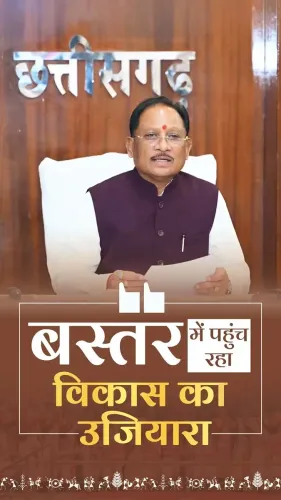
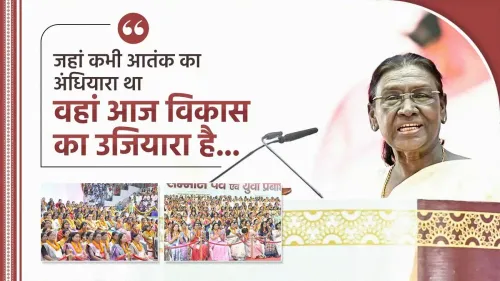
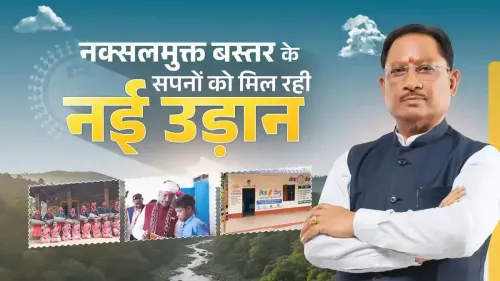
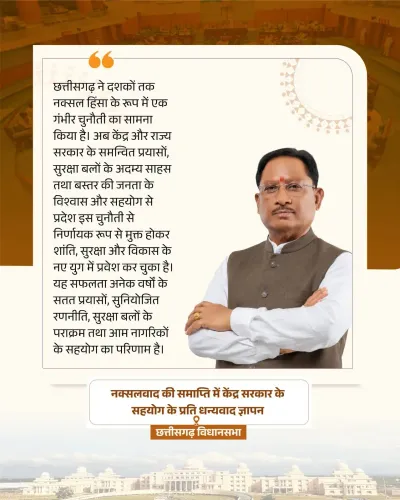
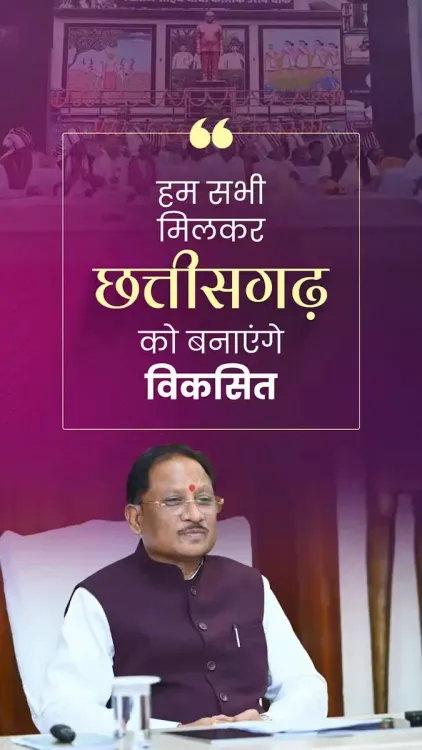
Where guns once defined daily life in the forests of Bastar, Chief Minister Vishnu Deo Sai now sees a different horizon — one of roads, welfare, and governance reaching communities long cut off by conflict. On Thursday, 29 October 2026, the Chief Minister's Office of Chhattisgarh posted a message from Sai asserting that the state is charting new milestones of development alongside progress in containing Left-Wing Extremism.
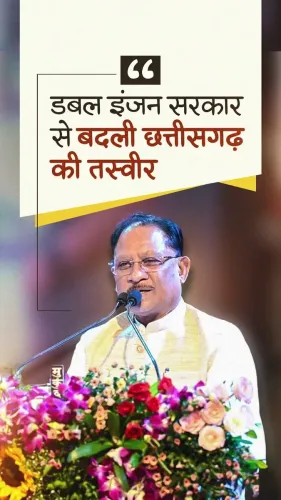
Posting in Hindi, CM Sai declared: 'नक्सलवाद के खात्मे की दिशा में मिली सफलता के साथ आज छत्तीसगढ़ निरंतर विकास के नए सोपान तय कर रहा है' — 'With the success achieved in the direction of eliminating Naxalism, Chhattisgarh today is continuously setting new milestones of development.' He added that through peace, security, and good governance, 'we will together make our Chhattisgarh a developed and prosperous state.'The Dual-Track Bet: Security Gains Fuelling Development Push
Chhattisgarh, carved out of Madhya Pradesh in 2000 to enable focused administration of its mineral-rich but underserved terrain, has spent over two decades wrestling with Left-Wing Extremism, particularly across districts in the Bastar division. Security forces — central and state — have operated in coordinated campaigns across successive governments. The logic was always the same: restore state presence in the forests first; deliver governance second. Sai's statement signals that his administration believes that sequence is now paying off. The approach CM Sai is invoking is not new to Chhattisgarh politics. Both BJP and Congress administrations since the early 2000s have paired anti-Naxal operations with infrastructure and welfare schemes to extend institutional reach into remote tribal areas. What shifts with the current messaging is the confidence of the framing — the language of 'khātmā' (elimination) rather than containment, and the pivot toward development as the primary story.Tribal Communities and the Governance Promise
The people most directly affected by any genuine shift in the security situation are the tribal communities of districts like Bastar, Sukma, Bijapur, and Dantewada. For decades, these areas saw limited access to health centres, schools, and road connectivity — a gap that armed groups exploited. If the state's security gains translate into sustained administrative presence and welfare delivery, these communities stand to be the principal beneficiaries. Sai's invocation of 'sushāsan' — good governance — directly targets that deficit. The post also carries the hashtag #Sushasansarkar, a branding term the current administration has used to signal accountability-driven governance — part of a wider BJP communication strategy that ties law-and-order wins to developmental credibility. The proof, of course, will come in the numbers: budget allocations for former Naxal-affected districts, school and health infrastructure completion rates, and whether security coverage in remote areas holds long enough for institutions to take root. Chhattisgarh's next state budget and progress reports on flagship welfare schemes will be the clearest test of whether this new chapter is as durable as Sai intends it to be.Point of View
A transition that carries significant electoral and policy weight for a BJP government seeking to validate its security record ahead of future cycles. The 'elimination' language on Naxalism is bolder than the 'management' framing of previous administrations, raising the stakes for any reversal. This mirrors the national BJP template of linking law-and-order credentials directly to governance legitimacy, particularly in tribal-majority constituencies. Whether the governance infrastructure can fill the vacuum left by receding extremism quickly enough will determine if the claim holds.
NationPress
29 Oct 2026
Frequently Asked Questions
What did CM Vishnu Deo Sai say about Naxalism in Chhattisgarh?
CM Sai stated on 29 October 2026 that Chhattisgarh is achieving new development milestones alongside success in the direction of eliminating Naxalism, and pledged to build a developed and prosperous state through peace, security, and good governance.
What is the current security situation in Naxal-affected districts of Chhattisgarh?
Chhattisgarh's Bastar division, including districts like Sukma, Bijapur, and Dantewada, has historically been the core of Left-Wing Extremist activity. The state and central governments have run coordinated security operations for over two decades, with the current administration signalling significant progress, though specific recent operational outcomes from 2026 cannot be independently verified.
Who is Vishnu Deo Sai and which party does he represent?
Vishnu Deo Sai is the Chief Minister of Chhattisgarh from the Bharatiya Janata Party (BJP), sworn in following the party's victory in the 2023 state assembly elections.
What does Sushasansarkar mean in Chhattisgarh politics?
'Sushasansarkar' translates to 'good governance government' and is a branding hashtag used by the current Chhattisgarh administration to emphasise accountability, law-and-order, and development delivery as interconnected priorities.
When was Chhattisgarh formed and why?
Chhattisgarh was carved out of Madhya Pradesh on 1 November 2000 to enable more focused administration of a mineral-rich region with distinct tribal demographics that had historically received limited development attention.