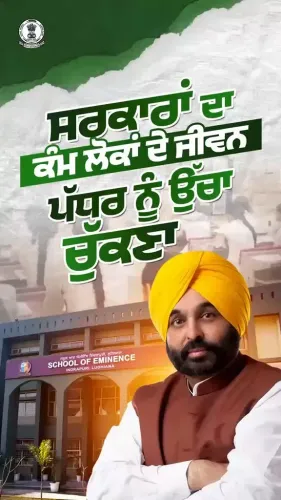
CM Bhagwant Mann: Punjab jumps from 27th to 1st in education

Synopsis
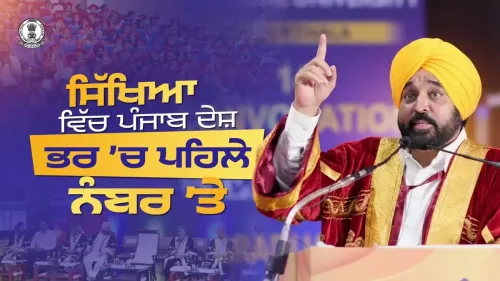
Chief Minister Bhagwant Mann claimed at a public meeting in Sarinh village, Jalandhar, that Punjab has risen from 27th to 1st place nationally in education in four years of AAP governance — a ranking leap the party is positioning as a flagship achievement.
Key Takeaways
CM Bhagwant Mann announced at a lok milni in village Sarinh, Nakodar constituency, Jalandhar on 29 October 2026 that Punjab ranks 1st nationally in education .
Punjab was reportedly ranked 27th in the country in education before the AAP government took office in March 2022 .
The claim covers education initiatives carried out over four years of AAP rule in Punjab.
The specific index or methodology behind the ranking has not been detailed in the announcement.
The lok milni format was held in a rural constituency, directly addressing students, teachers, and rural families.
The next official NITI Aayog or Ministry of Education state education rankings will be a key moment to verify the claim.
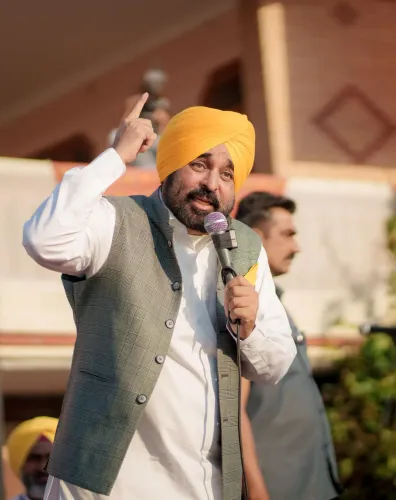
From the bottom third of India's education table to the very top — that is the claim Chief Minister Bhagwant Singh Mann made at a lok milni (public outreach meeting) in village Sarinh, under the Nakodar assembly constituency of Jalandhar district, on Thursday, 29 October 2026. Addressing residents directly, Mann said four years of sustained government effort had lifted Punjab from 27th place to 1st place nationally in the education sector.
What Mann said at Sarinh's lok milni
Speaking to a public gathering in this rural Jalandhar constituency, CM Mann credited the Punjab government's education initiatives over the past four years — since the Aam Aadmi Party came to power in March 2022 — for the dramatic ranking improvement. The claim, as stated, is that Punjab has moved from the 27th position to the 1st position among all Indian states in education. The post does not specify which index or ranking methodology underpins the figure.
The lok milni format — a structured public meet where the Chief Minister fields concerns from ordinary citizens — has been a consistent feature of Mann's governance style, particularly in rural and semi-urban belts across Punjab.
AAP's education push: the four-year arc
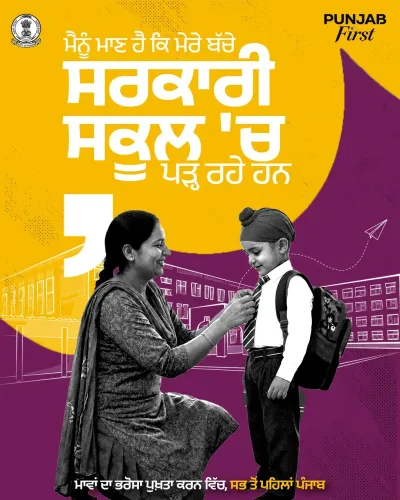
When AAP swept Punjab's 2022 assembly elections, it arrived with a pledge to replicate the government-school transformation it had championed in Delhi. The party's Punjab administration subsequently focused on school infrastructure upgrades, fresh teacher recruitment and training programmes, and improving enrollment and learning-outcome metrics — the typical axes on which state education rankings are assessed.
State-level education comparisons, often cited from NITI Aayog reports or the Union Ministry of Education's annual state rankings, have become a visible political scorecard. A jump of 26 positions — if borne out by a published, verifiable index — would represent one of the sharpest single-term climbs any Indian state has recorded.
Why Nakodar, and who was listening
Nakodar is a constituency inside the densely populated Jalandhar district, where agriculture and small industry sit side by side with a growing demand for quality public schooling. The audience at Sarinh — rural families, students, teachers — is precisely the stakeholder group most directly affected by government-school quality. Bringing the headline number to their doorstep is as much a mobilisation move as a governance update.
The next hard test for the claim comes with the release of the next NITI Aayog or Ministry of Education state rankings, and with Punjab's forthcoming budget allocations for school education. If the numbers hold up in published data, Punjab's four-year education story becomes one of the most striking turnarounds in Indian public policy. If they don't, the scorecard will matter just as much — in the other direction.
Point of View
More complex state. Claiming the top national education rank, four years in, is a calculated pre-election narrative anchor: it converts an abstract policy into a single, shareable number. However, the credibility of the claim rests entirely on which ranking is being cited; without naming the index, the government invites scrutiny it will need to address. If verified by a credible published ranking, it would mark one of the most significant state-level policy turnarounds in recent Indian history.
NationPress
29 Oct 2026
Frequently Asked Questions
What did CM Bhagwant Mann say about Punjab's education ranking?
CM Bhagwant Mann said at a public meeting in Sarinh village, Jalandhar, that Punjab has risen from 27th to 1st place in national education rankings over the past four years of AAP governance.
Which ranking shows Punjab as number one in education in India?
The Chief Minister's announcement did not specify the exact index or methodology. The specific national education ranking being referenced has not been identified in the official statement.
What education reforms has the AAP Punjab government carried out?
Since taking office in March 2022, the AAP Punjab government has focused on government school infrastructure upgrades, teacher recruitment and training, and improving enrollment and learning outcomes.
Where is Nakodar and why did CM Mann visit?
Nakodar is a legislative constituency in Jalandhar district, Punjab. CM Mann visited village Sarinh under this constituency for a lok milni — a structured public outreach event — to address rural residents.
When did the AAP government come to power in Punjab?
The Aam Aadmi Party won the Punjab assembly elections and formed the government in March 2022, with Bhagwant Singh Mann as Chief Minister.