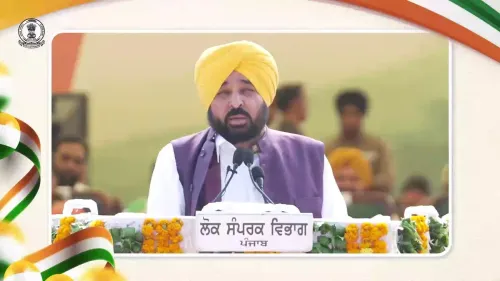
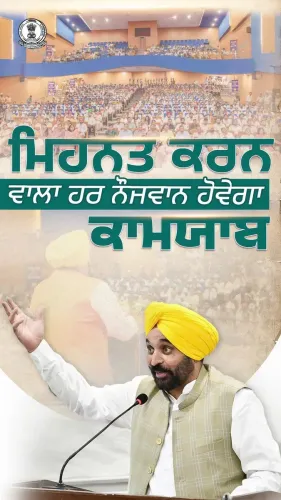
CM Mann's Punjab tops nation in parents' trust in govt schools
Synopsis
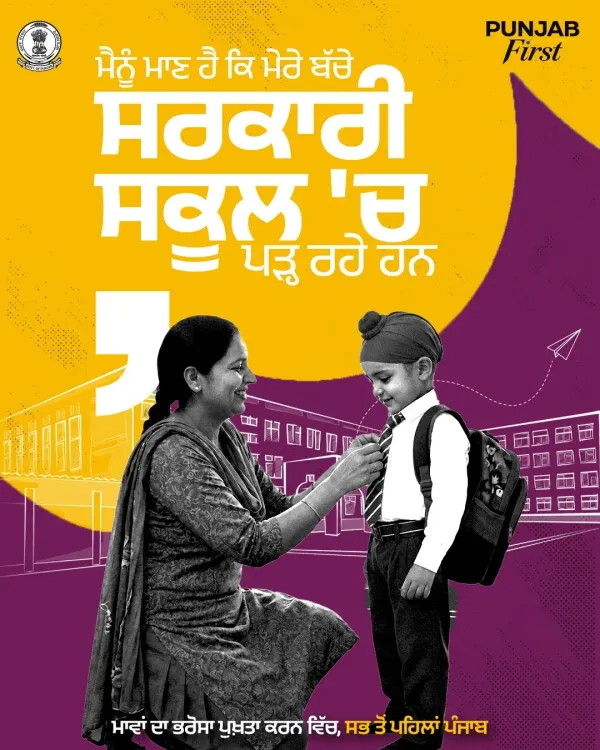
The Chief Minister's Office of Punjab declared on 1 July 2026 that Punjab has become the country's leading state in education, ranking first in reinforcing parents' trust in government schools under CM Bhagwant Singh Mann's directives.
Key Takeaways
The CMO Punjab announced on 1 July 2026 that Punjab ranks first nationally in parents' trust in government schools.
The achievement is attributed to education initiatives directed by Chief Minister Bhagwant Singh Mann since the AAP government took office in March 2022 .
Reforms have focused on teacher recruitment, infrastructure upgrades, smart classrooms , and community engagement in state-run schools.
Punjab's model draws parallels with AAP's Delhi school reforms , adapted to a larger, more rural state context.
Independent verification of the national ranking is expected when updated UDISE+ school-education data is released.
The government's next education budget allocation will indicate the sustainability of this investment.
The Chief Minister's Office of Punjab announced on 1 July 2026 that the state has emerged as a leading province in the country on education, with Punjab ranking first nationally in reinforcing parents' trust in government schools — a milestone the office attributes directly to the directives of Chief Minister Bhagwant Singh Mann.
The official post, shared in both Punjabi and English, stated: 'ਪੰਜਾਬ ਦੇਸ਼ ਭਰ ਵਿੱਚ ਮੋਹਰੀ ਸੂਬਾ ਬਣ ਗਿਆ ਹੈ' ('Punjab has become the leading state in the country'), adding that Punjab 'stands first in reinforcing parents' trust in government schools for the education of their children.'
Context
Since the Aam Aadmi Party swept the Punjab assembly elections in March 2022, the state government has placed public-school reform at the centre of its governance agenda. Chief Minister Bhagwant Singh Mann directed a series of measures targeting teacher recruitment, classroom infrastructure, and learning outcomes across state-run institutions. The broader goal has been to reverse years of declining enrolment in government schools and restore confidence among families who had shifted to private institutions.
The claim that Punjab now leads the nation in parental trust in government schools is the government's own assessment, shared through the official CMO Punjab handle. Independent verification of the specific national ranking awaits updated data from authoritative school-education surveys.
Policy Backdrop
Punjab's education push mirrors a pattern visible across states governed by the AAP, most notably the reforms carried out in Delhi from 2015 onwards, where upgrades to government school infrastructure attracted national and international attention. Punjab has sought to adapt and scale a similar model — combining physical renovation of school buildings with academic quality interventions — to its own context of a larger, more rural state.
Key planks of the initiative have included recruitment drives to fill teacher vacancies, renovation of school buildings, introduction of smart classrooms, and community-engagement programmes designed to bring parents closer to school governance. The government has periodically cited rising enrolment figures as evidence that the strategy is working, though comprehensive state-wide data is expected to be reflected in the next release of the national UDISE+ school-education statistics.
Stakeholders and Impact
The most direct beneficiaries of sustained improvement in government schools are Punjab's school-going children, a large proportion of whom belong to economically weaker sections for whom private schooling remains unaffordable. Parents — particularly in semi-urban and rural districts — stand to gain from improved infrastructure and teaching quality without incurring tuition fees.
Teachers and school administrators also figure prominently in this story: the government's recruitment and training drives have aimed to reduce the burden on existing staff and raise instructional standards. Wider civic trust in public institutions, a metric the AAP government has consistently highlighted, is the longer-term political and social dividend the ruling party is seeking to consolidate ahead of future electoral cycles.
What's Next
The government's claim of a national-first ranking will come under closer scrutiny when the next round of UDISE+ data is published, which will provide independently compiled figures on enrolment, dropout rates, and school infrastructure across all states. Punjab's education budget allocations in the upcoming fiscal session will also signal how firmly the government intends to sustain this investment trajectory. If the enrolment and trust metrics hold up under independent assessment, Punjab's model could influence education-policy conversations in other states looking to revitalise their public-school systems.
Point of View
Positioning the AAP government's education record as its most tangible governance achievement. By framing Punjab as the national leader in parental trust — a softer, sentiment-based metric — the government sidesteps harder quantitative comparisons while still claiming a top-of-table position. This follows a well-worn AAP playbook of leading with education optics, first tested in Delhi, now replicated in Punjab with state-specific adaptations. The real test will come when independent data either validates or complicates the government's self-assessed ranking.
NationPress
30 Sept 2026
Frequently Asked Questions
Why is Punjab ranked first in parents' trust in government schools?
The Punjab government, under CM Bhagwant Singh Mann's directives, has undertaken education reforms since 2022 including teacher recruitment, school infrastructure upgrades, and smart classrooms, which it says have rebuilt parental confidence in state-run schools.
What has the Bhagwant Mann government done for education in Punjab?
Since taking office in March 2022, the AAP government in Punjab has focused on filling teacher vacancies, renovating school buildings, introducing smart classrooms, and running community-engagement programmes to improve government school quality.
How does Punjab's education reform compare to Delhi's?
Punjab's reforms mirror the AAP-led Delhi model of upgrading government school infrastructure and improving teaching quality, adapted to Punjab's larger and more rural geography.
What is UDISE+ and why does it matter for Punjab's education ranking?
UDISE+ is the national Unified District Information System for Education Plus, which independently compiles enrolment, dropout, and infrastructure data for all states — its next release will be a key test of Punjab's claimed national-first standing.
Which schools benefit from Punjab's education initiatives?
Government-run schools across Punjab, particularly in semi-urban and rural areas, are the primary focus, benefiting children from economically weaker sections whose families cannot afford private schooling.