CM Mann Hands Out Appointment Letters in Bathinda
Synopsis
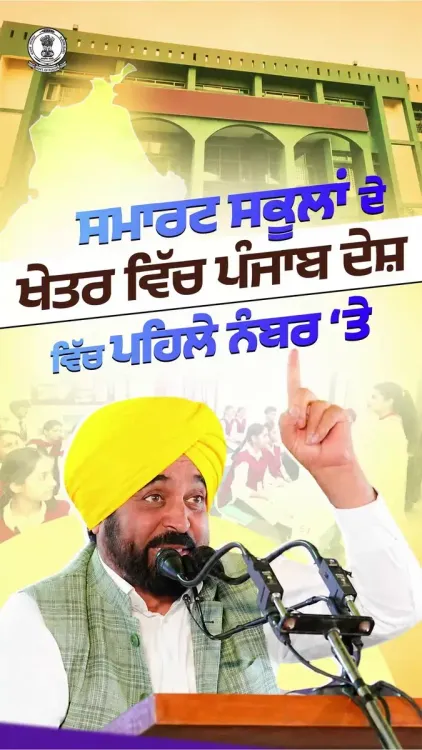
Chief Minister Bhagwant Singh Mann handed appointment letters to selected candidates across Punjab Government departments in Bathinda on 27 June 2026, asserting that the state has achieved historic education reforms and now ranks among India's leading states in the sector during his government's 4.5-year tenure.
Key Takeaways
CM Bhagwant Singh Mann distributed appointment letters to selected candidates in multiple Punjab Government departments at an event in Bathinda on 27 June 2026 .
Mann claimed Punjab has undergone 'historic' and 'revolutionary' changes in its education system under the AAP government's 4.5-year tenure .
The government asserted that Punjab now ranks among India's leading states in education — a claim that remains independently unverified.
The appointment drive aligns with AAP's 2022 election manifesto commitment to large-scale government recruitment and school upgrades.
The event was held in Bathinda district , a key constituency in Punjab's Malwa region.
Further recruitment phases and independent learning-outcome assessments will be key indicators of whether the education reform claims are substantiated.
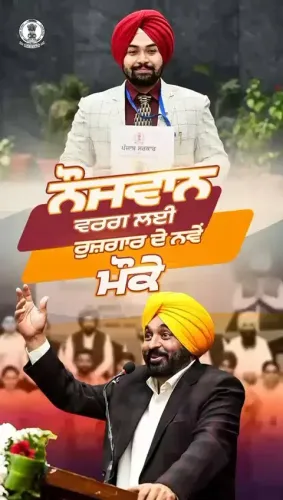
Chief Minister Bhagwant Singh Mann distributed appointment letters to selected candidates across various departments of the Punjab Government at an event in Bathinda district on Saturday, 27 June 2026, asserting that the state is undertaking historic reforms in education and has emerged as one of the leading states in the country in that sector.
What Was Said
Speaking at the appointment letter distribution ceremony, CM Mann declared that the Punjab Government is carrying out itihasik sudhar (historic reforms) in the field of education, and that as a result Punjab has today joined the ranks of the country's foremost states. The Chief Minister's Office noted that over the 4.5-year tenure of the Mann-led government, revolutionary changes have been brought about in the state's education system and its functioning.
The event served a dual purpose: formally inducting new government employees into various departments while also providing a platform for the Chief Minister to highlight the administration's governance record ahead of the state's next electoral cycle.
Context
The Aam Aadmi Party swept to power in Punjab in the March 2022 assembly elections on a platform that prominently featured large-scale teacher recruitment and school infrastructure upgrades, drawing heavily from its experience governing Delhi. Filling government vacancies through transparent recruitment and then publicly handing over appointment letters has been a recurring feature of AAP-led administrations, designed to underscore delivery on campaign promises.
Bathinda, a major district in the Malwa belt of Punjab, was the chosen venue, signalling the government's intent to project its governance reach beyond the state capital Chandigarh.
Policy Backdrop
Since 2022, the Punjab Government has pursued a multi-pronged approach to education reform: recruiting teachers to fill long-standing vacancies, upgrading school infrastructure, and attempting to replicate elements of the Delhi model of school governance. Recruitment drives across departments — including education — have been among the most visible outputs of this agenda.
AAP-led state governments have consistently used such recruitment events as proof points of administrative delivery, framing them as a contrast to what they describe as years of neglect under previous administrations. The claim that Punjab now ranks among India's leading states in education reflects the government's self-assessment; independent verification of such rankings remains pending.
Stakeholders and Impact
The most immediate beneficiaries are the candidates who received appointment letters at the Bathinda event, who now have confirmed positions in state government departments. More broadly, students and families dependent on the public school system stand to benefit if the reforms translate into improved learning outcomes and better-staffed classrooms.
Teachers' unions and aspirants awaiting future recruitment cycles will be watching whether the government sustains this pace of hiring across the remainder of its term.
What's Next
The government is expected to announce further phases of recruitment in the education and other departments as it moves through the second half of its term. Independent assessments of learning outcomes in Punjab's government schools — and any official state or national rankings — will be critical in substantiating the administration's claims of a transformation in public education. How the state performs in standardised learning surveys will determine whether the 'historic reform' narrative holds up to scrutiny.
Point of View
Such events serve as tangible proof points against opposition narratives of unfulfilled promises. However, the Chief Minister's claim that Punjab now leads the country in education is a significant assertion that outpaces what verified data currently supports, and the gap between political messaging and measurable learning outcomes will increasingly define the government's legacy. The pace and transparency of future recruitment cycles will be the real test of whether this is structural reform or electoral choreography.
NationPress
25 Sept 2026
Frequently Asked Questions
Who received appointment letters at the Bathinda event on 27 June 2026?
Candidates selected for positions across various departments of the Punjab Government received appointment letters at the event in Bathinda, presided over by Chief Minister Bhagwant Singh Mann.
What education reforms has the Bhagwant Mann government carried out in Punjab?
The AAP-led Punjab Government, since taking office in March 2022, has focused on filling teacher vacancies through recruitment drives, upgrading school infrastructure, and modelling reforms on the Delhi government school approach. The full scope and verified impact of these changes are still being assessed independently.
Is Punjab really one of India's top states in education?
Chief Minister Bhagwant Mann made this claim at the Bathinda event, citing 4.5 years of reforms. However, this ranking has not been independently verified by established public records or national learning-outcome surveys as of June 2026.
Why did CM Mann hold the appointment letter event in Bathinda?
Bathinda is a major district in Punjab's Malwa region, and holding the event there allowed the government to extend its public outreach beyond the state capital Chandigarh and demonstrate administrative delivery across the state.
What is AAP's approach to government recruitment in Punjab?
The Aam Aadmi Party's 2022 Punjab election manifesto committed to large-scale teacher recruitment and filling vacancies across government departments. Public appointment letter distribution events have been a recurring feature of the government's communication strategy to highlight job creation.