CM Mohan Yadav: MP Religious Tourism Reshaping Local Economy
Synopsis
Chief Minister Dr. Mohan Yadav says religious tourism in Madhya Pradesh is simultaneously expanding pilgrimage infrastructure and reshaping the local economy, linking faith-based development at sites like Ujjain and Omkareshwar to broader community prosperity.
Key Takeaways
Mohan Yadav stated on November 7, 2026 that religious tourism development in Madhya Pradesh is transforming the local economy alongside expanding faith centres.
Key pilgrimage sites include Mahakaleshwar in Ujjain and Omkareshwar on the Narmada river, drawing millions of devotees annually.
The Central Government's PRASAD scheme , launched in 2014-15 , provides infrastructure funding for pilgrimage tourism and has benefited Madhya Pradesh.
Yadav has held the Chief Minister's office since December 2023 , with a consistent public focus on tourism and infrastructure.
The state's approach mirrors temple corridor models piloted in Uttar Pradesh , blending state-level promotion with central scheme funding.
Future state budget allocations for religious tourism circuits will indicate the scale of the government's commitment.
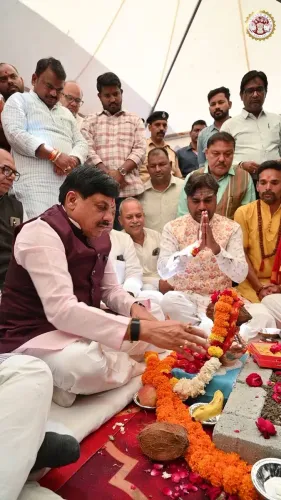
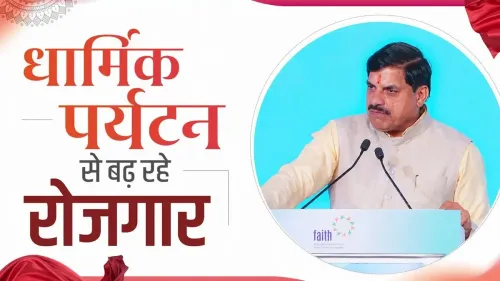
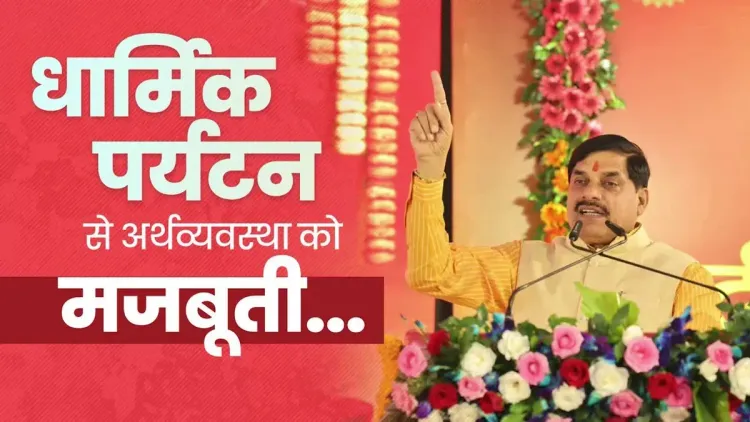
Faith and economic growth are converging in Madhya Pradesh — and Chief Minister Dr. Mohan Yadav wants the country to notice. On Saturday, November 7, 2026, the Chief Minister's Office of Madhya Pradesh posted a pointed observation on X: that the expansion of religious tourism across the state is not merely deepening devotion, but actively transforming the fortunes of local communities.
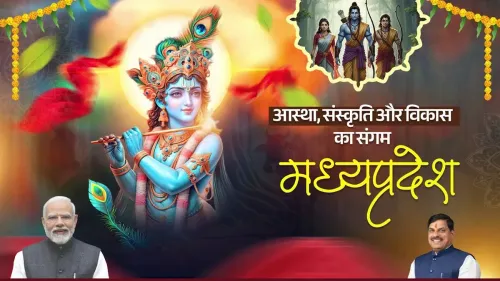
Quoting CM Dr. Mohan Yadav directly, the post stated: 'मध्यप्रदेश में धार्मिक पर्यटन के विकास से न केवल आस्था के केंद्रों का विस्तार हुआ है, बल्कि स्थानीय अर्थव्यवस्था की तस्वीर भी बदल रही है' — 'In Madhya Pradesh, the development of religious tourism has not only expanded the centres of faith, but is also changing the face of the local economy.'
Ujjain, Omkareshwar, and the Pilgrim Economy
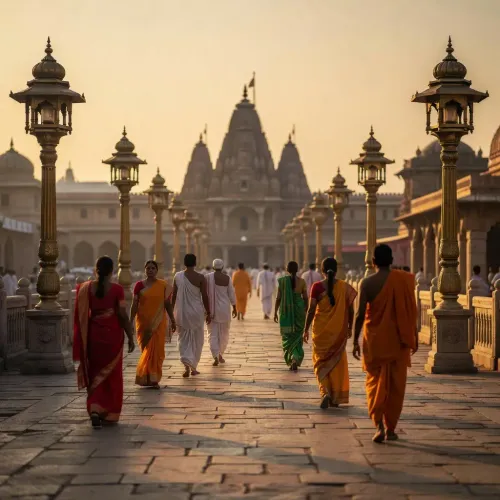
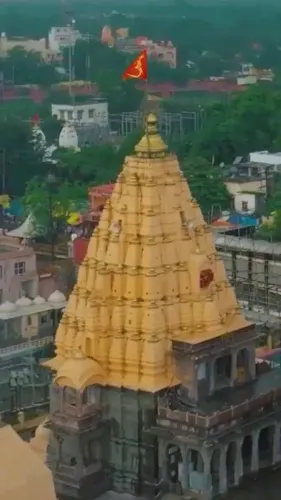
Madhya Pradesh sits at the heart of India's pilgrimage map. Mahakaleshwar in Ujjain — one of the twelve sacred Jyotirlingas — and Omkareshwar on the Narmada river draw millions of devotees each year. Where pilgrims flow, so does spending: on lodging, food, local handicrafts, transport, and offerings. For small traders and tourism operators who build their livelihoods around these nodes, every infrastructure upgrade at a temple town translates into real income.
The push draws on a well-established central framework. The Government of India's PRASAD scheme, launched in 2014-15, specifically funds pilgrimage and heritage tourism infrastructure in states — and Madhya Pradesh has been among its beneficiaries. State-level promotion layered atop central funding is precisely the model Dr. Yadav's government has leaned into since he took office in December 2023.
A Template Other States Have Already Tested
Madhya Pradesh is not writing this playbook from scratch. Uttar Pradesh's temple corridor projects — most visibly around Ayodhya and Kashi — demonstrated how combining infrastructure investment with religious branding can rapidly accelerate footfall, ancillary employment, and state revenue. Indian states have broadly embraced the logic that faith-based destinations, when backed by roads, sanitation, lighting, and digital connectivity, become economic multipliers.
The difference in Madhya Pradesh's framing is the deliberate accent on local economic transformation — not just visitor numbers, but how pilgrim traffic reshapes the income picture for communities living around these sites. That is a signal worth watching as the state prepares future budget allocations for tourism circuits.
When a state the size of Madhya Pradesh commits to making its pilgrimage belt its economic backbone, the ambition runs far deeper than any single temple corridor — it is a wager on rewriting how central India earns its living.
Point of View
His government signals an intent to build durable political capital in rural and semi-urban communities around temple towns. The convergence of the PRASAD scheme's central funding with state-level branding also reflects a coordinated Centre-state strategy that other BJP-governed states have deployed effectively. The real test will be whether budget allocations and project completions match the rhetorical ambition.
NationPress
7 Nov 2026
Frequently Asked Questions
What did CM Mohan Yadav say about religious tourism in Madhya Pradesh?
CM Dr. Mohan Yadav stated that the development of religious tourism in Madhya Pradesh has not only expanded faith centres but is also changing the face of the local economy, emphasising direct benefits to local communities.
Which religious tourism sites are major pilgrimage centres in Madhya Pradesh?
Mahakaleshwar temple in Ujjain — one of India's twelve Jyotirlingas — and Omkareshwar on the Narmada river are among the most significant pilgrimage destinations in Madhya Pradesh, drawing millions of devotees each year.
What is the PRASAD scheme and how does it help Madhya Pradesh?
The PRASAD scheme, launched by the Government of India in 2014-15 , funds pilgrimage and heritage tourism infrastructure across states. Madhya Pradesh has been a beneficiary, using the scheme to upgrade facilities at key religious sites.
How is religious tourism boosting the local economy in Madhya Pradesh?
Pilgrim footfall at sites like Ujjain and Omkareshwar generates income for local traders, lodging operators, food vendors, transport providers, and artisans, creating a multiplier effect on community-level earnings.
Since when has Dr. Mohan Yadav been Chief Minister of Madhya Pradesh?
Dr. Mohan Yadav has served as Chief Minister of Madhya Pradesh since December 2023 , with a consistent public agenda centred on tourism development and infrastructure.