Kishan Reddy Hails AIIMS Bibinagar Swasthya App
Synopsis
Union Minister G. Kishan Reddy highlighted the AIIMS Bibinagar Swasthya App on 7 November 2026, which enables patients to book appointments, make UPI payments for tests, and access lab reports via smartphone — extending India's digital health push into Telangana.
Key Takeaways
Union Coal and Mines Minister G.
Kishan Reddy praised the AIIMS Bibinagar Swasthya App on 7 November 2026 .
The app allows patients to book appointments, pay for medical tests via UPI , and access lab reports from their smartphones.
AIIMS Bibinagar in Telangana was established under the Pradhan Mantri Swasthya Suraksha Yojana (2003) to expand tertiary healthcare access.
The initiative aligns with the Ayushman Bharat Digital Mission (2020) , India's national digital health infrastructure framework.
Reddy, who is also BJP Telangana state president , framed the app as part of the broader Digital India push.
A government hospital in Telangana just put appointments, lab reports, and UPI payments into a patient's pocket — and Union Coal and Mines Minister G. Kishan Reddy is calling it exactly what it looks like: a quiet but meaningful shift in how public healthcare gets delivered in India.
Reddy highlighted the AIIMS Bibinagar Swasthya App on Saturday, 7 November 2026, praising it as 'a welcome step towards technology-driven, seamless and patient-centric healthcare delivery.' The app allows patients to book outpatient appointments, pay for medical tests via UPI, and retrieve laboratory reports — all from their smartphones, without standing in a queue.
What the Swasthya App actually does for patients
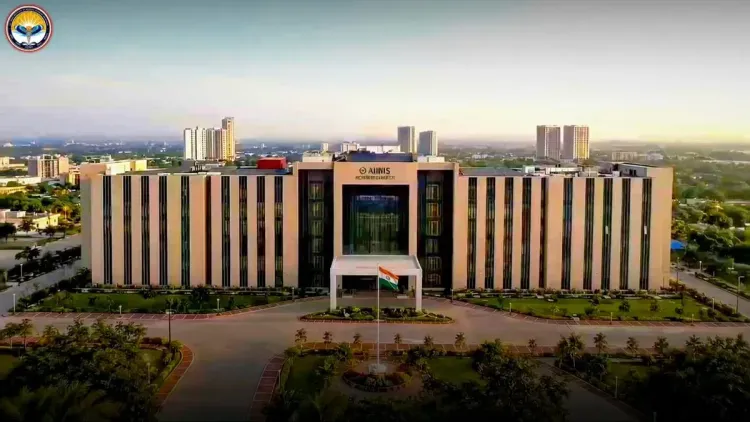
AIIMS Bibinagar, located in Telangana's Yadadri Bhongir district, is one of several new All India Institutes of Medical Sciences established under the Pradhan Mantri Swasthya Suraksha Yojana (2003) to push tertiary healthcare beyond the country's metro centres. The Swasthya App essentially collapses three friction points that have long plagued government hospital visits — the registration desk, the cashier's counter, and the diagnostics window — into a single mobile interface. For a first-generation smartphone user in a small Telangana town, that compression is not trivial.
Where this fits in India's digital health push
The app arrives against the backdrop of the Ayushman Bharat Digital Mission (2020), the central government's framework for building a unified digital health infrastructure — covering patient IDs, health records, and interoperable hospital systems. Similar patient-facing portals have been rolled out at other AIIMS campuses and under state health missions since the mid-2010s. The Bibinagar app extends that pattern deeper into Tier-2 and Tier-3 India, where the gap between a person and their nearest quality hospital has historically been measured not just in kilometres but in paperwork and wait times.
Reddy, who also serves as BJP Telangana state president, framed the development squarely within the Digital India narrative — a signal that the rollout carries both administrative and political significance for the party in a state it lost in the 2023 assembly elections.
Whether the remaining new AIIMS campuses follow Bibinagar's model — and whether the app eventually links into the broader National Digital Health Mission ecosystem — will determine how wide this particular door swings open.
Point of View
Allowing the party to demonstrate governance dividends in Telangana — a state it lost in 2023 — through a visible, citizen-facing tool. For the central government, digitising AIIMS campuses is also a low-cost, high-visibility way to demonstrate progress on the Ayushman Bharat Digital Mission without requiring fresh legislative action. The real test, however, lies in whether this remains a Bibinagar-specific proof of concept or becomes a scalable template replicated across all newer AIIMS institutions and eventually integrated into the National Digital Health Mission's interoperability layer.
NationPress
7 Nov 2026
Frequently Asked Questions
What is the AIIMS Bibinagar Swasthya App?
The AIIMS Bibinagar Swasthya App is a patient-facing mobile application that allows users to book outpatient appointments, make UPI payments for medical tests, and access laboratory reports directly from their smartphones.
Where is AIIMS Bibinagar located?
AIIMS Bibinagar is located in Yadadri Bhongir district, Telangana. It is one of the newer All India Institutes of Medical Sciences set up under the Pradhan Mantri Swasthya Suraksha Yojana to expand tertiary healthcare beyond metro cities.
What is the Pradhan Mantri Swasthya Suraksha Yojana?
The Pradhan Mantri Swasthya Suraksha Yojana, launched in 2003, is a central government scheme to establish new AIIMS institutions and upgrade existing government medical colleges to improve access to quality tertiary healthcare across India.
How does the Ayushman Bharat Digital Mission relate to apps like Swasthya?
The Ayushman Bharat Digital Mission, launched in 2020, provides the national framework for digital health infrastructure — including patient IDs and interoperable records. Apps like AIIMS Bibinagar's Swasthya contribute to this ecosystem by digitising hospital interactions at the patient level.
Why did Kishan Reddy comment on a healthcare app?
G. Kishan Reddy is Union Minister of Coal and Mines and BJP's Telangana state president. His comment on the AIIMS Bibinagar app reflects both the party's Digital India narrative and its interest in showcasing governance outcomes in Telangana.