Bangladesh Coast Guard drops 'Joy Bangla', renames vessels honouring 1971 war heroes
Synopsis
Bangladesh's Home Ministry has quietly approved renaming five Coast Guard vessels — erasing 'Joy Bangla' and the names of four leaders killed on Jail Killing Day 1975. Coming just days after the 50th anniversary of that massacre, the move has ignited a fierce Awami League backlash and reignited the country's deepest political fault line: who owns the legacy of 1971.
Key Takeaways
The Bangladesh Coast Guard has renamed five vessels , with approval from the Ministry of Home Affairs .
BCGS Joy Bangla has been renamed BCGS Adommo Bangla ; four other vessels named after 1971 Liberation War leaders have also been rechristened.
The original vessels honoured Syed Nazrul Islam , Tajuddin Ahmad , Captain M.
Mansur Ali , and A.H.M.
Kamaruzzaman — all killed inside Dhaka Central Jail on 3 November 1975 .
The Awami League condemned the decision as 'an alarming attack on Bangladesh's historical identity,' linking it to BNP 's alleged alignment with Jamaat-e-Islami .
The renamings came just days after Jail Killing Day , the annual commemoration of the 3 November 1975 assassinations.
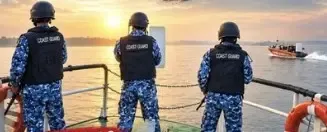
The Bangladesh Coast Guard has renamed five vessels, stripping away the battle cry 'Joy Bangla' and removing the names of four key leaders of the 1971 Bangladesh Liberation War — leaders who were assassinated inside Dhaka Central Jail on 3 November 1975, according to local media reports. The move, approved by the Ministry of Home Affairs, has drawn sharp condemnation from the opposition Awami League, which called it an assault on Bangladesh's founding identity.
What Was Changed and How
Under the approved renaming order, BCGS Joy Bangla has been rechristened BCGS Adommo Bangla. The four remaining vessels, previously named after slain national leaders, have been assigned entirely new identities. BCGS Syed Nazrul is now BCGS Firoz Kabir, BCGS Tajuddin has become BCGS Nurul Islam, BCGS Mansur Ali is now BCGS M Humayun Kabir, and BCGS Kamruzzaman has been renamed BCGS Ashraf Siddiqui, as reported by Bangladeshi daily Dhaka Tribune.
Who the Original Names Honoured
The vessels had been named after Syed Nazrul Islam, Tajuddin Ahmad, Captain M. Mansur Ali, and A.H.M. Kamaruzzaman — four senior Awami League leaders widely regarded as principal architects of the 1971 Liberation War. All four were killed inside Dhaka Central Jail on 3 November 1975, a date now observed annually in Bangladesh as Jail Killing Day. The timing of the renaming order — coming just days after the 50th anniversary of that massacre — has heightened the political sensitivity of the decision.
Awami League Condemns the Decision
The Awami League described the ruling Bangladesh Nationalist Party (BNP) government's decision as 'an alarming attack on Bangladesh's historical identity.' In an official statement, the party said: 'Coming just days after Jail Killing Day, this decision is not merely about renaming vessels. It raises serious questions about an apparent attempt to erase the symbols, legacy and values of our Liberation War.'
The party further argued that Joy Bangla was not a partisan political slogan but a phrase representing Bangladesh, its people, and the spirit of the 1971 Liberation War. It called on 'every patriotic Bangladeshi to wake up, unite their voices and stand against forces seeking to undermine the very foundations of Bangladesh.'
Broader Political Context
The Awami League linked the renaming to what it described as a wider pattern of historical revisionism, citing the former Muhammad Yunus-led interim government's so-called 'reset' agenda and what it characterised as Prime Minister Tarique Rahman-led BNP's political alignment with Jamaat-e-Islami — a party whose wartime leadership, critics allege, collaborated in the 1971 genocide. 'From Yunus's so-called reset to Tarique Rahman's political alignment with Jamaat, the party whose leadership collaborated in the 1971 genocide, we are witnessing a disturbing pattern: an attempt to redefine Bangladesh by distancing it from its founding history,' the Awami League stated. The government has not issued a public response to the condemnation, according to available reports.
What Happens Next
The renamings are reportedly already approved by the Ministry of Home Affairs, suggesting they are likely to take immediate administrative effect. Whether the opposition can mobilise enough public pressure to reverse the decision remains to be seen. The controversy is expected to deepen political fault lines in Dhaka ahead of any future electoral cycle, with the 1971 Liberation War legacy continuing to serve as the most charged flashpoint in Bangladeshi politics.
Point of View
Whether by design or oversight, handed the Awami League a potent symbolic argument. The deeper question is whether the BNP government has the political bandwidth to absorb the backlash while simultaneously managing its contested relationship with Jamaat-e-Islami. Bangladesh's civil-military and political equilibrium has historically been fragile precisely because 1971 remains unresolved as a national narrative — and this episode shows that fragility is nowhere near healed.
NationPress
7 Nov 2026
Frequently Asked Questions
Which Bangladesh Coast Guard vessels were renamed and what are their new names?
Five vessels were renamed: BCGS Joy Bangla became BCGS Adommo Bangla, BCGS Syed Nazrul became BCGS Firoz Kabir, BCGS Tajuddin became BCGS Nurul Islam, BCGS Mansur Ali became BCGS M Humayun Kabir, and BCGS Kamruzzaman became BCGS Ashraf Siddiqui. The changes were approved by Bangladesh's Ministry of Home Affairs.
Who were the four 1971 Liberation War leaders whose names were removed from the vessels?
They were Syed Nazrul Islam, Tajuddin Ahmad, Captain M. Mansur Ali, and A.H.M. Kamaruzzaman — senior Awami League leaders and key organisers of the 1971 Bangladesh Liberation War. All four were assassinated inside Dhaka Central Jail on 3 November 1975, a date now marked as Jail Killing Day.
Why did the Awami League condemn the vessel renamings?
The Awami League called the decision 'an alarming attack on Bangladesh's historical identity,' arguing it amounted to erasing the symbols and legacy of the 1971 Liberation War. The party also linked the move to what it described as the BNP government's political alignment with Jamaat-e-Islami, whose wartime leadership is accused of collaborating in the 1971 genocide.
What is the significance of 'Joy Bangla' that made its removal controversial?
'Joy Bangla' was the rallying cry of the 1971 Bangladesh Liberation War and is widely seen as a symbol of the country's founding struggle for independence. The Awami League argues it belongs not to any single party but to Bangladesh's national identity and the memory of the Liberation War.
What is Jail Killing Day in Bangladesh?
Jail Killing Day is observed annually on 3 November to commemorate the assassination of four top Awami League leaders — Syed Nazrul Islam, Tajuddin Ahmad, Captain M. Mansur Ali, and A.H.M. Kamaruzzaman — inside Dhaka Central Jail on 3 November 1975. The Coast Guard renaming order came shortly after the 50th anniversary of those killings.