Bangladesh Jamaat chief's 'tested friend' remark on US sparks 1971 war debate
Synopsis
Jamaat-e-Islami chief Shafiqur Rahman calling the US a 'tested friend' at Bangladesh's parliament has done more than stir diplomatic debate — it has forced a reckoning with 1971, when Nixon sent the USS Enterprise into the Bay of Bengal in what was widely seen as backing Pakistan. That the remark came from a party whose own Liberation War role remains deeply contested makes the historical irony especially sharp.
Key Takeaways
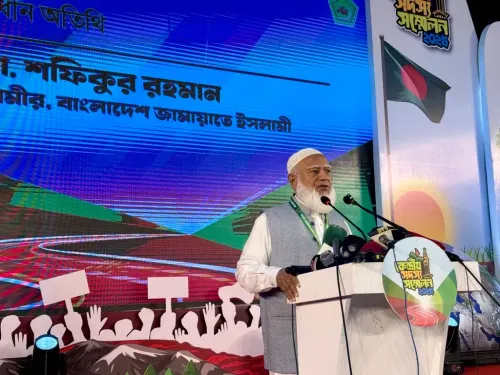
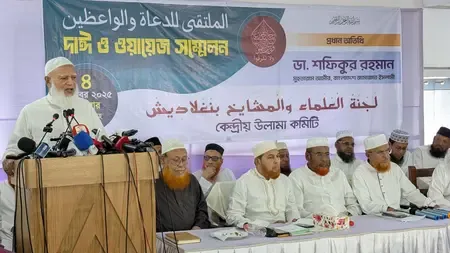
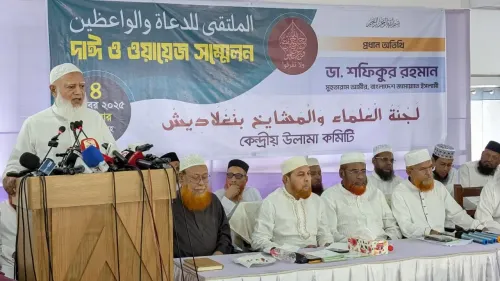
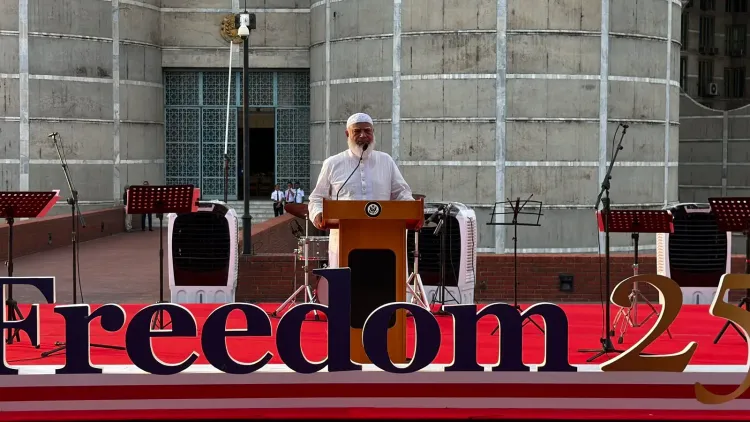
Bangladesh Jamaat-e-Islami chief Shafiqur Rahman described the United States as a 'tested friend' at a 250th American independence anniversary event at the Jatiya Sangsad .
Critics argue the label ignores Washington's support for Pakistan during the 1971 Bangladesh Liberation War , including deploying Task Force 74 and the USS Enterprise into the Bay of Bengal .
The Nixon administration's backing of Pakistan, driven by Cold War strategy and the China opening, has been widely condemned by historians as a major moral failure.
Leftist groups and intellectuals criticised hosting the celebration at Bangladesh's parliament and linked it to concerns over growing US influence.
Jamaat-e-Islami's own contested wartime role during the Liberation War has added a layer of irony to the controversy, according to reports.
Bangladesh Jamaat-e-Islami chief Shafiqur Rahman's description of the United States as a 'tested friend' of Bangladesh during a celebration marking the 250th anniversary of American independence at the South Plaza of the Jatiya Sangsad has reignited a charged historical debate. Critics argue the characterisation cannot be divorced from Washington's deeply controversial role during the 1971 Bangladesh Liberation War.
The Remark and Its Context
The event, held at Bangladesh's parliament, drew sharp criticism from leftist political groups and intellectuals who viewed the venue choice itself as an affront to the country's founding history. The gathering was framed as a celebration of bilateral ties, but opponents say it glossed over a defining episode in the relationship between the two nations.
According to a report in Bangladesh's Daily Sun, diplomatic courtesies are a routine feature of international relations — yet portraying the US as a 'tested friend' without acknowledging the defining test of 1971 'risks reducing history to political convenience.'
Washington's 1971 Record Under Scrutiny
The Nixon administration's conduct during the Bangladesh Liberation War has been widely criticised by historians as one of the gravest moral failures of American foreign policy. Driven by Cold War calculations and a strategic push to open relations with China, then-President Richard Nixon and his National Security Advisor Henry Kissinger continued to back Pakistan despite mounting evidence of atrocities committed by Pakistani forces in Bangladesh, according to the report.
The contradictions were most starkly on display in December 1971, when the United States dispatched Task Force 74 — led by the nuclear-powered aircraft carrier USS Enterprise — into the Bay of Bengal as the Indo-Pakistani War reached its critical stage. The move was widely interpreted as a show of support for Pakistan.
The Irony Critics Point To
The Daily Sun report highlighted what it called a difficult-to-ignore irony: the remark came from the leader of a party whose own wartime role during the Liberation War 'continues to cast a long shadow over its political legacy.' The report stated that for Jamaat-e-Islami to invoke the language of enduring friendship while remaining silent about both its own wartime position and Washington's record 'raises uncomfortable questions about historical consistency.'
Critics also linked the event to broader anxieties about growing American influence in Bangladesh, including recent criticism of the Interim Government's reciprocal trade agreement with the US, which opponents have characterised as contrary to Bangladesh's sovereign interests.
Historical Memory and Political Accountability
The report was unequivocal in its assessment of Jamaat's wartime legacy, stating: 'History is not served by selective remembrance. Bangladesh's Liberation War is the moral foundation of the Republic. Any political party — particularly one whose own wartime role remains deeply contested — should approach that history with humility rather than revisionism.'
Whether the controversy reshapes the political calculus of Bangladesh's Interim Government or deepens the fault lines between nationalist memory and present-day realpolitik remains to be seen.
Frequently Asked Questions
What did Bangladesh Jamaat-e-Islami chief Shafiqur Rahman say about the United States?
Shafiqur Rahman described the United States as a 'tested friend' of Bangladesh during a celebration of the 250th anniversary of American independence held at the South Plaza of the Jatiya Sangsad. The remark has drawn criticism for glossing over Washington's support for Pakistan during the 1971 Bangladesh Liberation War.
What was the US role during the 1971 Bangladesh Liberation War?
The Nixon administration continued to back Pakistan despite evidence of atrocities by Pakistani forces in Bangladesh, driven by Cold War strategy and efforts to open ties with China. In December 1971, the US deployed Task Force 74, led by the USS Enterprise, into the Bay of Bengal — a move widely seen as a show of support for Pakistan at a critical stage of the Indo-Pakistani War.
Why is Jamaat-e-Islami's remark considered particularly controversial?
Jamaat-e-Islami's own role during the 1971 Liberation War remains deeply contested in Bangladesh. Critics argue it is historically inconsistent for the party's leader to invoke the language of enduring US friendship while staying silent about both Washington's 1971 record and Jamaat's own wartime position.
Who criticised the event at the Jatiya Sangsad?
Leftist political groups and intellectuals criticised the decision to host the American independence anniversary celebration at Bangladesh's parliament. They also connected the event to broader concerns about US influence, including criticism of the Interim Government's reciprocal trade agreement with the United States.
What is the broader significance of this debate for Bangladesh?
The controversy reflects a tension between present-day diplomatic pragmatism and a historical memory that remains central to Bangladesh's national identity. The Liberation War is widely regarded as the moral foundation of the Bangladeshi republic, making any selective engagement with that history politically sensitive.