BNP demands Jamaat apology for 1971 Liberation War role in Bangladesh
Synopsis
More than 50 years after Bangladesh's independence, the ruling BNP has issued its sharpest public demand yet — Jamaat-e-Islami must apologise for siding against the nation in 1971, or face deepening political isolation. The move also puts the newer National Citizen Party on notice for aligning with Jamaat.
Key Takeaways
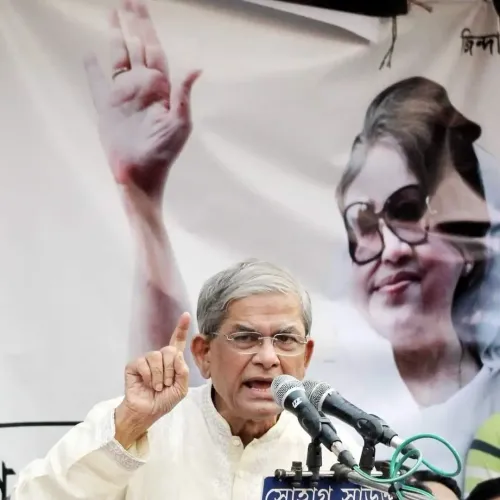
BNP Secretary General Mirza Fakhrul Islam Alamgir demanded Jamaat-e-Islami apologise for opposing Bangladesh's independence during the 1971 Liberation War .
The remarks were made in parliament on 29 June during debate on the 2026-27 budget in Dhaka .
Fakhrul cited former Jamaat leader Golam Azam's statement that the party 'did not make a mistake' in 1971.
Home Minister Salahuddin Ahmed backed the criticism, citing the National Freedom Fighters Council Act as legal confirmation of Jamaat's wartime opposition.
The BNP also warned the National Citizen Party (NCP) against maintaining its alliance with Jamaat.
Jamaat has never issued a formal, unconditional apology for its role in the 1971 war .
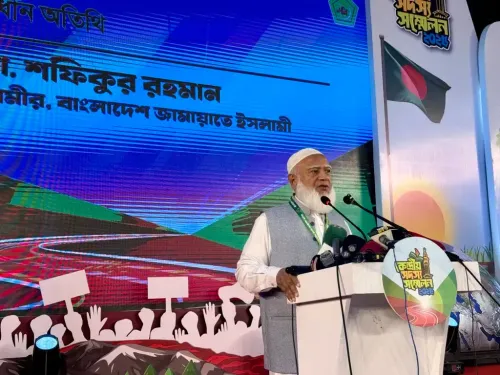
Bangladesh Nationalist Party (BNP) Secretary General and Local Government Minister Mirza Fakhrul Islam Alamgir on 29 June publicly demanded that Jamaat-e-Islami apologise to the nation for opposing Bangladesh's independence during the 1971 Liberation War, warning that the Islamist party's political future in the country depends on it coming clean about its wartime role. The remarks were made during parliamentary debate on the proposed 2026-27 national budget in Dhaka.
What Fakhrul Said in Parliament
Addressing Jamaat directly, Fakhrul said the party had never once apologised for its conduct in 1971, a silence he described as politically untenable. 'For your role in 1971, you have not apologised even once. You should have apologised before the nation. Had you done so, today's problems would not have existed. But you did not. On the contrary, your leader Golam Azam declared that in 1971 ‘we did not make a mistake’. You can even reconsider it now,' he was quoted as saying by The Daily Star, Bangladesh's leading English-language newspaper.
Fakhrul added: 'You should make your position on Bangladesh clear to us, to the nation. I don’t want to go further.' The remarks signal a hardening of the ruling BNP's posture toward Jamaat, even as both parties have at times operated in overlapping political space.
BNP Targets NCP-Jamaat Alliance
Fakhrul also turned his criticism toward the National Citizen Party (NCP), which has aligned itself with Jamaat. He acknowledged the NCP's potential but cautioned its younger leadership against associating with a force that, in his words, 'did not believe in Bangladesh's independence.' 'These young politicians have much potential. They will do well. We want them to succeed. But they should not carry the stigma of being associated with those who denied Bangladesh's very existence,' he said.
Home Minister Echoes the Criticism
Bangladesh's Home Minister Salahuddin Ahmed separately questioned whether Jamaat could genuinely be regarded as a religious party, given its 1971 record. Ahmed pointed to the National Freedom Fighters Council Act, which, he said, explicitly establishes that 'the then Jamaat opposed the Liberation War. That has been settled.'
The Historical Context
Jamaat-e-Islami's role in the 1971 Bangladesh Liberation War has remained one of the most contested fault lines in the country's politics for over five decades. According to reports, the party not only opposed Bangladesh's independence but also allegedly sided with the Pakistani military, becoming complicit — critics argue — in atrocities against civilians. Several Jamaat leaders were tried and convicted by Bangladesh's International Crimes Tribunal in subsequent decades for war crimes committed during the conflict.
This comes amid renewed scrutiny of Jamaat's political rehabilitation efforts and its alliances with newer political formations. Notably, the party has never issued a formal, unconditional apology for its wartime conduct — a fact that critics describe as a 'deliberate act of obfuscation' rather than a historical oversight, according to a recent report in Times of Bangladesh.
What Comes Next
The BNP's public pressure campaign raises the stakes for Jamaat ahead of any future electoral cycle. Whether Jamaat responds — and how — will likely shape coalition arithmetic in Bangladesh's fragmented political landscape. The debate also puts the NCP in an uncomfortable position, forcing its leadership to publicly define its relationship with a party whose 1971 record remains legally and morally unresolved.
Point of View
The BNP sharpens a wedge that has defined Bangladeshi politics since independence — and conveniently distances itself from any future coalition arithmetic with the Islamist party. The targeting of the NCP is equally calculated: it signals to younger, reform-minded voters that the BNP will not tolerate ideological ambiguity on 1971, even as its own record of political alliances invites scrutiny. Over five decades on, the Liberation War remains Bangladesh's most potent political currency — and every major party knows it.
NationPress
27 Sept 2026
Frequently Asked Questions
Why is BNP demanding an apology from Jamaat-e-Islami?
The BNP is demanding that Jamaat-e-Islami apologise for opposing Bangladesh's independence during the 1971 Liberation War, arguing that the party's refusal to acknowledge its wartime role is a political and moral failure. BNP Secretary General Mirza Fakhrul Islam Alamgir made the demand during parliamentary debate on 29 June 2026.
What was Jamaat-e-Islami's role in the 1971 Bangladesh Liberation War?
Jamaat-e-Islami opposed Bangladesh's independence in 1971 and, according to critics and legal findings, aligned with the Pakistani military during the conflict. Several Jamaat leaders were subsequently convicted by Bangladesh's International Crimes Tribunal for war crimes committed during that period.
What did Mirza Fakhrul Islam Alamgir say about the NCP-Jamaat alliance?
Fakhrul warned the National Citizen Party against associating with Jamaat, saying the NCP's younger leadership should not 'carry the stigma of being associated with those who denied Bangladesh's very existence.' He acknowledged the NCP's potential but urged it to clarify its political direction.
Has Jamaat-e-Islami ever apologised for its 1971 conduct?
No. Jamaat-e-Islami has never issued a formal, unconditional apology for its role in the 1971 Liberation War. Former Jamaat leader Golam Azam was quoted as saying the party 'did not make a mistake' in 1971, a statement Fakhrul cited directly in his parliamentary address.
What legal basis did Home Minister Salahuddin Ahmed cite?
Ahmed pointed to the National Freedom Fighters Council Act, which he said explicitly establishes that Jamaat opposed the Liberation War. He argued this makes the historical question legally settled, and questioned whether Jamaat can genuinely be considered a religious party given that record.