Impact of 1971 Liberation War Ideology on Bangladesh's Election Outcomes
Synopsis
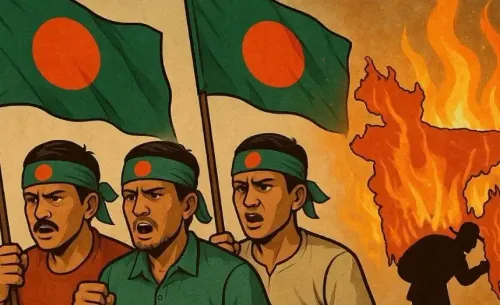
The role of historical memory in shaping electoral behavior was evident in Bangladesh's recent elections, where ties to the 1971 Liberation War influenced voter preferences significantly.
Key Takeaways
1971 Liberation War ideology influenced voting patterns.
BNP leveraged historical connections in campaigns.
Jamaat-e-Islami positioned as adversary.
Voter concerns about legacy and values impacted choices.
Historical narratives remain crucial in Bangladeshi politics .
Dhaka, April 13 (NationPress) The recent elections in Bangladesh highlighted how political engagement with historical memory can significantly influence public perceptions and voting patterns.
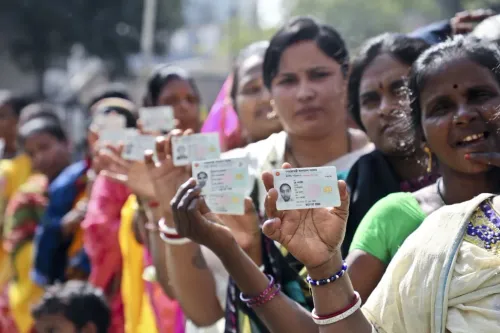
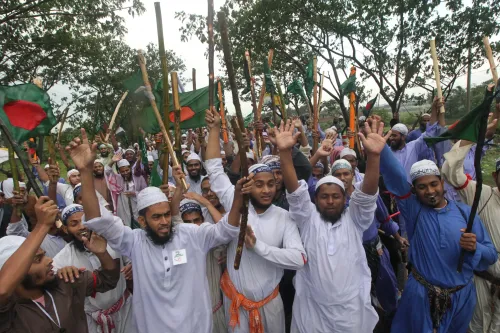
Voters who strongly identify with the 1971 Liberation War showed a preference for parties perceived as champions of its legacy, while those associated with anti-liberation forces were notably rejected, according to a report released on Monday.
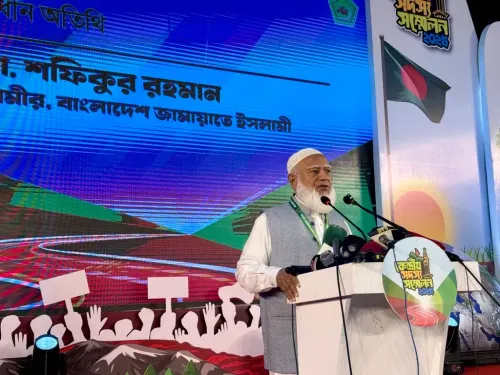
As noted in an editorial from the prominent Bangladeshi newspaper Prothom Alo, in the run-up to the 2026 parliamentary elections, the BNP has increasingly referenced the 1971 Liberation War in its campaign strategies, particularly highlighting the contentious role of Jamaat-e-Islami (JI) during that era.
“Historically, the BNP has allied with JI in various elections, forming coalitions despite JI’s opposition to Bangladesh’s independence. However, with the Awami League absent in this election, JI has emerged as BNP’s primary adversary, prompting a re-evaluation of historical narratives for electoral gain,” the report pointed out.
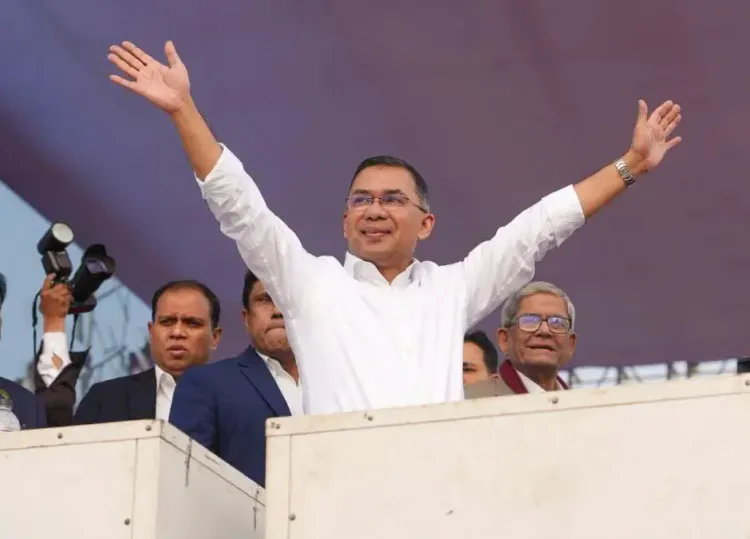
Bangladesh’s Prime Minister and BNP Chairman Tarique Rahman addressed an election rally in Sylhet on January 22, underscoring JI’s stance against the Liberation War.
“During our struggle for independence, diverse roles were evident. The past cannot be erased; people witnessed who opposed the nation,” Prothom Alo quoted Rahman as stating.
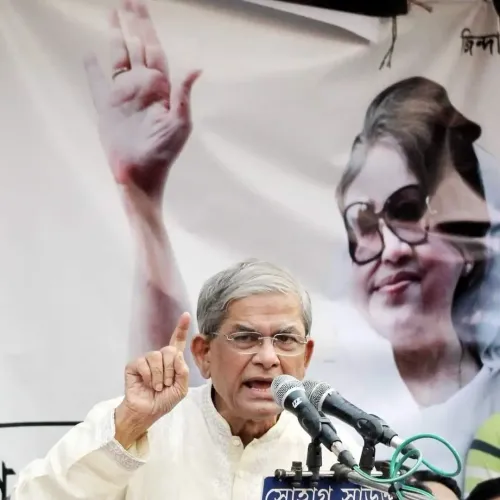
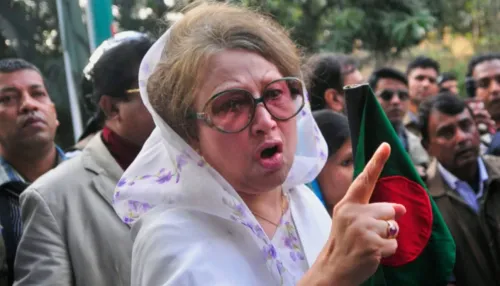
Other senior BNP leaders echoed similar sentiments. On January 28, BNP Secretary General Mirza Fakhrul Islam Alamgir criticized JI, asserting, “This party opposed our independence and does not believe in the freedom of Bangladesh. Can we trust such individuals with governance?”
The editorial emphasized that BNP leaders framed their criticisms as a principled defense of the Liberation War and its heroes, while acknowledging that their past alliances with JI were strategic rather than endorsements of Jamaat’s controversial history.
BNP leaders clarified that the earlier coalition was merely a 'strategic election partnership' and did not absolve JI of its historical wrongdoings.
“Analysts suggested that this tactic was primarily aimed at appealing to voters sensitive to the Liberation War, who might have otherwise leaned toward Awami League supporters. By highlighting JI’s historical opposition to independence, BNP aimed to position itself as a guardian of the Liberation War, framing JI as an ideological and moral adversary in the absence of the Awami League,” it further stated.
The report underscored that subsequent election results indicated that voters with strong allegiances to the 1971 Liberation War supported the BNP, significantly contributing to its electoral success.
“Commentators noted that in the February 12 election, voters with ideological connections to the Liberation War supported BNP not solely due to its manifesto but also out of concern that if JI were in power, the values and legacy established in 1971 might be at risk,” it emphasized.
Point of View
It is clear that the historical context of the 1971 Liberation War continues to resonate deeply with voters in Bangladesh. Political parties are strategically leveraging this connection to influence public opinion and electoral outcomes, reflecting the ongoing relevance of national identity in shaping political discourse.
NationPress
1 Oct 2026
Frequently Asked Questions
How did the 1971 Liberation War affect the recent elections in Bangladesh?
The 1971 Liberation War significantly influenced voter behavior, with those identifying strongly with its legacy favoring parties that uphold this history, particularly the BNP.
What role did Jamaat-e-Islami play in the elections?
Jamaat-e-Islami was a focal point in the BNP's campaign, as the party highlighted JI's historical opposition to the Liberation War to position themselves as its defenders.
What is the significance of historical narratives in politics?
Historical narratives serve as powerful tools in politics, shaping public perception and influencing voter allegiance, especially in contexts with strong national identities like Bangladesh.
What strategies did BNP employ in the run-up to the elections?
The BNP strategically invoked the 1971 Liberation War in their campaigns, reframing historical alliances to appeal to voters sensitive to this issue.
How did voter sentiment impact the election results?
Voter sentiment tied to the Liberation War played a crucial role in supporting the BNP, impacting the overall results and demonstrating the significance of historical memory in shaping electoral outcomes.