Could a Radicalised Bangladesh Emerge as a Strong Voice in Islamist International Forums?
Synopsis
As Bangladesh approaches its pivotal elections, experts warn that the outcome could redefine the nation's political landscape, affecting stability and international relations. Will a rise in radicalism shift the country's trajectory toward a more conservative debate? Discover the implications of the upcoming elections for Bangladesh and its global standing.
Key Takeaways
Bangladesh's elections are crucial for its political future.
The BNP faces skepticism from voters due to past governance.
Jamaat-e-Islami's resurgence raises concerns for minorities.
The potential for a conservative shift in public discourse is significant.
International relations may become more complicated depending on the election outcome.
Tel Aviv, Feb 7 (NationPress) As Bangladesh approaches its elections next week, the result will significantly influence whether the nation moves toward stability, endures prolonged uncertainty, or pivots toward a new ideological path. The future direction will hinge on how the upcoming government governs, its inclusiveness, and whether it learns from historical missteps, according to a recent report.
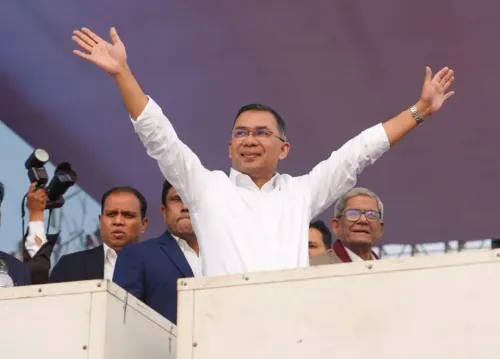
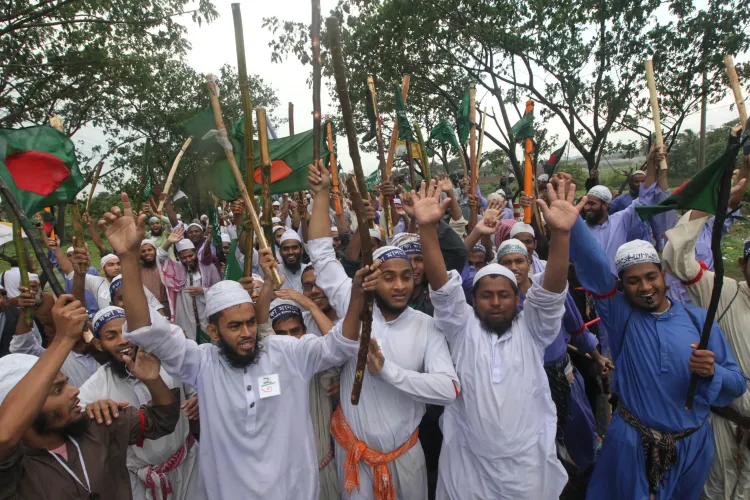
The 'Times of Israel' reports that with the ban on the Awami League, the forthcoming election has primarily transformed into a battle between two political factions: the Bangladesh Nationalist Party (BNP) and the radical Islamist group, Jamaat-e-Islami.
Addressing concerns regarding the BNP, the report states, “During its previous governance, the country was infamous for corruption and fragile institutions. The party has historically relied on Islamist allies, leading many voters to harbor doubts about its authenticity and whether any real change has occurred.”
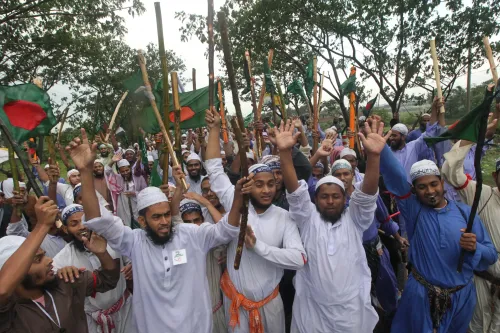
The report outlines that the opposition includes an Islamist coalition led by Jamaat, a party that was politically marginalized due to its ideology and its actions during the 1971 Bangladesh Liberation War, where it sided with Pakistan.
Since the fall of Sheikh Hasina's Awami League government in 2024, Jamaat has significantly reestablished its influence in the country.
“Jamaat portrays itself as disciplined, honest, and aligned with religious values. In numerous regions, its organizational strength surpasses that of secular parties, which have been weakened by years of political pressure. Its supporters trust it to provide moral leadership and a clean government. This rise is alarming for many secular Bangladeshis and religious minorities, raising concerns among foreign observers about the social and political future of Bangladesh,” the report points out.
If Jamaat and its allies come to power, the report suggests, Bangladesh might enter a new phase where it may not become a religious state, but public discourse could lean more conservatively.
“Minorities may feel increasingly vulnerable. Women’s rights and secular education could experience increased pressure. Internationally, Bangladesh might adopt a more distant stance towards India and Western nations while maintaining practical relations with China and others. For Israel and Middle Eastern watchers, this could result in more overtly hostile rhetoric, even if formal policies remain unchanged,” it warns.
The report also cautions that a hung parliament or a contentious election outcome would likely present the most perilous scenario.
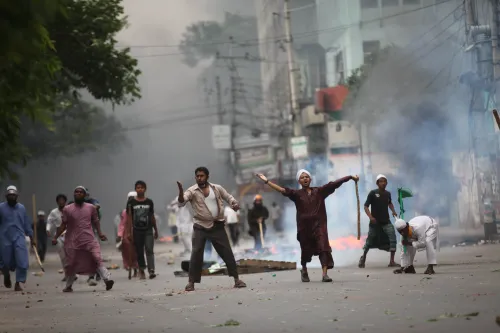
“Protests could reemerge. Political violence might rise. The military, which has never fully exited the political sphere, could intervene as a power broker. This is the outcome that diplomats dread most,” it adds.
From a global perspective ahead of the February 12 elections in this South Asian nation, the report observes, “While Bangladesh has no formal ties with Israel, its political direction is crucial. A more religious and nationalist Bangladesh could assert itself more vocally in Islamist international circles. A stable civilian government would likely remain distant but predictable.”
Point of View
It is vital to recognize that the upcoming elections in Bangladesh hold substantial implications for the nation and the broader region. With a history of political turbulence, the direction taken by the newly elected government will be critical in fostering or undermining stability. Our commitment remains to objectively report on developments while advocating for a government that prioritizes inclusivity and learns from past mistakes.
NationPress
24 Sept 2026
Frequently Asked Questions
What are the main political parties in Bangladesh's upcoming elections?
The primary contest is between the Bangladesh Nationalist Party (BNP) and the radical Islamist party, Jamaat-e-Islami.
What concerns are raised about the BNP?
The BNP has a history of corruption and reliance on Islamist allies, leading to voter distrust regarding whether it has genuinely changed.
What could happen if Jamaat-E-Islami gains power?
If Jamaat secures power, there may be a shift toward conservatism in public discourse, potentially impacting women's rights and minority safety.
How might Bangladesh's foreign relations be affected?
A more religious and nationalist Bangladesh could adopt a colder stance toward India and Western nations while maintaining practical ties with China.
What scenarios could lead to political violence?
A hung parliament or disputed election results could trigger protests and political violence, raising concerns about military intervention.