Will the Rise of Jamaat-e-Islami Heighten Violence Against Women in Bangladesh Elections?
Synopsis
As Bangladesh approaches its elections, the fear of increased violence and oppression looms, particularly for women. The potential rise of the Jamaat-e-Islami party has sparked significant concern among women about losing their rights and freedoms. Will the upcoming elections mark a turning point or lead to further regression?
Key Takeaways
Women are raising concerns about their rights amidst rising political tensions.
The Jamaat-e-Islami party's potential rise raises fears of increased violence.
Data indicates a worrying increase in cases of gender-based violence.
Past progress in women's rights may be threatened by Islamist politics.
Upcoming elections could be pivotal for the country's future.
New Delhi, Feb 11 (NationPress) As elections approach in Bangladesh, alarming discussions surrounding violence, human rights violations, and the suppression of minority communities have surfaced. However, women across the country are increasingly raising their voices about their rights following the announcement of election results.
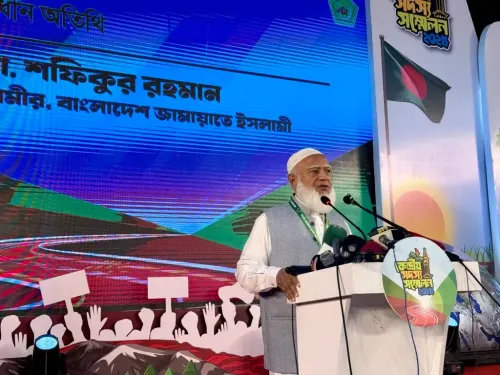
The Jamaat-e-Islami party is the primary concern for these women, many of whom fear that if this party gains power, their freedoms will be severely curtailed.
Once the leading force in a revolution that led to a regime change, these women now express deep anxiety about their future in the nation. They are witnessing a troubling resurgence of Islamist politics, which is directly impacting their freedoms.
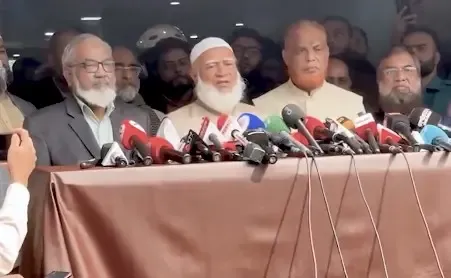
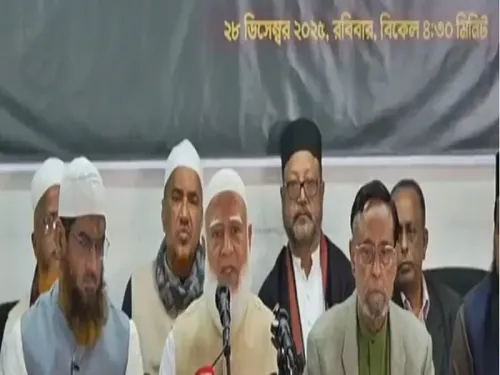
The call for Sharia law is intensifying day by day. The Jamaat has pledged to govern the country according to the Constitution while aspiring to foster peace and prosperity.
Experts advise caution regarding the Jamaat. While there may be moderate factions within, the majority adhere to a radical ideology. Furthermore, their longstanding ties with Pakistan raise significant concerns.
For years, the Jamaat and Pakistan have collaborated closely. Following Sheikh Hasina's departure from the country, Pakistan has exploited the situation in Bangladesh, facilitated by the Jamaat.
Radicals within Pakistan's establishment, along with certain factions in Bangladesh, are advocating for the implementation of Sharia law. Experts warn that if this occurs, it would spell disaster for women's rights.
The apprehensions voiced by numerous women in Bangladesh are not baseless.
Data from police reports covering January to June 2025 indicates a rise in gender-based violence compared to the same period in 2024. The Women’s Council of Bangladesh attributes this uptick to the increasing rhetoric from religious groups.
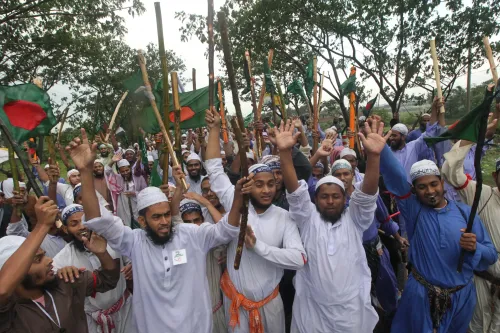
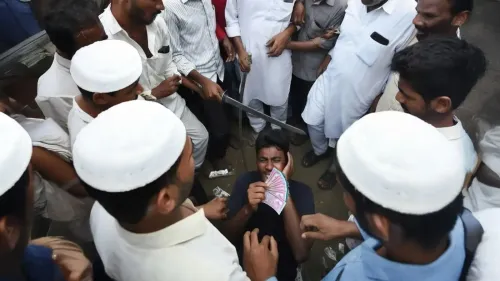
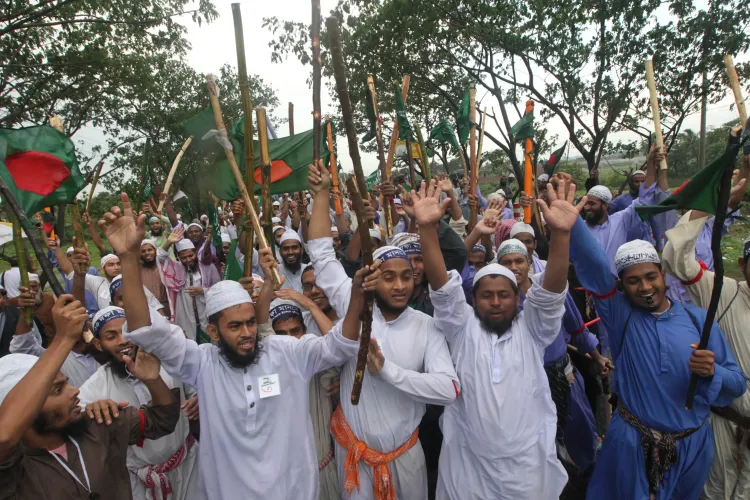
Various religious factions across Bangladesh are trying to impose restrictions on women's freedoms, including their attire and mobility. In May 2025, hardline religious groups protested against the interim government's efforts to enhance gender equality, labeling these initiatives as anti-Islamic.
Women have reported experiencing verbal, physical, and digital abuse.
Despite Bangladesh having had two women prime ministers, the current landscape reveals that 30 out of 51 political parties, including the Jamaat, have not fielded a single female candidate.
Statistics show that in the last four months of 2024, there were 5,795 reported cases of violence against women. In January 2025 alone, 1,440 such cases were reported. The numbers for February, March, April, and May were 1,430, 2,054, 2,104, 2,087, and 1,933, respectively.
Women have voiced their frustrations about the justice system's shortcomings. Society is increasingly viewing women as subordinate, and there is a lack of adequate legal and victim support.
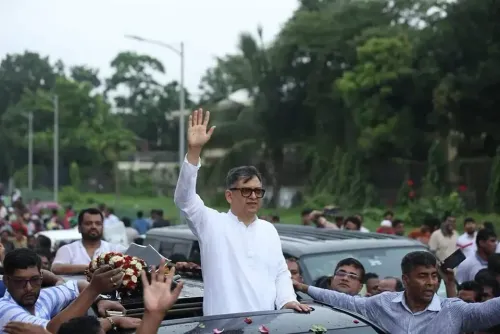
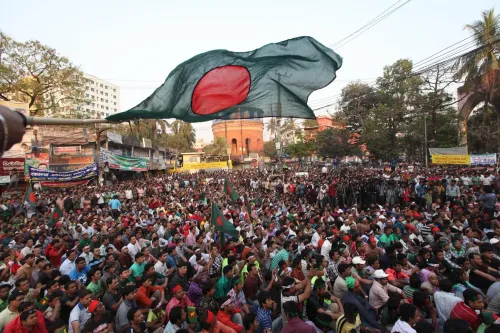
The upcoming elections have generated significant anticipation across the nation. The hope was for a democratically elected government to restore normalcy. Initially, it seemed that the Bangladesh Nationalist Party (BNP) would easily secure victory, particularly with the return of the late Khaleda Zia’s son, Tarique Rahman, acting as a strong motivator for the BNP. However, the situation on the ground is evolving rapidly, and the Jamaat has mobilized at an unprecedented rate.
The swiftness of the Jamaat's rise has further alarmed women in the country. Opinion polls just before election day indicate that while the BNP may be leading, the Jamaat is not far behind.
Numerous factors could influence the election outcome, potentially benefiting the Jamaat.
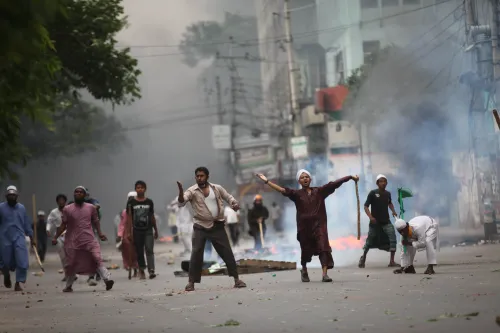
Security forces are bracing for possible violence, which might deter BNP voters from participating. Should the BNP win, the Jamaat is predicted to emerge a close second, gaining significant vote share. This scenario poses further threats to women in the country, leading to widespread fears of a society governed by Jamaat principles, according to experts.
Point of View
I observe that the rising tide of Islamist politics in Bangladesh poses a significant threat to women's rights and freedoms. While the upcoming elections are anticipated as a pivotal moment for democracy, the potential resurgence of the Jamaat-e-Islami raises pressing concerns. It is essential for the nation to prioritize the protection of human rights and ensure the safety and dignity of all citizens, particularly women.
NationPress
27 Sept 2026
Frequently Asked Questions
What is the current state of women's rights in Bangladesh?
Women's rights in Bangladesh are under threat, with recent reports indicating an increase in gender-based violence and restrictions imposed by religious groups.
How has the Jamaat-e-Islami influenced women's rights?
The Jamaat-e-Islami party's rise has led to fears among women that their freedoms may be curtailed, especially with calls for the implementation of Sharia law.
What actions can women take to protect their rights?
Women are encouraged to raise their voices, engage in advocacy, and seek support from organizations focused on human rights and gender equality.
What is the role of the government in ensuring women's safety?
The government must provide adequate legal protections, support services for victims of violence, and promote gender equality as a fundamental right.
What is the significance of the upcoming elections?
The elections are seen as a crucial moment for Bangladesh's democracy and will determine the future direction of the nation, particularly in terms of human rights and governance.