Is Jamaat-e-Islami's Vision for Women Empowerment Just a Facade?
Synopsis
Jamaat-e-Islami's recent manifesto appears to advocate for women's empowerment but reveals a stark contradiction against its historical regressive attitudes. The lack of female leadership and candidates highlights a façade of inclusivity. This article delves into the complexities of Jamaat's promises and their implications for women's rights in Bangladesh.
Key Takeaways
The promises made by Jamaat-e-Islami highlight a contradiction between their stated commitments and actual practices.
Women's representation is significantly lacking, with no female candidates for upcoming elections.
The focus on safety overshadows the need for genuine empowerment of women.
Jamaat's approach remains deeply rooted in traditional regressive ideologies.
Understanding the nuances of their manifesto is crucial for evaluating the future of women's rights in Bangladesh.
Male, Feb 11 (NationPress) The recent declarations and manifesto from Bangladesh's radical Islamist party Jamaat-e-Islami reveal a profound contradiction, projecting a facade of inclusivity and protection for women, while their deeply entrenched regressive perspectives towards women remain intact. Jamaat's pledges for representation and safety are undermined by the exclusion of women from leadership positions, a lack of female candidates, and a persistent narrative that confines women to domestic roles, according to a report released on Wednesday.
A report from Maldives Insight indicates that Jamaat's unclear position on Shariah laws further implies that its vision for women is rooted in segregation and subordination rather than genuine empowerment.
For women in Bangladesh, the narrative put forth by Jamaat does not signal liberation but rather a continuation of restrictions, cloaked in the language of dignity and protection.
“The issue of women's empowerment within Islamist movements is rife with contradictions, and the case of Bangladesh's Jamaat-e-Islami exemplifies this. At first glance, the party’s recent election manifesto seems to advocate for inclusivity, promising representation for women, ethnic minorities, and religious groups in government. Yet, when scrutinized against the party's historical rhetoric and practices, these commitments are revealed as superficial gestures rather than authentic commitments to gender equality,” the report elaborates.
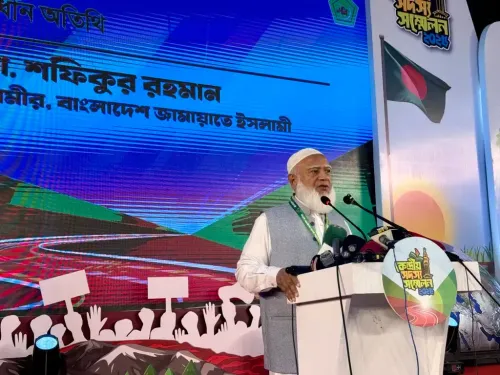
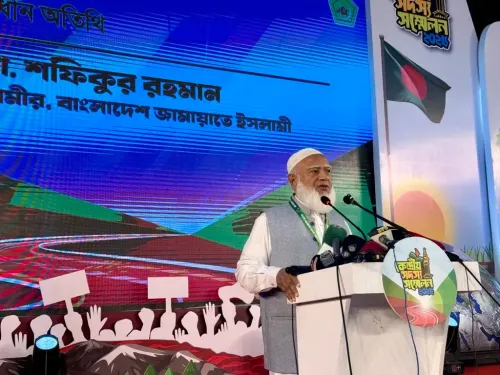
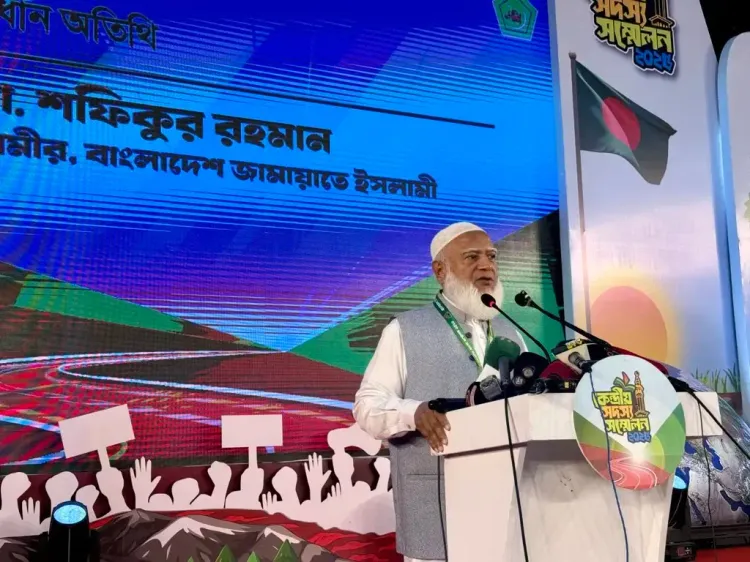
In campaign addresses, Jamaat Ameer Shafiqur Rahman has consistently highlighted women's 'security and dignity' as paramount. He has promised that women will be protected 'at home, on the streets, in workplaces, and everywhere else'. The manifesto reinforces this notion by pledging safe working conditions, reduced working hours for maternity, and initiatives such as dedicated bus services, CCTV installations, and emergency hotlines,” it continues.
However, the report emphasizes that the commitments made by Jamaat focus on protection rather than empowerment, perpetuating the idea that women are fragile beings who require safeguarding instead of being active participants in public life.
“In spite of these assurances, Jamaat-e-Islami has not nominated a single female candidate for the forthcoming elections. This significant omission undermines the manifesto’s assertion of ensuring women's representation in government. The party’s leadership has also indicated that women are barred from holding the highest offices,” it states.
The report concludes that Jamaat's approach to women's issues shows little meaningful change from its original ideology.
“The party continues to urge women to adhere to domestic responsibilities, while its promises of inclusion remain largely symbolic. The lack of female candidates, the prohibition of women in top leadership roles, and the ongoing rhetoric equating women's public engagement with immorality all underscore a deep-seated resistance to authentic empowerment,” it observes.
“The pledges of safety and dignity in the manifesto, while superficially attractive, conceal a vision of society in which women are segregated, subordinated, and denied equal leadership opportunities. The party's vagueness regarding Shariah further highlights its unwillingness to openly acknowledge its regressive agenda, opting instead to disguise it with the language of protection and morality,” it concludes.
Point of View
I believe it is crucial to critically examine Jamaat-e-Islami's claims regarding women's empowerment. While their manifesto may suggest progress, the reality reveals a troubling pattern of exclusion and contradiction. Our commitment to reporting the truth remains unwavering, and we will continue to hold political entities accountable for their promises.
NationPress
19 Sept 2026
Frequently Asked Questions
What is Jamaat-e-Islami's stance on women's empowerment?
Jamaat-e-Islami claims to support women's empowerment but consistently excludes women from leadership roles, presenting a contradiction in their manifesto.
Are there any female candidates from Jamaat-e-Islami in the upcoming elections?
No, Jamaat-e-Islami has not fielded any female candidates for the upcoming elections, undermining their claims of ensuring women's representation.
How does the manifesto address women's safety?
The manifesto promises safety and dignity for women but emphasizes protection over empowerment, maintaining women as vulnerable rather than active participants.
What does the report say about Shariah laws and Jamaat's vision for women?
The report suggests that Jamaat's ambiguous stance on Shariah laws implies a regressive vision for women, rooted in segregation rather than empowerment.
What are the implications of Jamaat's promises for women in Bangladesh?
The implications of Jamaat's promises are troubling, as they continue to confine women to domestic roles and hinder true empowerment.